
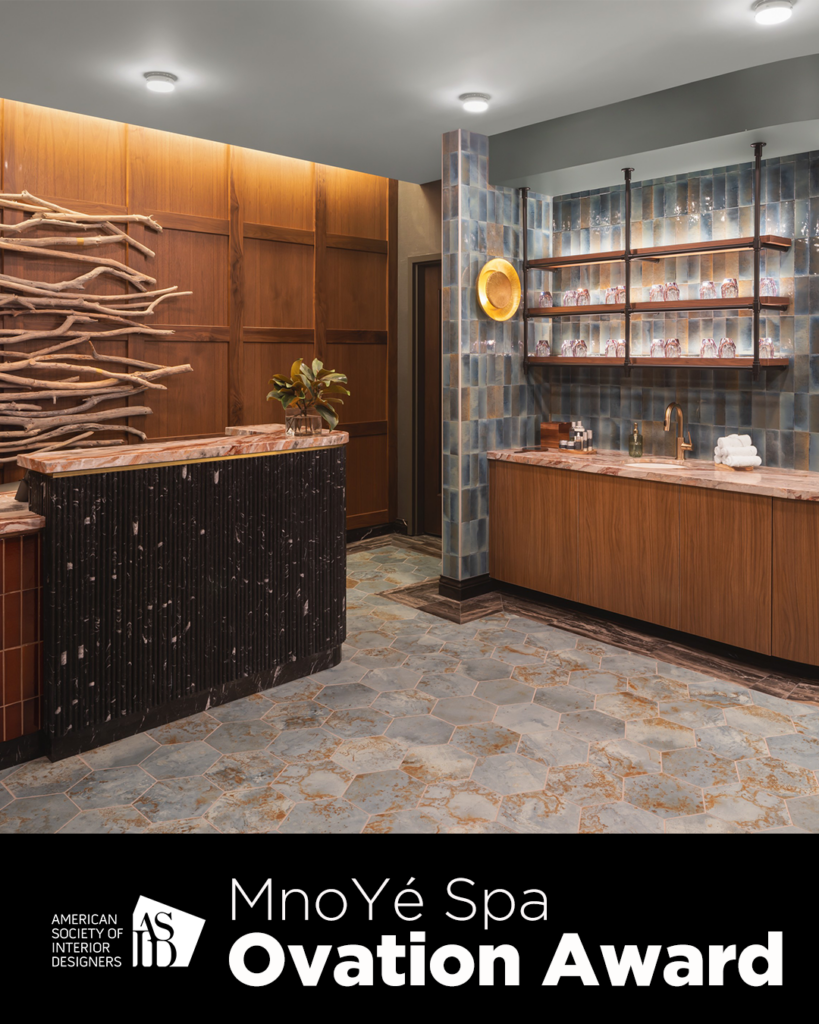
 MnoYé Spa, located within
  The spa’s thoughtful integration of cultural storytelling and contemporary wellness design creates a memorable guest experience that stood out among all commercial submissions in this year’s competition.
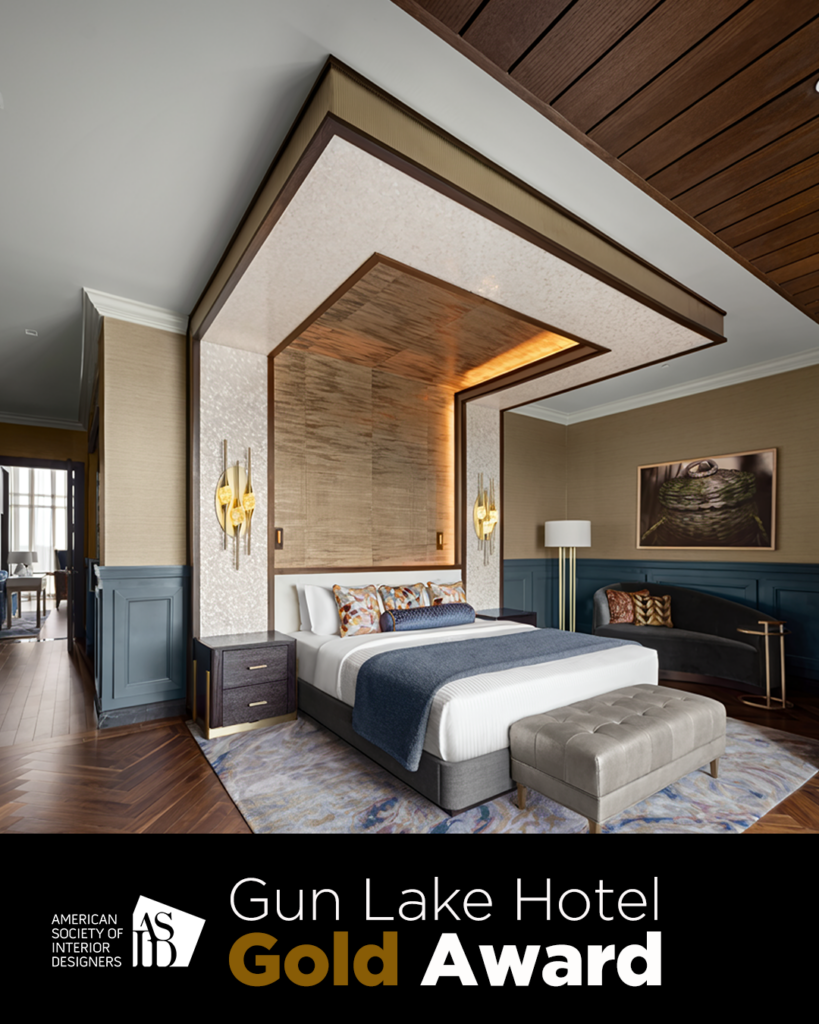 The Gun Lake Casino Resort Hotel received Gold in Hospitality Design, recognizing the interiors of the new hotel tower that anchors the resort’s transformation into a premier Midwest destination.
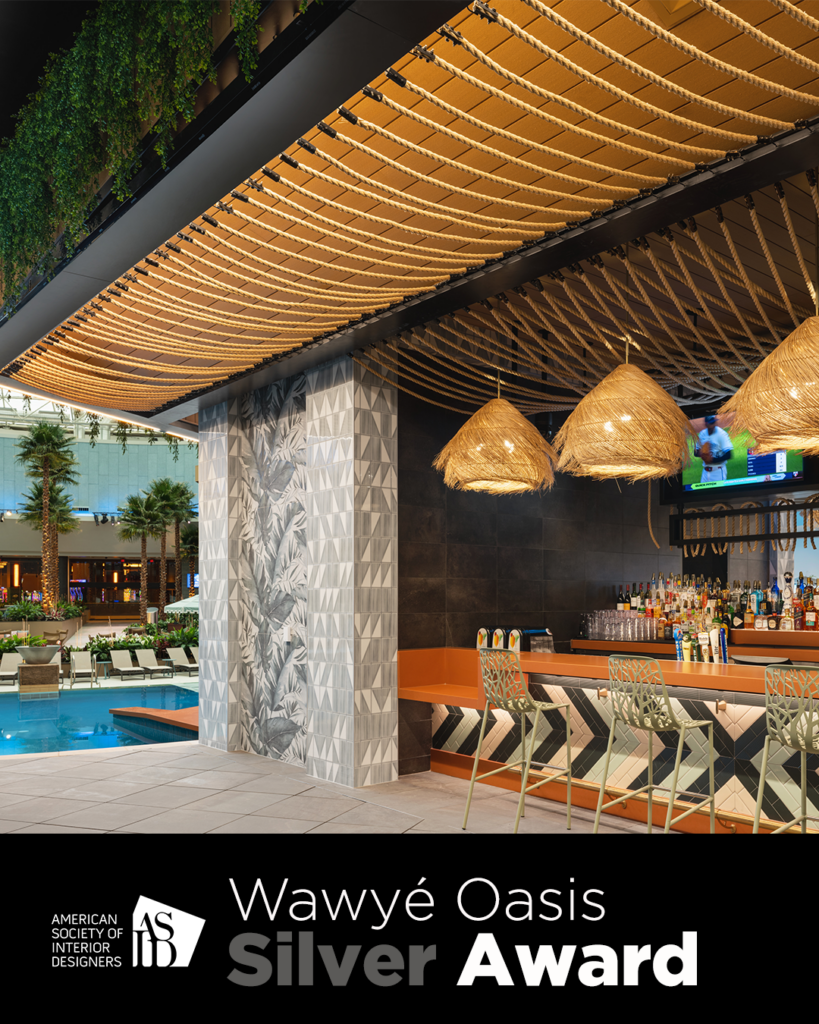 Completing the recognition for the resort expansion, Wawyé Oasis received Silver in Commercial Design. This dynamic pool and recreation venue creates a vibrant indoor resort environment designed for year-round enjoyment.
Are Your Public Spaces Working Hard Enough?
Hospitality Design Trends 2026: Wellness, Dwell Time & Revenue Activation
With rising construction costs and increasing guest expectations, every square foot inside a hotel or casino resort must deliver measurable value. Yet many public spaces — lobbies, lounges, pre-function areas, and resort environments — remain underleveraged.
The most important question for owners and operators today is simple: Are your public spaces working hard enough?
Across the hospitality industry, a shift is underway. Spaces that were once designed primarily for circulation are now expected to drive revenue, extend guest stays, and strengthen brand loyalty.
The future of hospitality design lies in activated public environments.
The 2026 Shift in Hospitality Design
One of the defining hospitality design trends of 2026 is the shift from passive gathering areas to multi-functional, revenue-generating environments.
Two major forces are driving this change.
First, hospitality and retail research consistently shows a direct correlation between guest dwell time and spending. When guests stay longer in an environment, they are more likely to engage with food and beverage, entertainment, retail, and premium amenities.
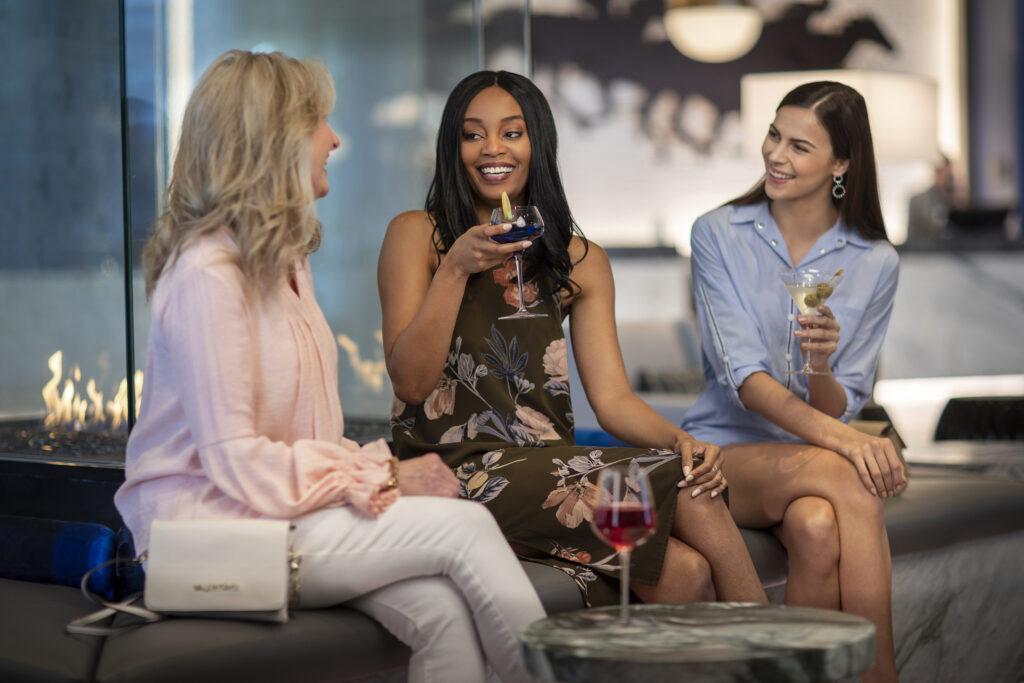 Second, the global wellness economy has grown to $6.8 trillion, according to the Global Wellness Institute. Wellness is no longer limited to spas or fitness centers; today it encompasses social connection, relaxation, and shared experiences — all of which take place in public environments.
 For casino resorts and destination hotels, this means public space has become one of the most powerful economic tools on the property.
Public space is no longer transitional — it is strategic.
What Is Public Space Activation?
Public space activation is the intentional design of hospitality environments to support both experience and economics.
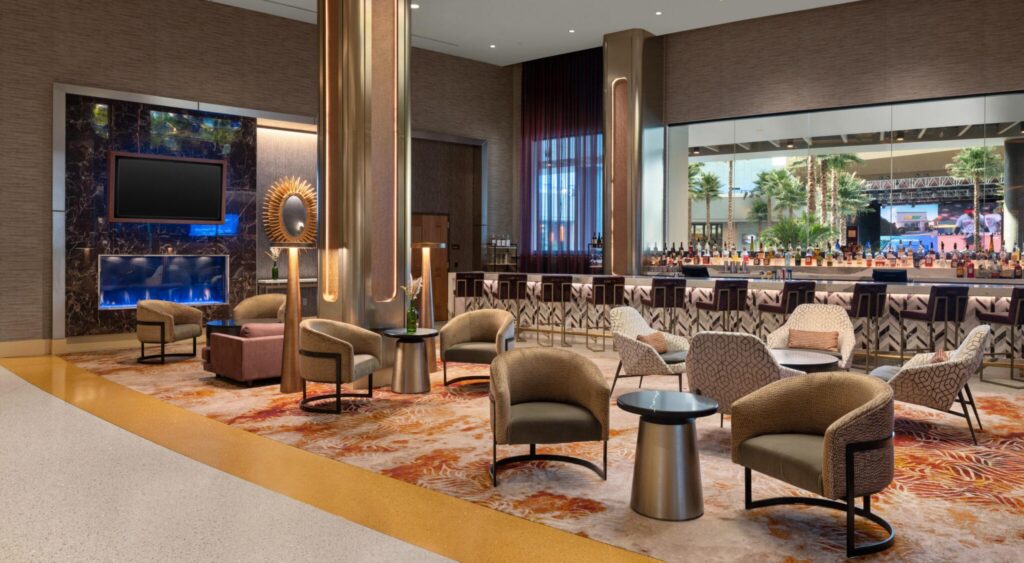
These spaces are designed to:
- Increase guest dwell time
- Encourage social interaction and group gathering
- Support multi-generational audiences
- Flex across dayparts and programming needs
- Strengthen brand identity
- Generate direct or indirect revenue
When done well, activated public spaces become the connective tissue of a resort, linking hospitality, entertainment, dining, and gaming into a seamless guest experience.
Gun Lake Resort: Designing an Indoor Destination
At Gun Lake Casino Resort, public space activation takes the form of an immersive indoor resort environment—free to guests during the day as a vibrant pool experience that also builds anticipation for the events and entertainment the space hosts at night.
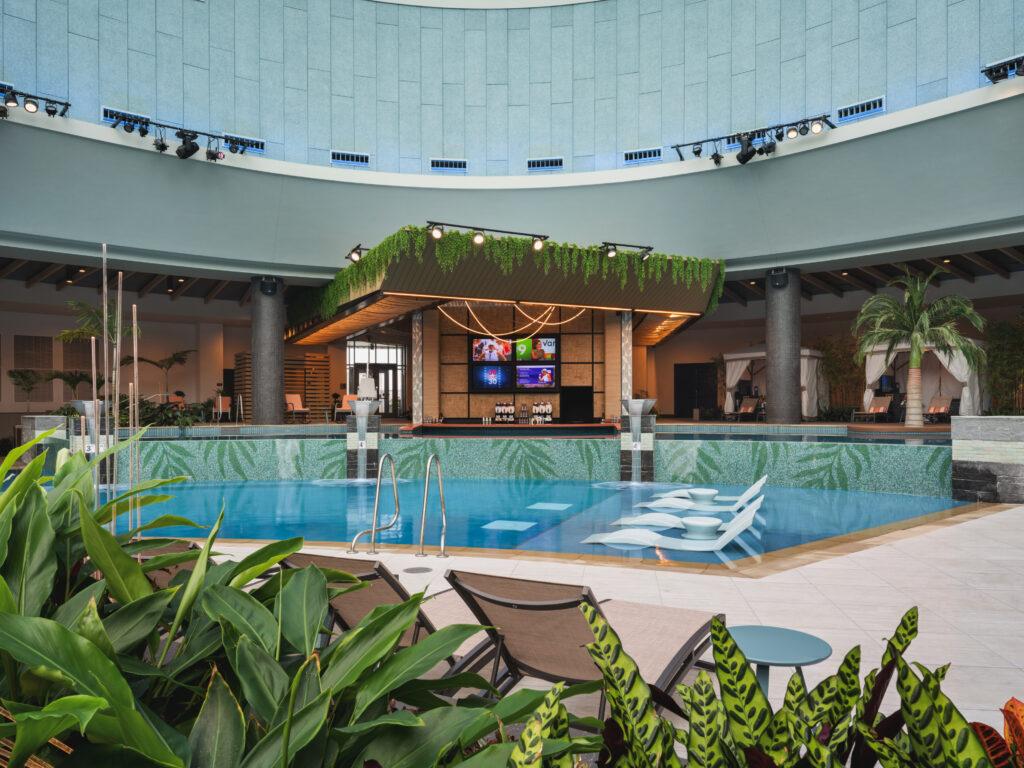
The Wawyé Oasis, a 32,000-square-foot indoor tropical atrium, creates a year-round destination that blends leisure, entertainment, and social gathering into a single environment. The climate-controlled space includes resort-style pools, cabanas, lounge seating, and integrated food and beverage venues arranged around a flexible event stage.
The key to the space’s success is programmatic flexibility. During the day, the Oasis operates as a relaxed indoor pool retreat for hotel guests and families, while its open layout and visual connections to the stage and surrounding venues create energy and anticipation for evening programming. At night, the same environment transforms into a concert venue, DJ lounge, or special event space—dramatically increasing utilization and guest engagement across dayparts.
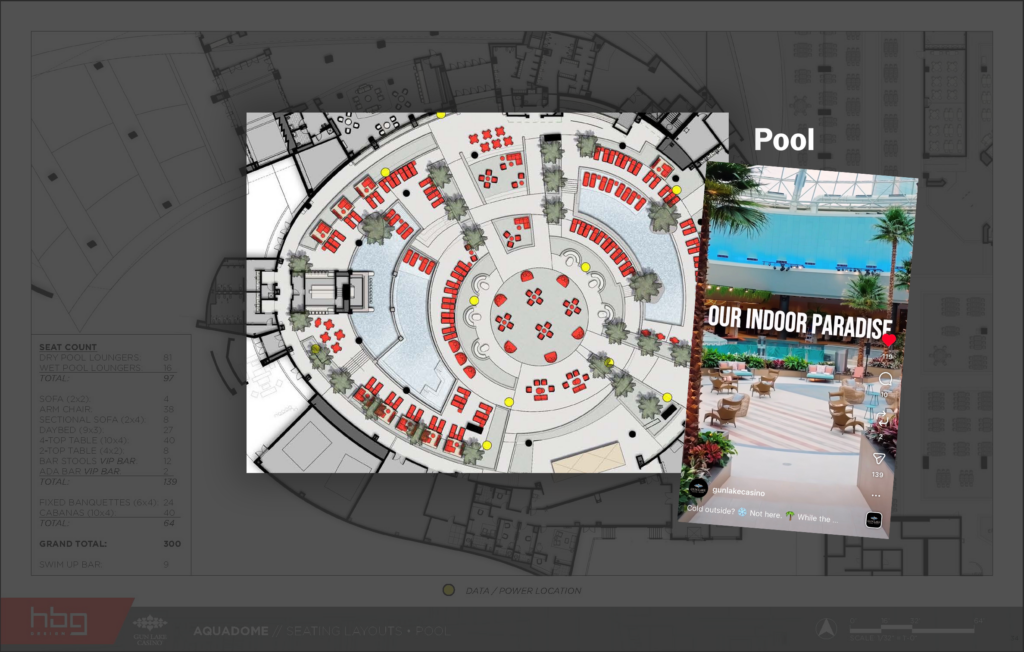
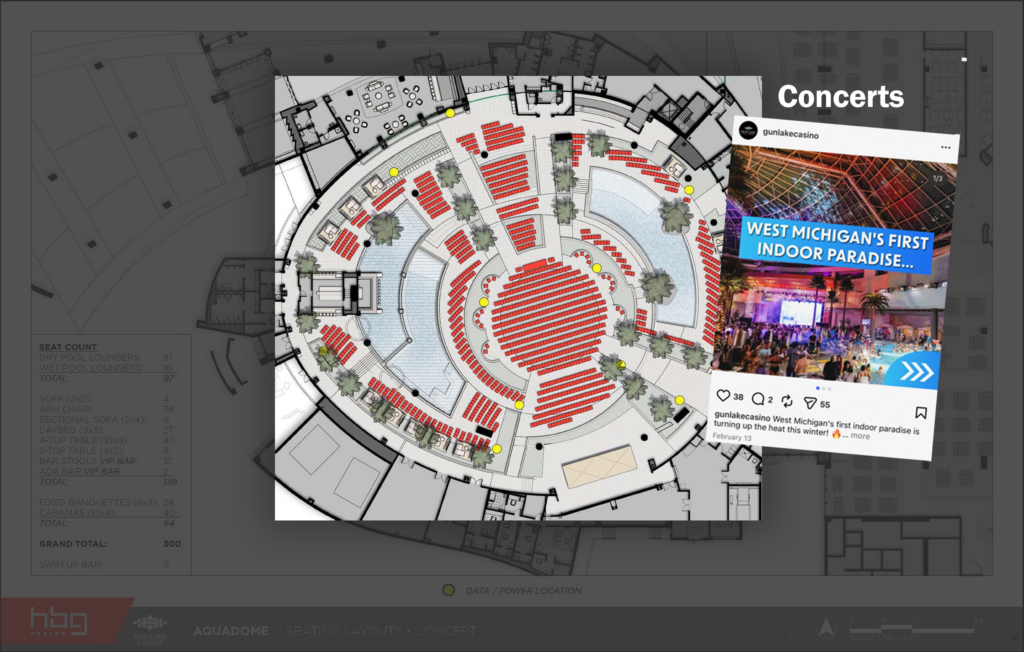
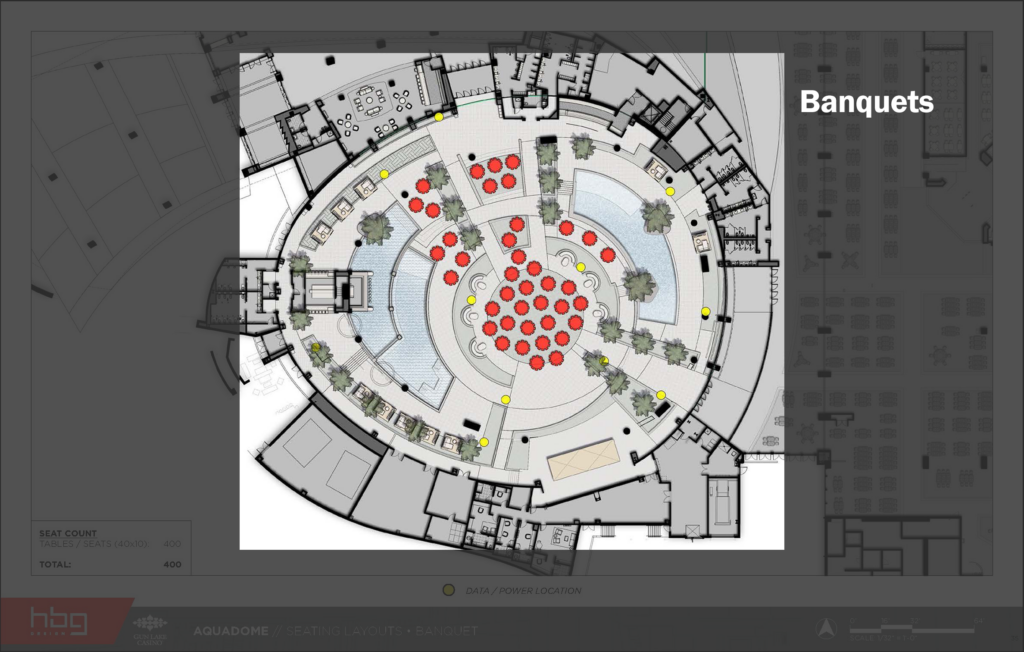
The environment also expands the resort’s audience. By creating a destination amenity that appeals to couples, families, and younger social groups, the property broadens its demographic reach beyond traditional gaming audiences.
Since completing its $300 million resort expansion, which introduced a hotel, spa, and new entertainment amenities, Gun Lake Casino Resort has reported a 20% increase in revenue along with strong hotel occupancy—signaling demand for experiential resort environments that extend the guest journey beyond gaming.
In this model, public space is not simply decorative—it becomes a strategic connector that builds visibility, excitement, and demand for the resort’s revenue-generating amenities.
Golden Mesa: Cultural Identity as Competitive Advantage
At Golden Mesa Casino & Hotel in Guymon, Oklahoma, public space activation takes a different approach — one rooted in cultural storytelling and social connection.
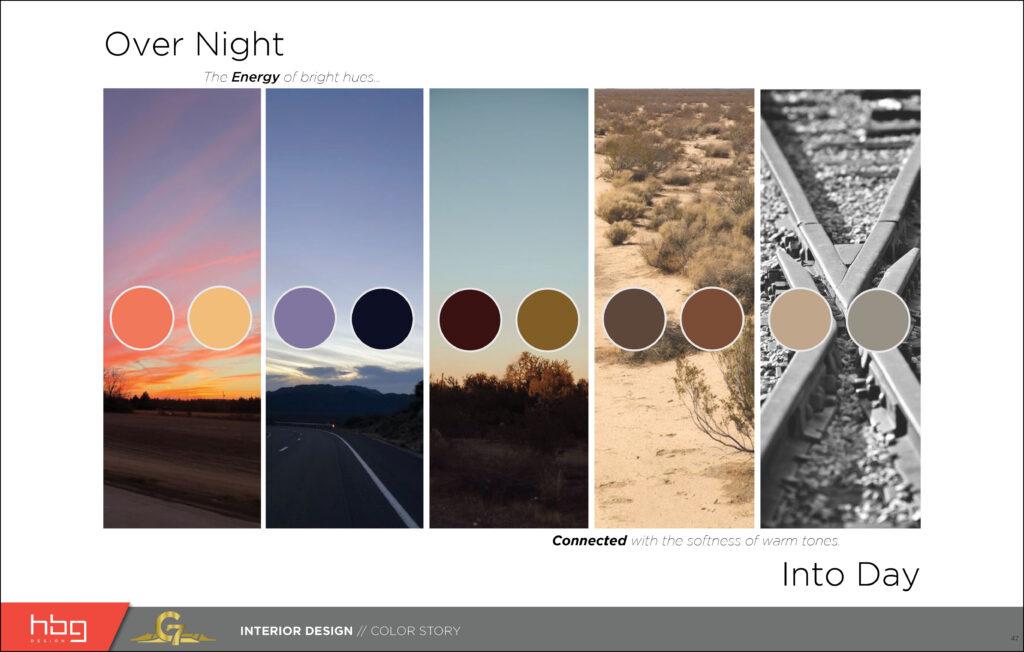 The property’s $78 million expansion doubled gaming capacity while introducing a new hotel, dining venues, and multiple gathering spaces that together transform the property into the Oklahoma Panhandle’s only full-scale casino resort destination.
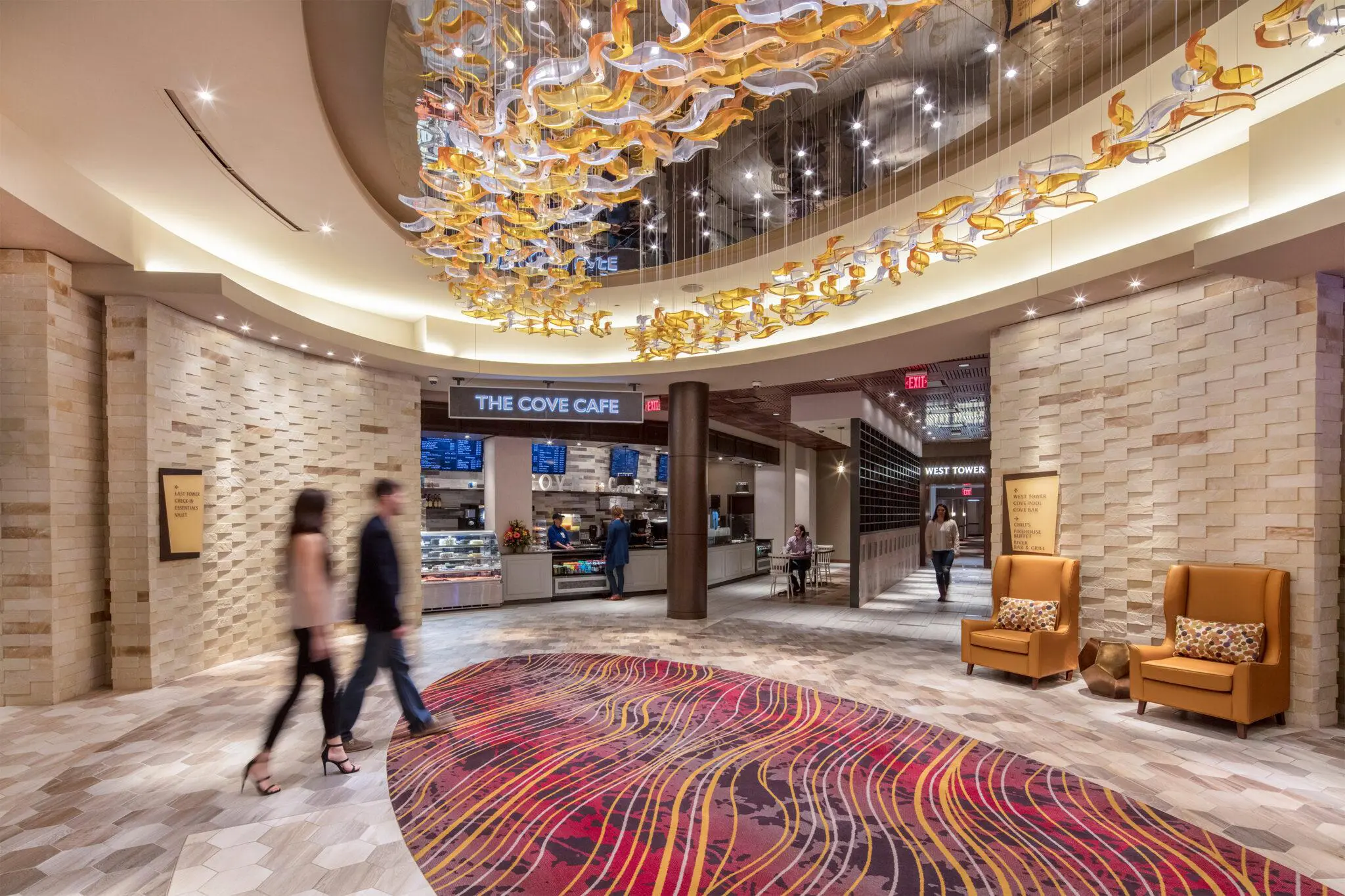
Rather than designing the lobby as a traditional circulation zone, the space functions as a hospitality hub.
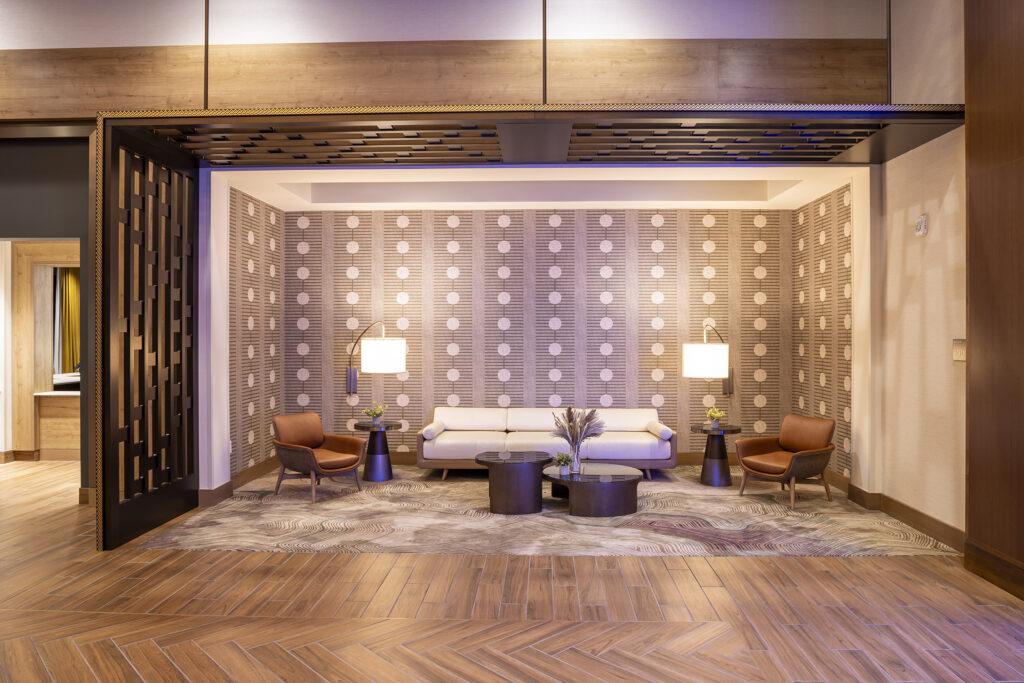
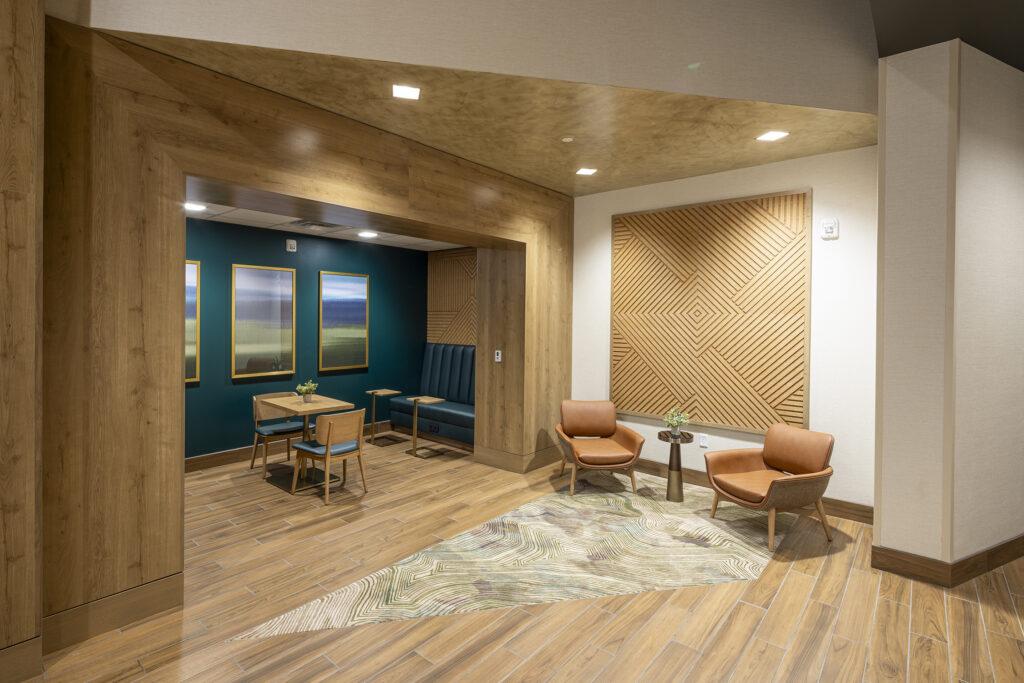 Residential-style seating clusters encourage guests to gather and linger, while the adjacent Panhandle Press café and nearby Cimarron Ridge restaurant create natural activity throughout the day. These proximities were intentionally designed to increase visibility and engagement with food and beverage offerings.

Technology also plays a role in activating the environment. On the casino floor, a 12-foot CLEAR digital signage wall introduces dynamic content and branding while maintaining visual transparency between the high-limit room and the gaming floor — drawing attention and curiosity from guests moving through the space.
Another key moment occurs at the transition between hospitality and gaming. A dramatic geometric light portal connecting the hotel lobby to the casino floor transforms circulation into an experiential threshold, guiding guests from calm social space into the energy of gaming.
These types of architectural moments do more than create visual impact — they encourage exploration and movement throughout the property.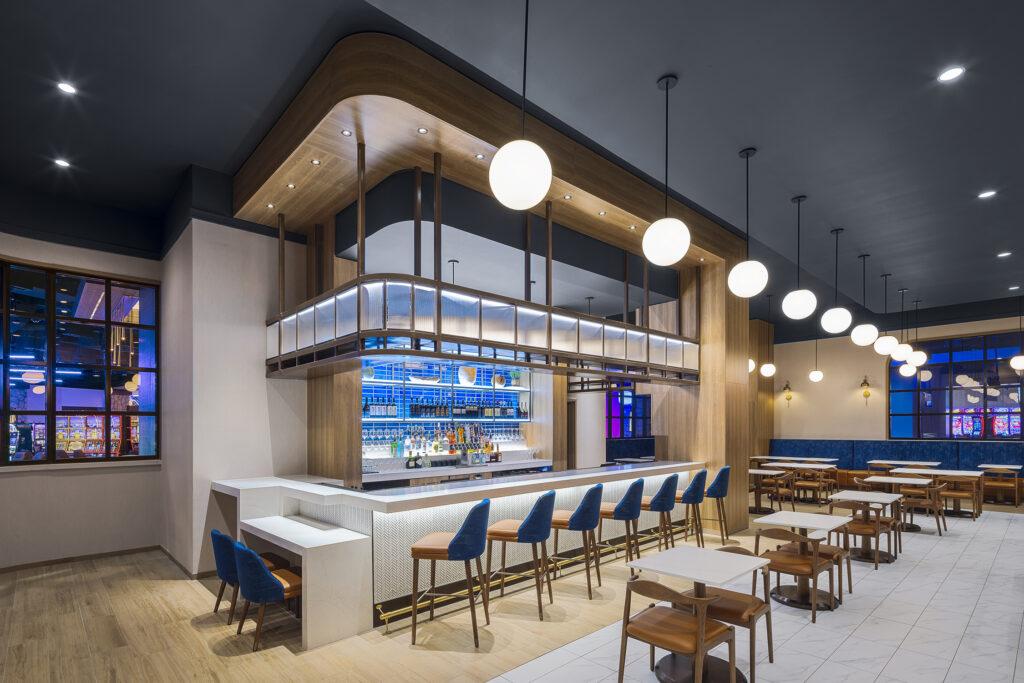
Golden Mesa demonstrates how culturally authentic environments can drive both guest engagement and long-term brand differentiation.
The Future of Hospitality Public Space
Across hospitality and gaming resorts, a clear pattern is emerging.
The most valuable square footage in a property may no longer be the gaming floor or guestrooms — but the spaces in between.
When designed intentionally, public environments can:
- Extend guest stays
- Increase cross-property spending
- Support events and entertainment programming
- Strengthen brand identity
- Create memorable social experiences
For owners and operators navigating rising construction costs and competitive markets, activated public space represents one of the most powerful design strategies available.
The most successful resorts in the next decade will not treat public space as circulation.
They will treat it as performance.
HBG Design Participates in the Form Follows Fitness 5K in Dallas
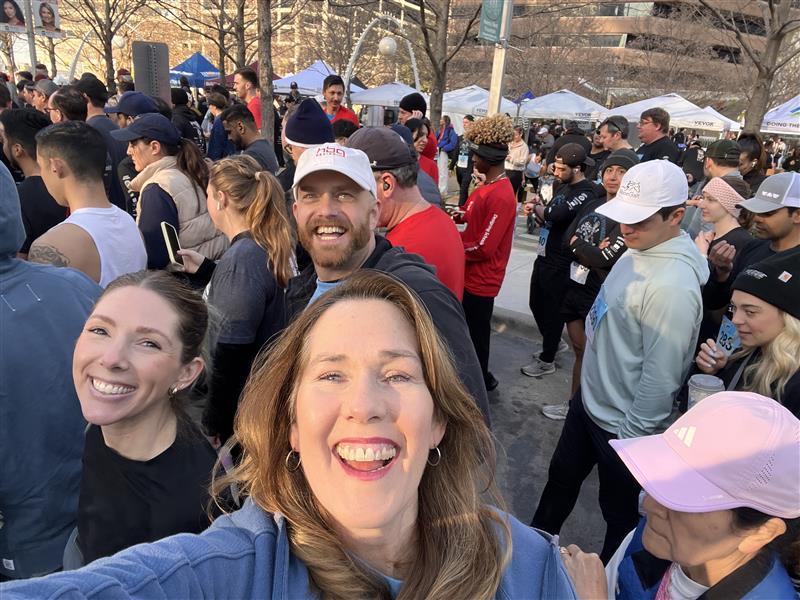
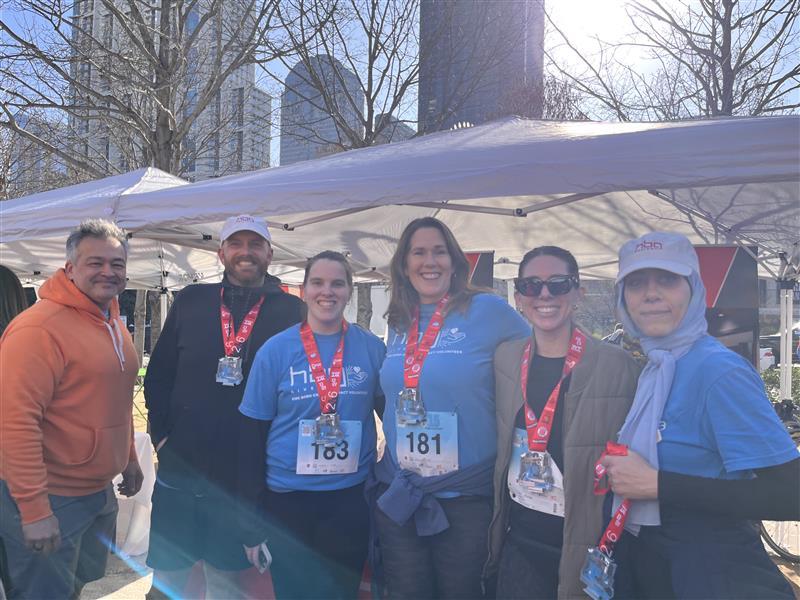
On a bright, sunshine-filled Saturday morning, team members from HBG Design’s Dallas office laced up their running shoes and joined thousands of architecture and design professionals at the annual Form Follows Fitness 5K—Dallas’ premier race celebrating the city’s iconic architecture. With an outstanding turnout, the event once again demonstrated the strength and vibrancy of the North Texas design community.
Team members from both the Dallas and Memphis offices participated, making it a meaningful cross-office event centered around wellness, community engagement, and industry connection.
Supporting the Purpose Behind the Race
Sponsored by Blackson Brick, the Form Follows Fitness 5K benefits The Architecture and Design Foundation. The Foundation is dedicated to advancing the value and impact of architecture and design throughout North Texas.
HBG Design is proud to support the mission of the Form Follows Fitness 5K and the Foundation’s efforts to make careers in architecture more accessible, cultivate future design leaders, and strengthen public engagement with the built environment. Investing in initiatives that elevate education, professional growth, and community awareness aligns closely with HBG’s own commitment to advancing the design industry.
The race route winds through some of Dallas’ most architecturally significant neighborhoods—including Uptown, the Arts District, and the West End—offering participants a unique opportunity to experience the city’s built environment from a new perspective.
Race Day Highlights
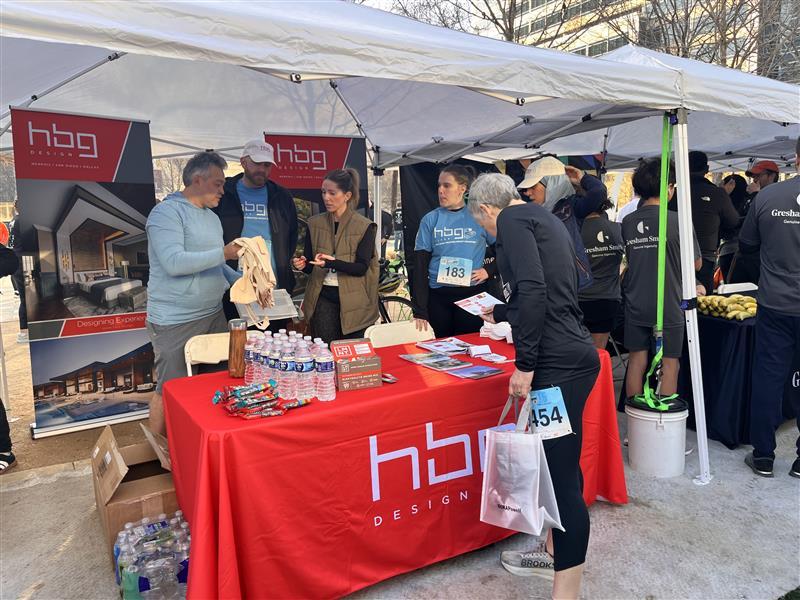
Beyond the run itself, the event offered extensive opportunities for networking and community engagement. HBG Design hosted a well-branded booth that attracted steady traffic throughout the morning. Team members connected with industry peers, strengthened existing relationships, and introduced HBG’s work and culture to new audiences.
With thoughtfully curated merchandise and refreshments, the booth created a welcoming space for conversation and engagement. The event also provided a valuable opportunity to elevate brand visibility in the Dallas market and actively connect with potential future team members.
Looking Ahead
Participation in the Form Follows Fitness 5K reflects HBG Design’s ongoing commitment to supporting the design community, promoting professional development, and encouraging wellness among our teams. Events like this allow us to celebrate architecture while strengthening relationships across offices and within the broader industry.
Thank you to everyone who helped coordinate and organize HBG’s involvement and ensured the day was a success.
Way to go, Team HBG!