In TG&H: Nathan Peak - The New Definition of Casino Design Efficiency
Tribal Gaming and Hospitality recently published an interview with Nathan Peak, AIA, President of HBG Design, sharing insights into what's next in the world of casino design!
As casino resorts become increasingly complex businesses, the definition of efficiency is evolving. TG&H sat down with HBG Design President Nathan Peak, AIA, to discuss how savvy operators are using design as a strategic tool to create long-term value.
TG&H: For years, efficiency in casino design has focused on cost and speed to market. What's changing?
NP: Those priorities still matter, but we’re seeing more focus on long-term business strategies. Operators are recognizing that designing efficiency is about creating a high-performing operation that delivers value across the entire business, influencing employee productivity and guest satisfaction, as well as maintenance costs and future growth.
Strategic thinking begins early. I’d challenge any operator to ask themselves: if you’re not bringing operations, employee experience, guest expectations, lifecycle costs, and long-term adaptability into the conversation from day one, then what could you miss in creating not just a project investment but a competitive advantage?

TG&H: If an owner or operator wants to design a more efficient casino resort, what are the top priorities they should focus on?
- Design for the Entire Lifecycle, Not Just the Grand Opening
Project decisions shouldn’t be driven by opening-day budgets and schedules. While important, the real measure of success is how a property performs over the next 10, 20, or even 30 years. Durable furnishings and finishes, resilient infrastructure, and adaptable planning can significantly reduce maintenance needs, replacement costs, and operational disruptions. The goal is not simply to spend less today; it's to maximize value over the life of the asset.
- Plan for Change Before It Happens
Everything evolves. Investing in flexible building systems and infrastructure helps a property adapt to new technologies, changing customer expectations, and future expansions without requiring costly renovations. Designing infrastructure capacity, strategic adjacencies, and expansion options from the start enables operators to meet future needs while minimizing business disruptions.
- Make the Employee Experience a Design Priority
One of the most effective ways to improve operations is by enhancing the work environment. Efficient back-of-house layouts, convenient access points, thoughtfully planned support spaces, and streamlined circulation can help teams work faster, communicate better, and deliver more consistent service. Employee-focused design is based on a simple yet often overlooked reality: the guest experience is heavily influenced by the employees delivering it.
- Align Operations and Guest Experience from the Start
The best-performing resorts don't treat operational efficiency and guest experience as competing priorities; they’re designed simultaneously. Service functions, loading areas, and support operations should work seamlessly behind the scenes. When operations are carefully integrated into the design process, properties can deliver exceptional guest experiences while maintaining speed, consistency, and efficiency.
TG&H: What does this mean for the future of casino resort development?
NP: The most successful developments will be those that intentionally connect operations, guest experience, and asset value from the very beginning. Properties leading the next generation of gaming will be designed to work smarter every day after opening. That’s where design becomes more than a project investment—it becomes a competitive advantage.

Continue the Conversation
Every casino resort faces a different set of operational priorities, guest expectations, and long-term investment decisions.
If these ideas connect with plans underway for your property, Nathan Peak and the HBG Design team would welcome the opportunity to exchange perspectives and learn more about the challenges and opportunities you are considering.
DOWNLOAD HBG DESIGN’S 2026 HOSPITALITY REPORT
Nathan Peak, AIA, President, HBG Design
[email protected]
Nathan Peak on the Future of Performance-Driven Casino Design
At HBG Design, we believe successful casino resorts must do more than look beautiful. We must also plan them strategically to perform for decades to come.
Casino Style magazine invited HBG Design President Nathan Peak, AIA to share his expertise as a featured casino resort design specialist in its latest issue. His article, "Designing for What's Next: Rethinking Casino Efficiency as a Performance Strategy" examines the role of performance-driven design. It explores how this approach is shaping the future of gaming and hospitality environments.
Nathan explores how the definition of "efficiency" has fundamentally changed as the gaming and hospitality industry continues to evolve. Accordingly, leading casino resorts are measured by more than construction costs or energy performance. They are designed as high-performing ecosystems. Guest experience, operations, employee satisfaction, and long-term asset value must all work together to create lasting success.
Four Strategies Shaping the Future of Casino Design
In the article, Nathan highlights four key principles driving the next generation of gaming destinations:
- Flow as a Revenue Engine: Thoughtful planning and intuitive circulation do more than improve navigation—they encourage exploration, increase dwell time, and create more opportunities for guest engagement. Strategic layouts transform movement throughout the property into a competitive advantage.
- Designing for a More Complex Guest Profile: Today's casino resorts welcome a broader audience than ever before. From loyal gaming patrons to younger, experience-driven travelers and non-gaming visitors, successful destinations offer flexible environments that seamlessly support multiple guest journeys at once.
- Designing for Lifecycle Performance: Long-term value begins on day one. From durable materials and adaptable infrastructure to future-ready technology planning, every design decision should contribute to operational efficiency and sustained return on investment throughout the life of the property.
- Elevating the Employee Experience: Exceptional guest experiences start behind the scenes. Efficient back-of-house planning, intuitive operational workflows, and thoughtfully designed employee spaces improve productivity, strengthen workplace culture, and ultimately enhance service throughout the resort.
HBG Design in Practice
Nathan illustrates these concepts with recent HBG projects LIVE! Casino & Hotel Louisiana in Bossier City and Wawyé Oasis at Gun Lake Casino Resort, demonstrating how strategic planning creates environments that are as operationally effective as they are memorable for guests.
Looking Ahead
As Nathan writes, "The role of design in gaming is no longer just about creating compelling spaces or delivering efficiency in isolated ways. It's about orchestrating performance across the entire enterprise—aligning guest experience, operations and long-term business objectives."
That philosophy continues to guide every project HBG Design delivers for our gaming and hospitality clients.
Read the full article in Casino Style. Discover how thoughtful, performance-driven design is shaping the future of casino resorts.
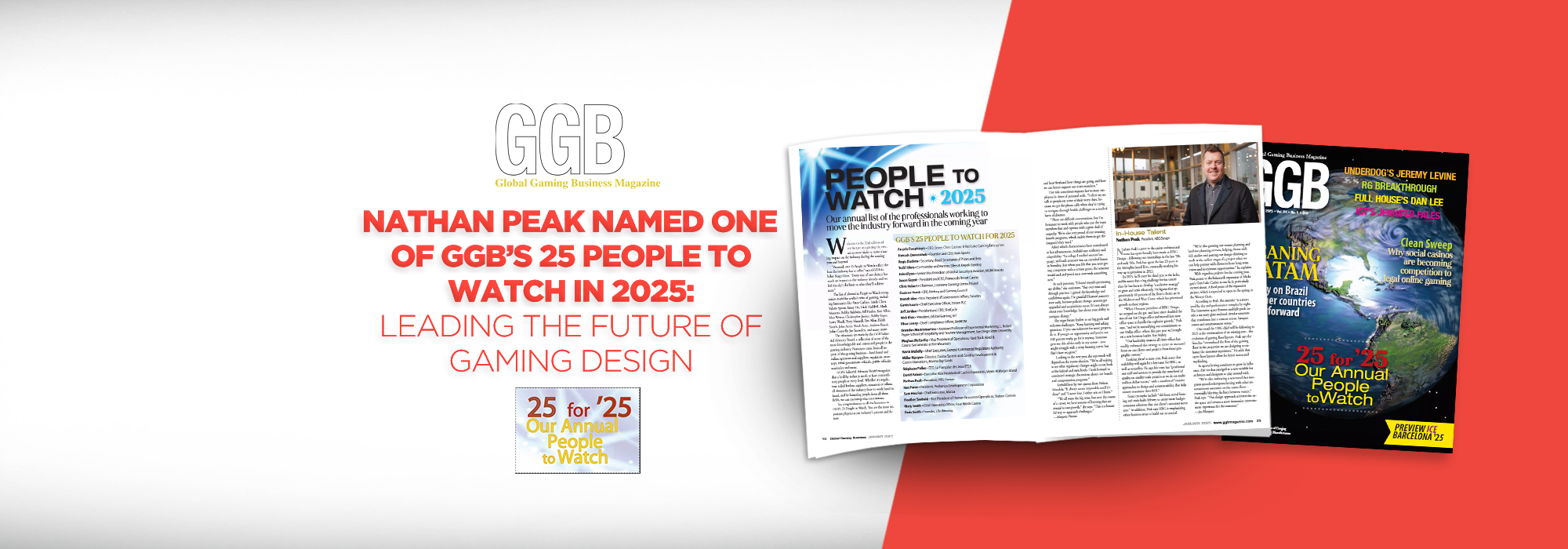
Nathan Peak Named to GGB’s 25 People to Watch in 2025
HBG Design’s President Honored for Shaping the Future of Gaming and Entertainment Design
At HBG Design, we’re thrilled to celebrate our President, Nathan Peak, AIA, LEED GA, for being featured in Global Gaming Business (GGB) Magazine’s prestigious "25 People to Watch in 2025" list. This annual recognition highlights individuals who are shaping the future of the gaming industry through innovation, leadership, and impactful contributions.
Nathan’s journey at HBG Design exemplifies dedication and growth. Starting with two internships in the late 1990s and early 2000s, he has spent the past 23 years shaping our firm and the broader gaming and entertainment design landscape. Since becoming President in 2022, Nathan has guided HBG Design through a transformative period of strategic growth and regional expansion.
Driving Growth and Innovation
Under Nathan’s leadership, HBG Design has doubled the size of its San Diego office and solidified its presence in Dallas with the appointment of a new location leader, Ray Mabry. These expansions are part of a cohesive strategy to enhance client service and project execution across the Midwest and West Coast—regions that account for the majority of the firm’s client base.
Nathan is also spearheading efforts to expand HBG’s capabilities, ensuring the firm delivers exceptional quality on projects of all scales. This includes creative approaches to design and construction, such as cost-effective framing methods that maximize client ROI while maintaining a premium guest experience.
Beyond project delivery, HBG Design is investing in master planning and land-use planning services, positioning the firm to provide value at the earliest stages of project development. From environmental impact studies to visioning long-term investment opportunities, Nathan and his team are focused on helping clients realize their goals from the ground up.
A Vision for 2025 and Beyond
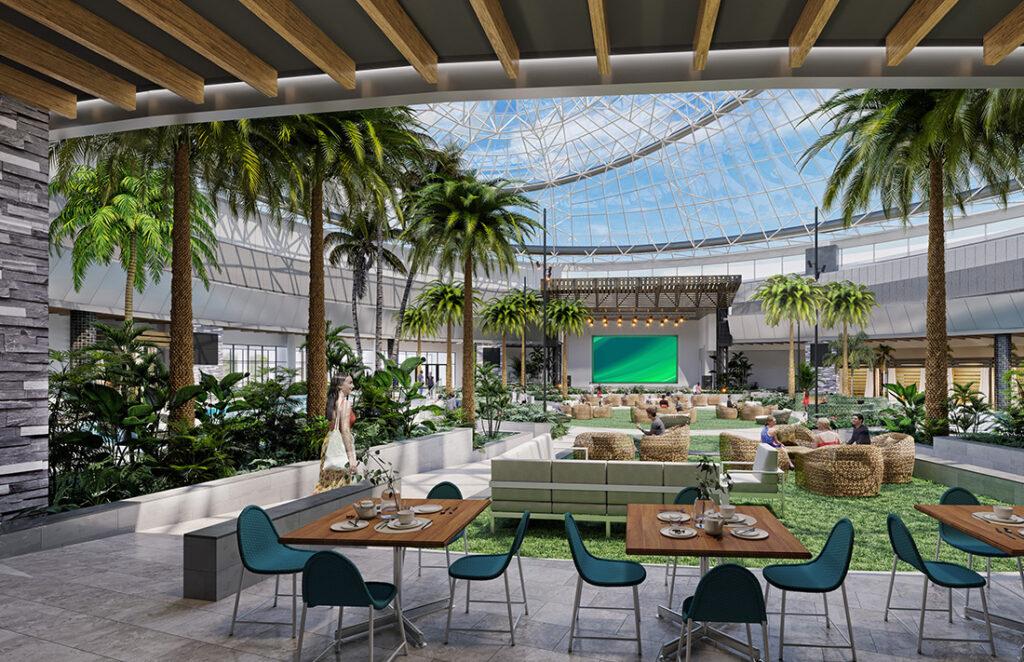
Looking to the year ahead, Nathan is particularly excited about HBG Design’s involvement in landmark projects like the Gun Lake Casino expansion in Michigan. The centerpiece of this project, the Wawyé Oasis, exemplifies innovation, transforming from a resort pool by day to a performance complex by night within a six-story glass-enclosed structure. 
Nathan also recognizes the importance of evolving gaming floor designs to enhance customer experiences. His vision incorporates streamlined layouts for improved flow and wayfinding, while integrating sportsbooks with other entertainment amenities—a trend that blurs traditional boundaries and creates immersive environments.
Recognizing Leadership in Gaming Design
Nathan’s inclusion in GGB’s "25 People to Watch in 2025" underscores his significant contributions to gaming and entertainment design and his forward-thinking leadership at HBG Design.
As Roger Gros, GGB Publisher, notes, “As usual, our 25 People to Watch reflect the best the industry has to offer. Every one of our choices [this year] has made an impact on the industry already, and we feel the sky’s the limit to what they’ll achieve next.”
For more updates on Nathan Peak and HBG Design’s innovative projects, follow us on social media or explore our website.
InspireDesign Reveals the Inspired Mind of Practice Leader Nathan Peak
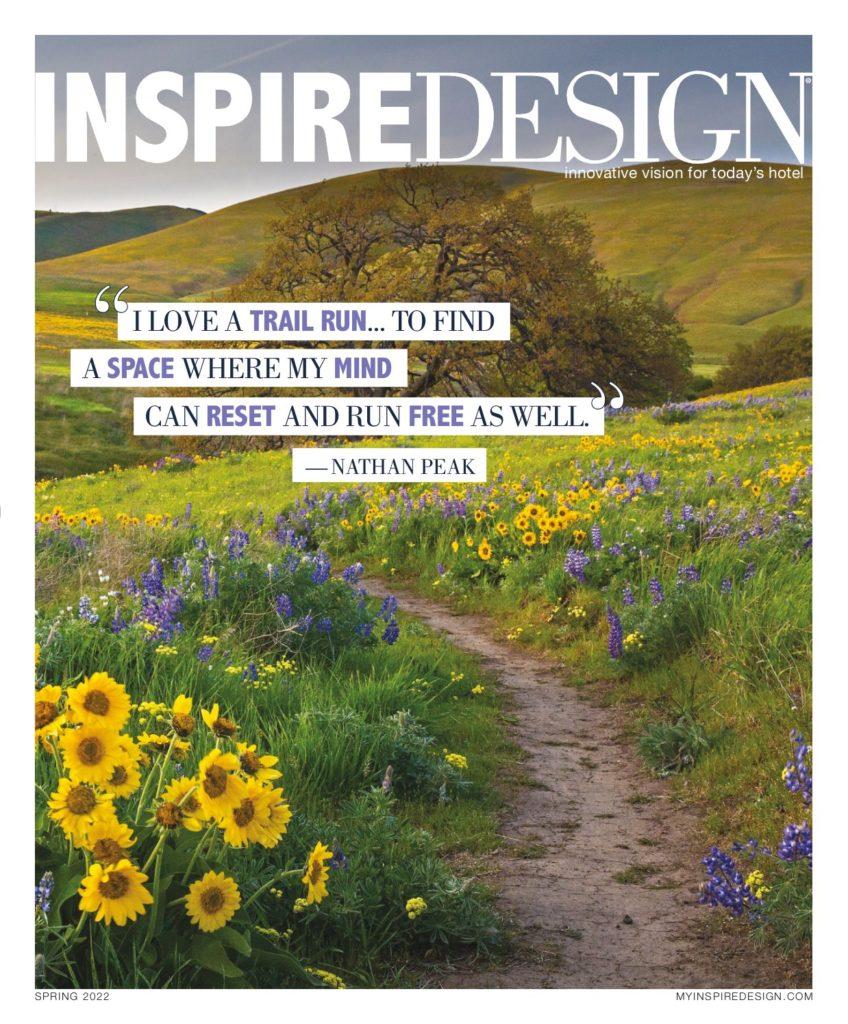
What energizes HBG Design’s new Practice Leader, Nathan Peak, as he takes on each new day? From good conversation that leads to fresh perspectives, to the freedom to let his body and mind run--InspireDesign magazine has the inside track on the personal and professional inspirations and collaborative mindset of HBG’s leader, Nathan Peak, AIA, LEED GA.
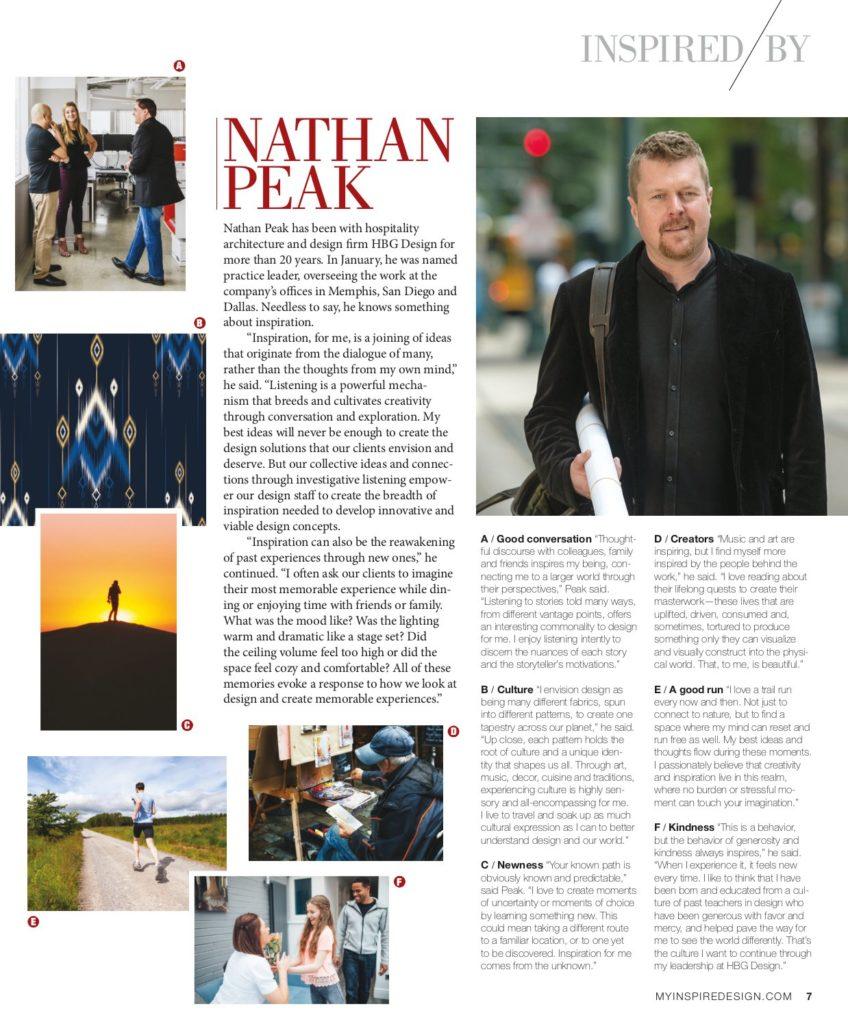
Nathan Peak has been with hospitality architecture and design firm HBG Design for more than 20 years. In January, he was named practice leader, overseeing the work at they company's offices in Memphis, San Diego and Dallas. Needless to say, he knows something about inspiration.
"Inspiration, for me, is a joining of ideas that originates from the dialogue of many, rather than the thoughts from my own mind," he said. Listening is a powerful mechanism that breeds and cultivates creativity through conversation and exploration. My best ideas will never be enough to create the design solutions that our clients envision and deserve. But our collective ideas and connections through investigative listening empower out design staff to create the breadth of inspiration needed to develop innovative and viable design solutions.
"Inspiration can also be the reawakening of past experiences through new ones," he continued. "I often ask our clients to imagine their most memorable experience while dining or enjoying time with friends or family. What was the mood like? Was the lighting warm and dramatic like a stage set? Did the ceiling volume feel too high or did the space feel cozy and comfortable? All of these memories evoke a response to how we look at design and create memorable experiences.