
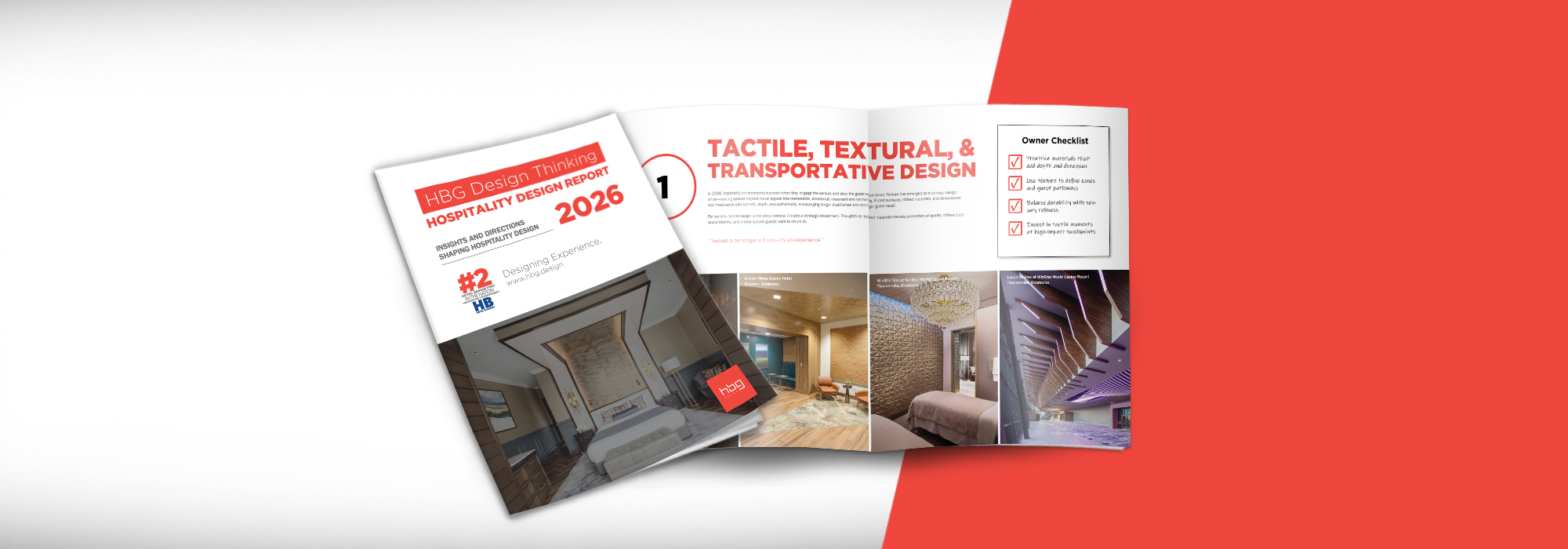
HBG Design Thinking: Hospitality Design Report
In 2026, hospitality design is all about creating immersive, memorable experiences that resonate with guests long after they leave. From boutique hotels to large-scale resorts and entertainment destinations, the bar for innovation has never been higher. HBG Design, ranked #2 Hospitality and Entertainment Design Firm in the U.S., by Hotel Business Magazine for 2026, has decades of experience translating industry insights into transformative guest experiences. This year, our team has identified the design thinking that will define hospitality experiences and drive both engagement and operational success.
You can download the full 'HBG Design Thinking' Hospitality Design Report here.
Social Wellness: Connection as the New Currency

Wellness has evolved beyond serenity and self-care—connection is now central to well-being. Guests increasingly seek shared experiences that foster community and engagement. HBG clients are already ahead of this curve, with co-ed hydrothermal lounges at WinStar Spa and hydrotherapy pools at MnoYé Spa at Gun Lake Resort. These spaces blend luxury, functionality, and social interaction, transforming wellness into a destination activity rather than a solitary experience.
Open Edge Environments
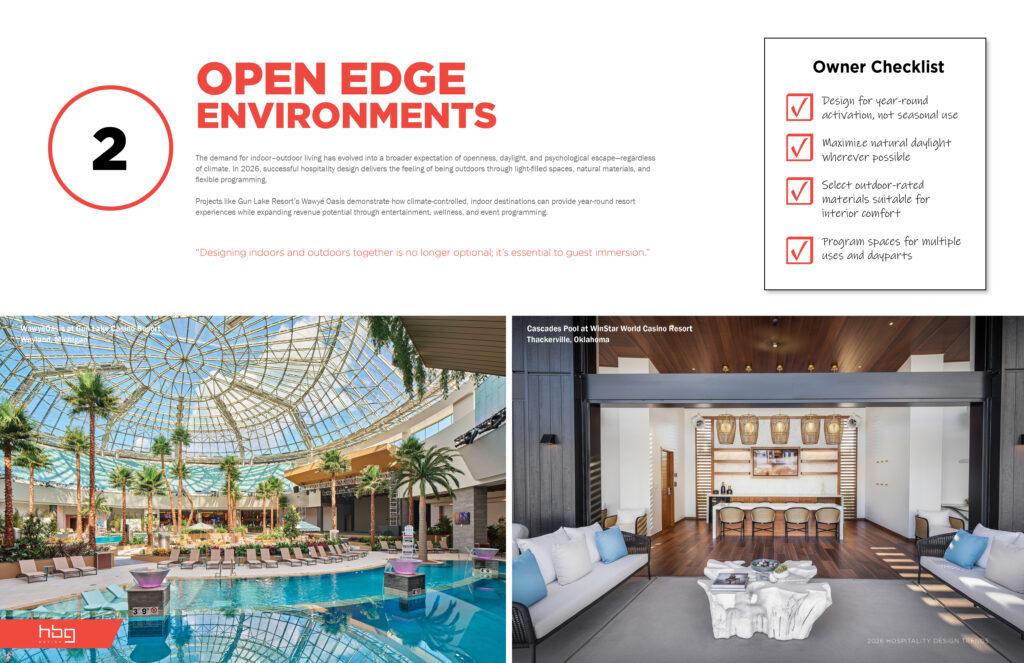 Seamless indoor–outdoor environments are no longer just a coastal luxury—they’re expected year-round, everywhere. The Wawyé Oasis at Gun Lake Resort exemplifies this trend, featuring a six-story glass dome that creates a tropical, light-filled escape in Wayland, Michigan. Guests enjoy the sensation of being outdoors while designers control climate, programming, and operational flexibility, proving that immersive environments drive engagement and revenue alike.
Maximalism with Meaning
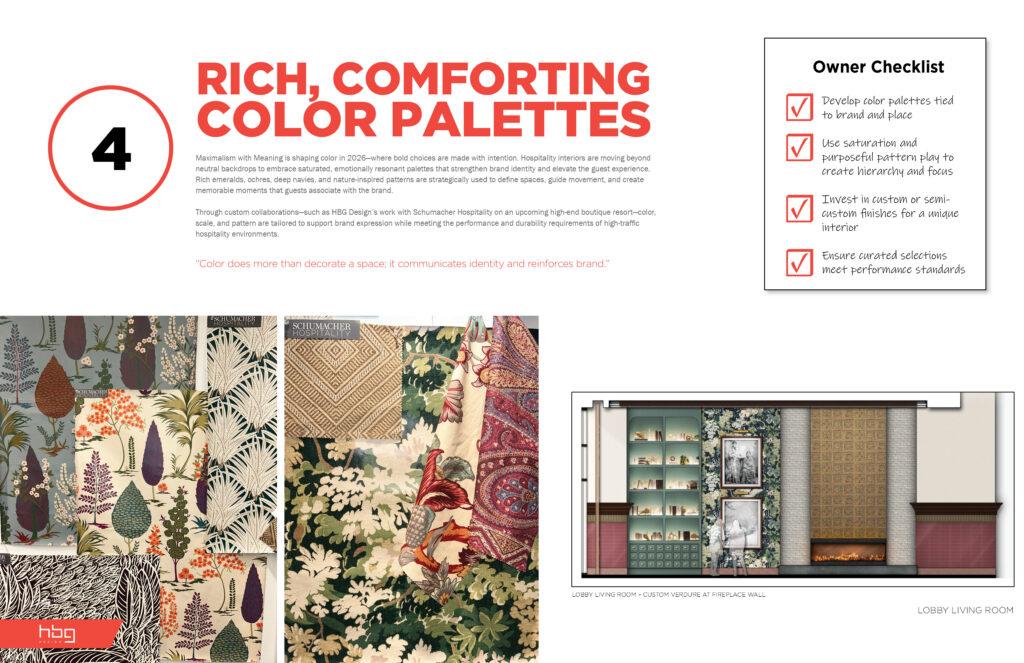 Color and material storytelling are taking center stage. For an upcoming boutique resort lobby, HBG Design collaborated with Schumacher Hospitality to transform iconic residential patterns into hospitality-grade fabrics and wallcoverings. Custom applications—from vibrant lobby wallcoverings to rooftop restaurant fabrics—combine durability with artistry, craft, and narrative inspiration drawn from the surrounding woodland landscapes and local industrial heritage.
Ready to explore all six trends in detail?
Download the full 'HBG Design Thinking' Hospitality Design Report to see more quotes, actionable owner checklists, and client case studies that bring these insights to life.


Hospitality Design Trends for 2025
HBG Design Thinking: From Sustainable Innovations to Immersive Guest Experiences
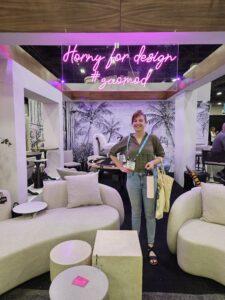
As the hospitality industry gears up for 2025, the landscape continues to shift in response to economic, cultural, and technological forces. Insights from recent conferences such as The Lodging Conference, BDNY, and HD Expo provide a roadmap for what’s next in hospitality design. From sustainable innovations to immersive guest experiences, the trends shaping the future align closely with HBG Design’s mission to craft inspired and transformative spaces. HBG leaders Nathan Peak, Emily Marshall, Alexandra Milkovich and Landon Shockey weigh in on the trends.
Here’s what to expect in 2025 and how these trends will impact hospitality projects.
________________________________________
-
Sustainability as a Core Value
HD Expo 2024 Show Floor

Sustainability is no longer optional—it’s integral to the guest experience and the development process. Hotels are weaving sustainable practices into their brand narratives, using them as a competitive advantage.
Key Takeaways:
- Material Choices: Expect an emphasis on eco-friendly materials, such as rattan, rich wood tones, and recycled metals.
- Operational Practices: Digital keys, water refill stations, and large-format amenities reduce waste and align with consumer expectations.
- Circular Design: Designers are scrutinizing supply chains to reduce carbon footprints, inspired by innovations like Styrofoam-free casegoods and eco-conscious packaging.
"HBG Design’s approach prioritizes solutions that enhance both operational efficiency and environmental stewardship – focusing on product longevity and sustainably made products, creating spaces that resonate with eco-conscious travelers," says Nathan Peak, AIA, LEED GA, HBG Principal and Practice Leader.
________________________________________
-
Wellness and Well-Being Take Center Stage

The wellness economy continues to flourish, influencing everything from luxury spa design to guestroom amenities.
"Wellness isn’t just a trend—it’s a fundamental expectation for guests," says HBG Sr. Interior Designer, Landon Shockey, ASID, NCIDQ.
Key Takeaways:
- Holistic Offerings: Wellness extends beyond spas. Guests seek spaces that nourish mind and body, from sound baths to in-room wellness features like sleep-enhancing technologies.
- Luxury Wellness: Hotels like Six Senses are redefining luxury by integrating sleep science, spiritual well-being, and sustainable design into the guest journey.
- Flexible Programming: Spaces designed for multi-use programming—yoga classes by day and stargazing at night—offer unique experiences while maximizing ROI.
________________________________________
-
Technology: Enhancing, Not Replacing, the Human Touch
Guest rooms and suites at Oaklawn Resort, Hot Springs, feature in-room tablets as digital concierges, offering seamless access to dining, promotions, events, and more.

"As artificial intelligence and automation advance, successful hospitality design will balance technology with human-centered experiences" explains Emily Marshall, IIDA, NCIDQ, HBG Principal / Interior Design Leader.
Key Takeaways:
- AI-Powered Guest Experiences: From personalized room preferences to virtual concierge services, AI adds convenience while preserving the essence of hospitality.
- Connected Spaces: Smart room technology enhances intuitive design, providing guests with seamless control over lighting, climate, and entertainment.
- Community Connection: Digital platforms are enabling guests to engage with one another, enhancing the sense of belonging and discovery.
________________________________________
-
Elevated Design: Nostalgia Meets Modern Luxury
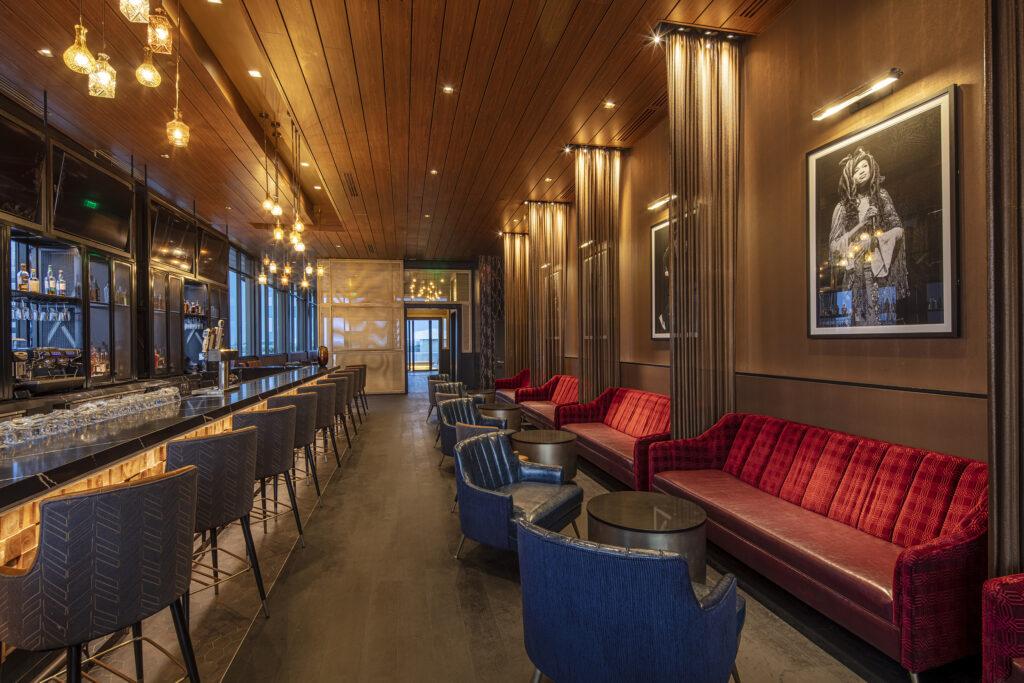
Design trends are leaning into warm palettes, nostalgic textures, and tactile materials, creating spaces that feel both luxurious and welcoming.
Key Takeaways:
- Color Trends: Deep plums, cranberry reds, olive greens, and butterscotch tones evoke a cozy, grounded atmosphere.
- Biophilia and Texture: Rich biophilic elements and layered textures add visual and sensory depth.
- Experiential Elements: Thoughtful design moments—like curated art installations or locally inspired storytelling—leave lasting impressions on guests.
"HBG Design excels at blending these elements into cohesive narratives that connect deeply with guests and reflect the property’s location and brand identity," offers Alexandra Milkovich, IIDA, NCIDQ, HBG Sr. Associate / Sr. Interior Designer.
________________________________________
-
The Rise of Lifestyle and Extended-Stay Models
The Hadsten Solvang, Tapestry Collection by Hilton, blends a “vineyard vibe” with vintage Danish charm, the design reflects the rich heritage of Solvang and the allure of its wine-country surroundings.

"Increased demand for lifestyle boutique hotels and extended-stay options is reshaping the market, driven by the need for flexible, experience-rich accommodations," adds Marshall.
Key Takeaways:
- Lifestyle Hotels: Brands like Moxy and Virgin focus on curated experiences, from local art displays to intimate dining.
- Extended Stay: Accommodations catering to 30-, 60-, or 90-day stays provide opportunities for innovative design that bridges home and hospitality.
- Personalization: These models emphasize creating environments that feel unique and personal, offering a sense of discovery with every stay.
________________________________________
-
Storytelling: Creating Emotional Connections
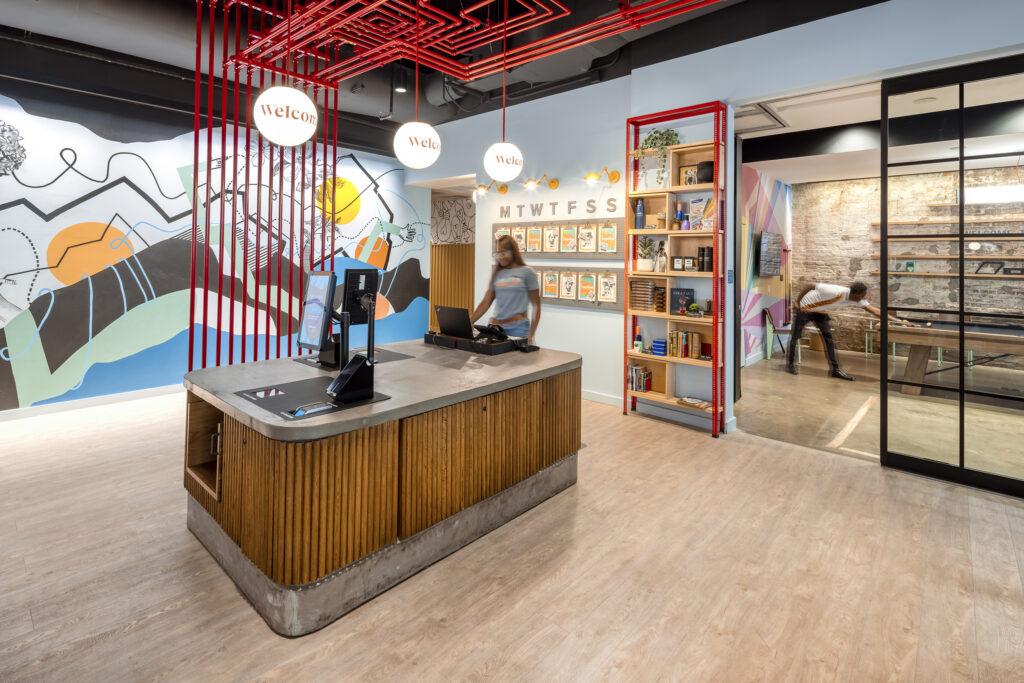
Milkovich adds: "The art of storytelling is redefining hospitality. Guests crave narratives that shape every aspect of their journey, from booking to departure."
Key Takeaways:
- Unique Branding: Fictional personas or cultural references—create memorable, cohesive brand stories.
- Local Integration: Leveraging neighborhood influences, such as street art or regional culinary themes, creates authentic connections.
- Consistent Messaging: Every touchpoint, from architecture to amenities, must reinforce the story and immerse guests in the experience.
________________________________________
Looking Ahead: Opportunities for 2025
"The year ahead promises growth, innovation, and creativity in hospitality design," says Peak. "HBG Design remains committed to staying at the forefront of these trends, helping clients achieve their vision while crafting spaces that inspire and endure."
By combining sustainable practices, cutting-edge technology, and emotionally resonant storytelling, HBG is creating destinations that not only meet guest expectations but exceed them—ensuring properties thrive in an ever-evolving market.
Let’s start the conversation about how these trends can elevate your next project. Reach out to our team at HBG Design to explore the possibilities.