
HBG Design Featured on No Vacancy: Why Casino Resorts Now Compete Like Destination Hotels
Regional casino resorts have evolved—and today’s most successful properties are no longer competing solely on gaming floors or square footage. They are competing as full-scale destination hotels, designed to extend stays, increase spend, and drive repeat visitation.
That shift is the focus of a recent episode of the No Vacancy podcast, hosted by Glenn Haussman with guest co-host Dr. Suzanne Bagnera, featuring HBG Design leaders Kelly DeVine, Principal, and Emily Marshall, NCIDQ, NEWH, IIDA, Principal and Interior Design Leader.
In the episode, Kelly and Emily discuss how design, operations, and profitability are inseparable in modern regional casino resorts—and why performance-driven design must start long before finishes and aesthetics are considered.
From Regional Casino to Destination Resort
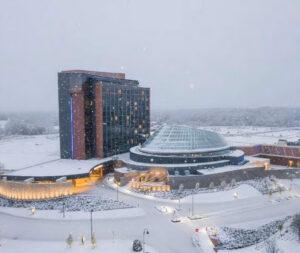 Using Gun Lake Casino Resort in Michigan as a case study, the conversation explores how regional gaming properties now compete with Las Vegas–style destination resorts. Guests expect more than gaming alone: hospitality, dining, entertainment, and thoughtfully designed hotel experiences all play a role in attracting longer stays and repeat visits.
Kelly and Emily emphasize that this evolution requires a fundamental shift in how projects are approached—one that prioritizes operational strategy and guest behavior from day one.
 Designing for Gaming Performance
 Designing for Gaming Performance
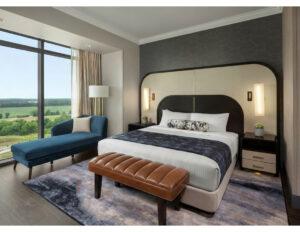
One of the key insights from the episode is how hotel design directly influences gaming behavior. Guest rooms must strike a careful balance: they should feel comfortable and welcoming, but not so indulgent that guests disengage from the casino floor and resort amenities.
This intentional approach ensures that the hotel supports—not competes with—the core gaming experience, reinforcing the overall business model of the resort.
Operations First: The Engine Behind the Experience
At HBG Design, successful casino resorts begin with operations. Kelly and Emily discuss why elements such as:
- Housekeeping flow and back-of-house efficiency
- Durability and material selection
- Turnover time and maintenance realities
are often more critical to long-term performance than purely visual considerations.
By designing the “engine” before the exterior experience, properties are better positioned to operate efficiently, control costs, and deliver consistent guest satisfaction over time.
Programming Spaces for Repeat Visitation
 Programming Spaces for Repeat Visitation
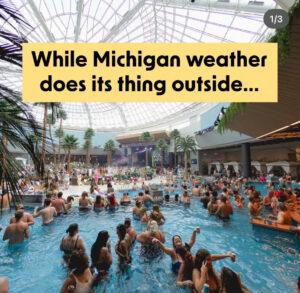
Beyond the hotel and gaming floor, the episode highlights the importance of programming spaces that keep guests coming back—especially local and regional visitors. Flexible entertainment venues, food and beverage offerings, and social spaces all contribute to building loyalty and extending engagement beyond a single visit.
Design as a Business Tool
 Ultimately, the conversation reinforces a core HBG Design philosophy: design is not a vanity exercise—it is a business tool. When design decisions are grounded in operations, guest behavior, and measurable outcomes, they can directly support revenue growth and long-term success.
We’re proud to see Kelly DeVine and Emily Marshall share their expertise on No Vacancy and contribute to an industry-wide conversation about performance-driven design in today’s casino resorts.
Listen to the full episode of No Vacancy: Episode 1009 – Why Casino Resorts Now Compete Like Destination Hotels to hear the complete discussion and insights.

Designing a Better Stay: Golden Mesa’s Guestrooms Set a New Hospitality Standard
At Golden Mesa Casino & Hotel, the guestrooms and suites were intentionally designed to do more than provide overnight accommodations—they were conceived as a strategic extension of the resort experience, supporting guest satisfaction, brand perception, and long-term value. For hospitality operators, these spaces demonstrate how thoughtful interior design can directly enhance a property’s competitiveness within its market.
 As part of the $78 million expansion, HBG Design approached the hotel tower with a clear objective: deliver guestrooms that feel warm, contemporary, and rooted in place, while aligning with the expectations of today’s resort guest. The result is a collection of rooms and suites that elevate comfort and atmosphere without unnecessary complexity—raising the design standard for hospitality in Oklahoma’s Panhandle.
A Cohesive Design Strategy from Arrival to Guestroom
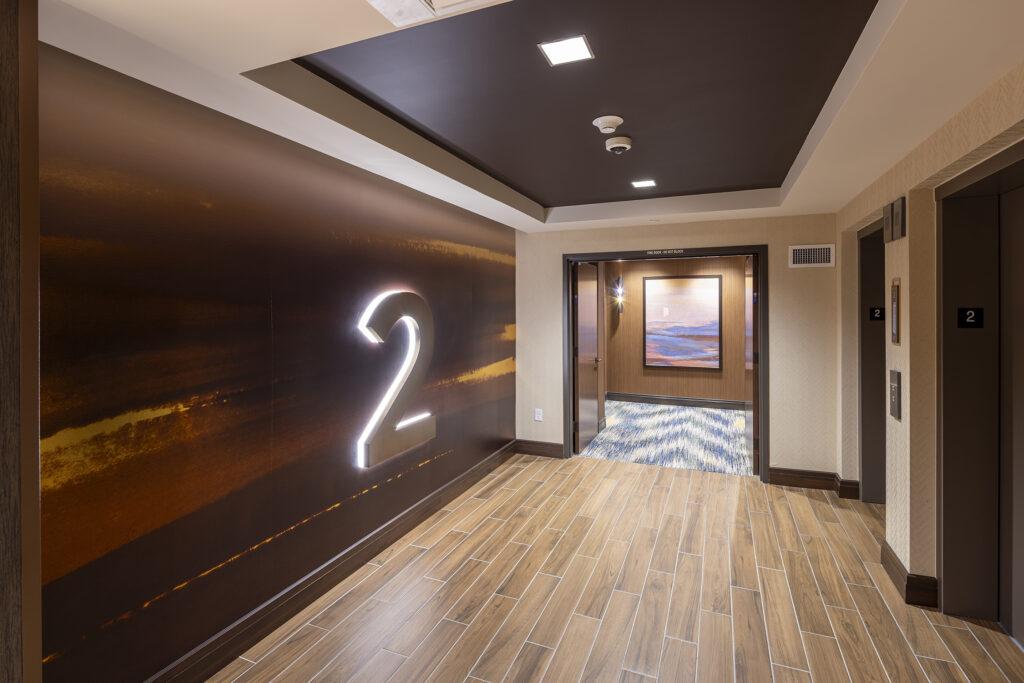
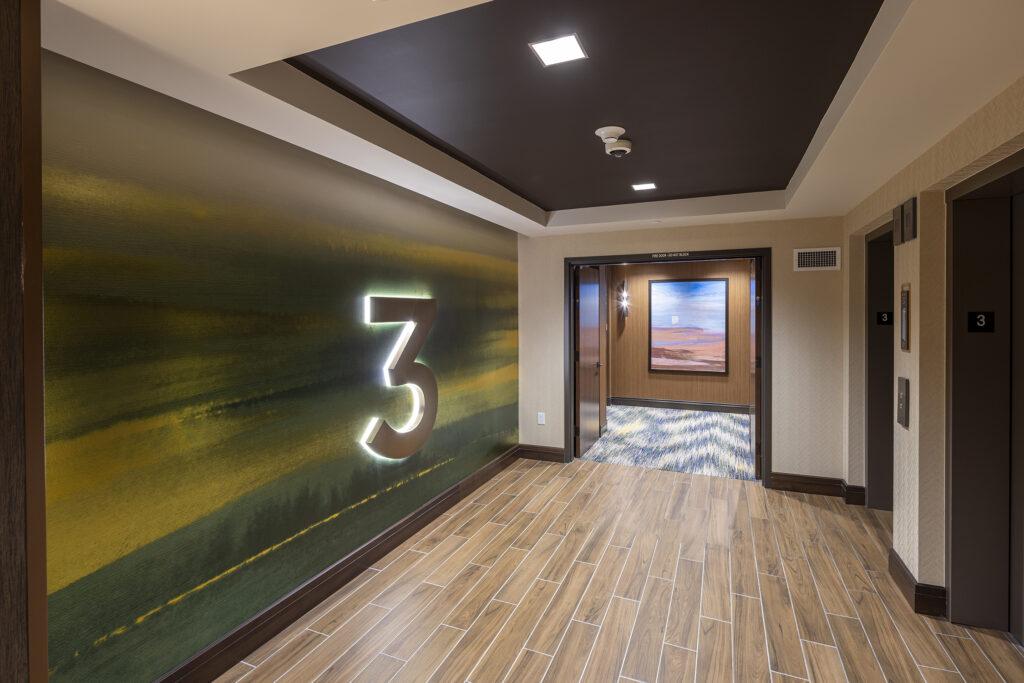
The guest experience begins well before the room door opens. Elevator lobbies introduce a subtle dusk-to-dawn progression through shifting wallcovering tones, guiding guests vertically through the tower and reinforcing a sense of journey and arrival. Guestroom corridors continue this narrative with ambient lighting and a warm, textural palette—setting a calm, welcoming tone that supports guest satisfaction and wayfinding.
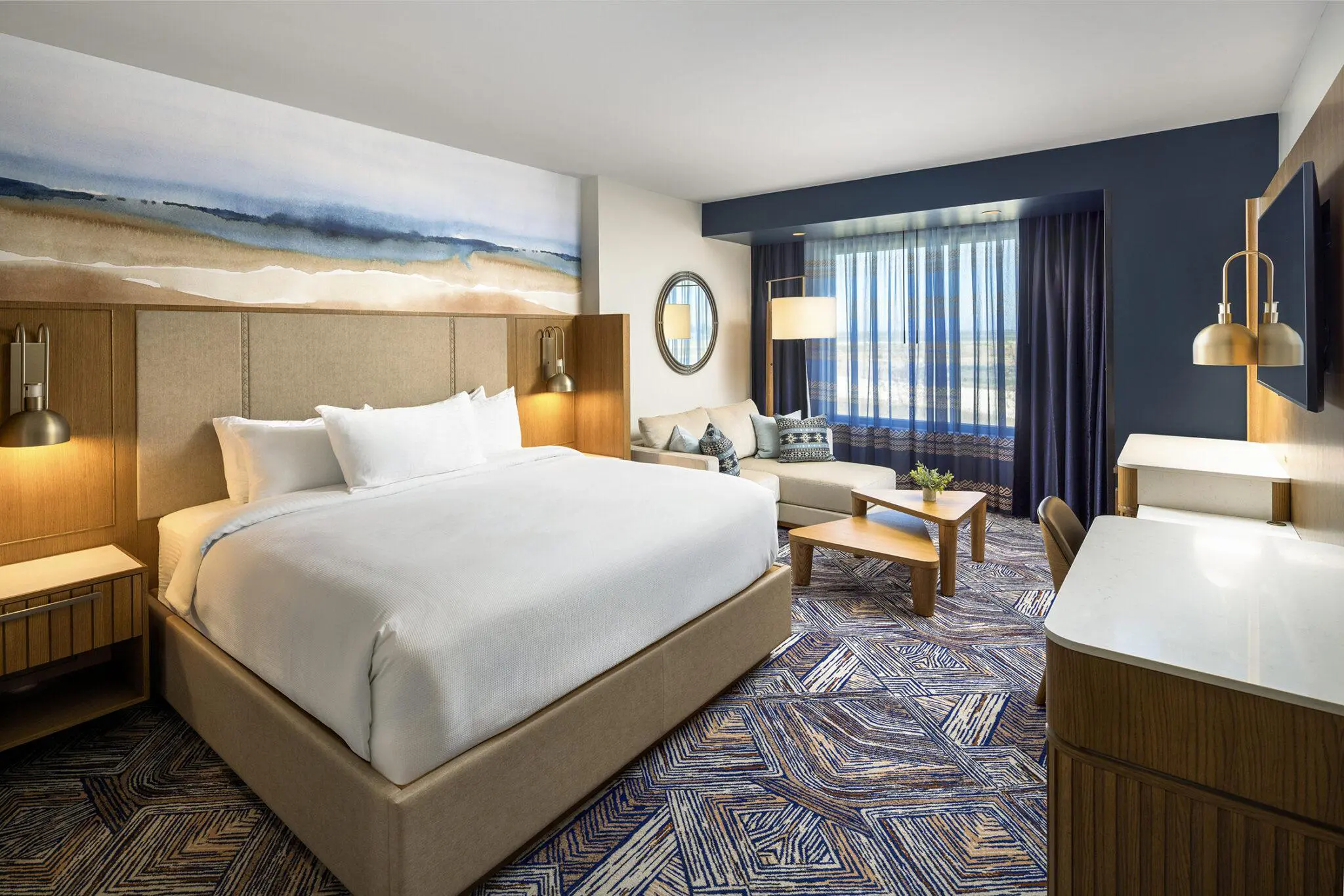
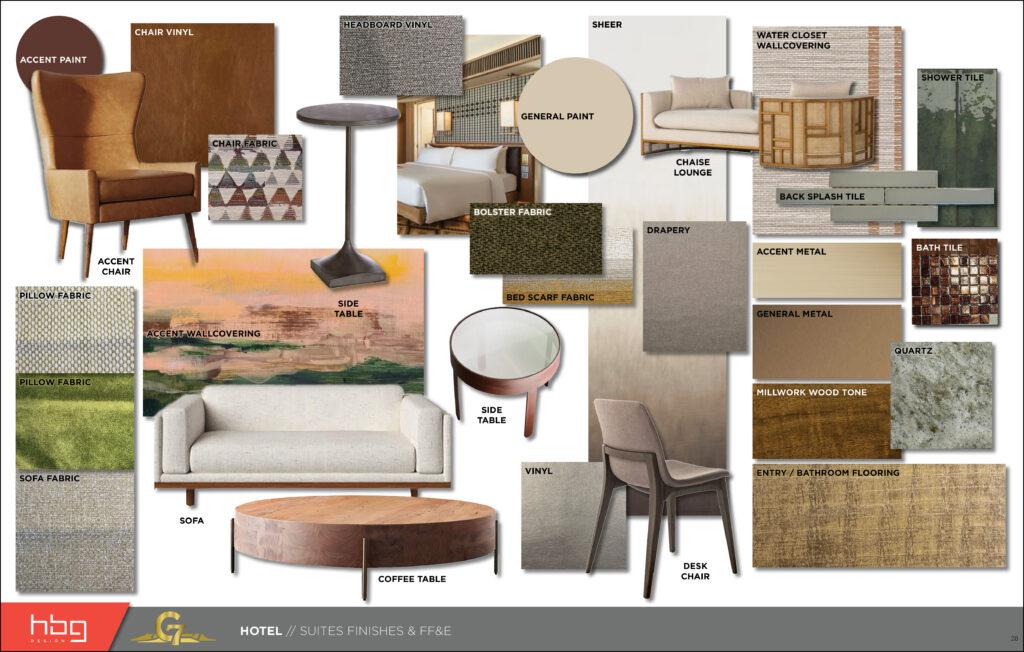
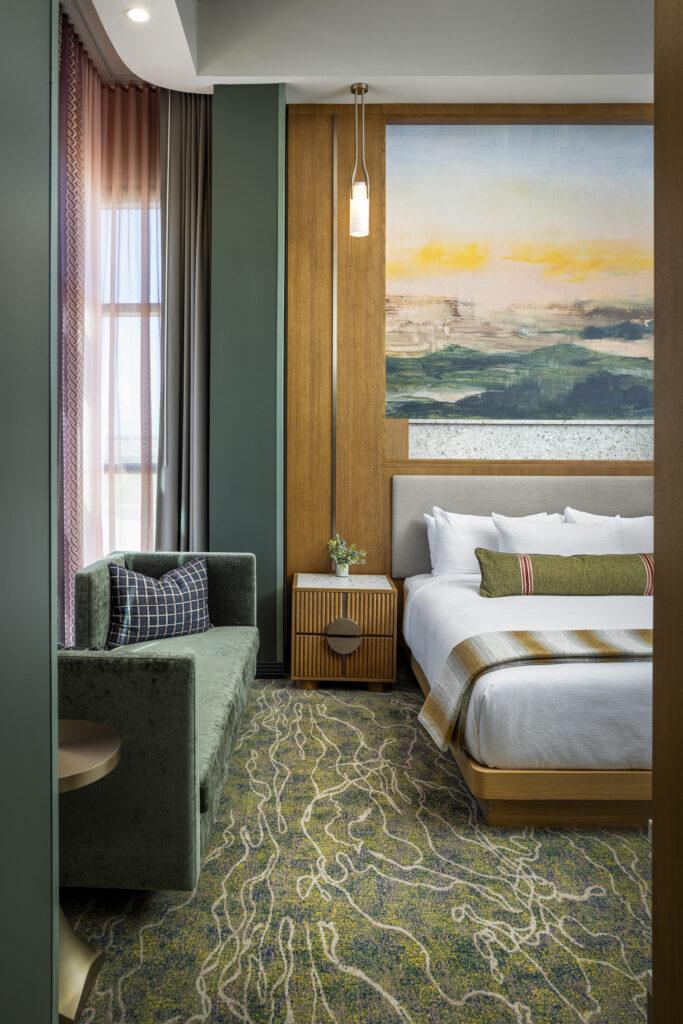
Inside the guestrooms, natural materials and a disciplined color strategy establish an immediate sense of comfort. Warm white oak millwork anchors the space, delivering durability, longevity, and a residential feel that resonates with today’s travelers. Custom headboard assemblies integrate upholstered panels and built-in reading lights, reducing visual clutter while enhancing functionality and ease of use.
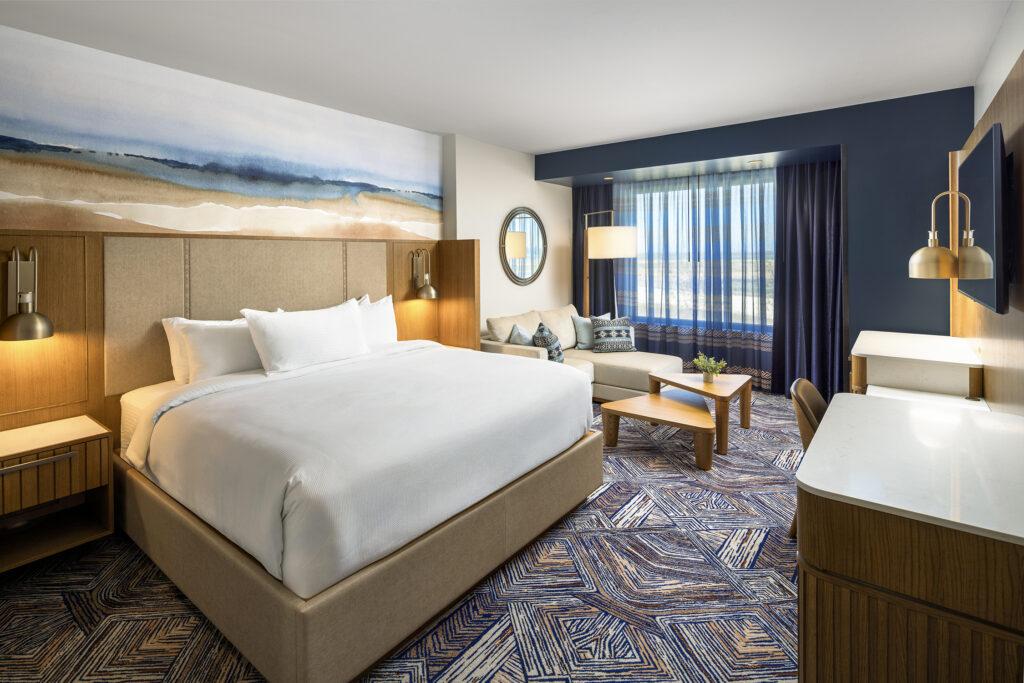
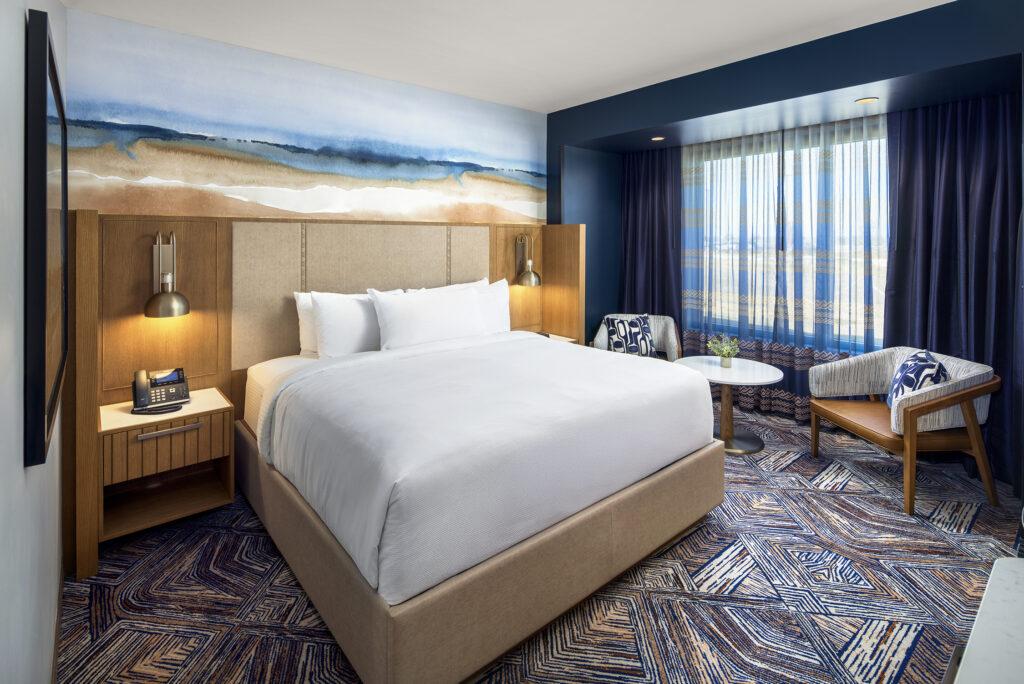
Above the bed, landscape-inspired artwork reflects the open skies and sunlit plains of the Panhandle through layered blues, soft whites, and sandy neutrals. Rather than literal theming, these elements provide a sense of place that feels authentic and timeless—supporting brand identity without limiting future adaptability.
“We focused on creating depth and contrast rather than relying on expensive gestures. By layering rich, saturated colors against warm wood tones and soft neutrals, we created guestrooms that feel calm, refined, and highly livable—spaces that elevate the guest experience while remaining efficient to build and maintain.”
— Chris Wood, Lead Interior Designer
Accent walls in deep, atmospheric blue tones add contrast and visual interest, framing seating areas and window views while giving the rooms a stronger sense of identity. Layered window treatments—sheer panels paired with blackout drapery—offer guests control over light, privacy, and comfort, a critical expectation in resort and casino hospitality.
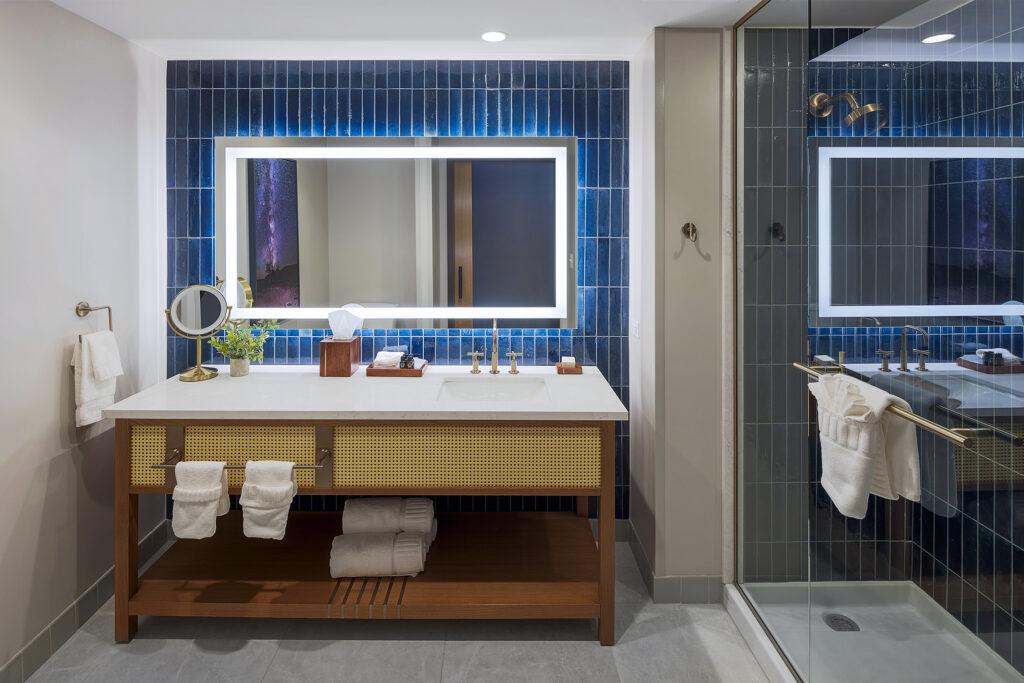
Custom-designed carpet introduces subtle movement through geometric patterns inspired by the surrounding landscape. The pattern adds energy and durability while visually tying the room together—an important consideration for high-traffic hospitality environments.
Lighting Designed for Comfort, Efficiency, and Atmosphere
Lighting was treated as a foundational design tool rather than a finishing layer. Integrated bedside sconces provide focused task lighting, while ambient and accent illumination shape the overall mood of the room. This layered approach supports both relaxation and functionality, allowing guestrooms to transition seamlessly from daytime retreat to evening sanctuary—enhancing guest comfort while supporting operational efficiency.
Suites Designed to Deliver Premium Value
Golden Mesa’s suites—offered in 1.5- and 2-bay configurations—were designed to meet the needs of longer stays, VIP guests, and premium players, while maintaining a strong sense of cohesion with the standard guestrooms.
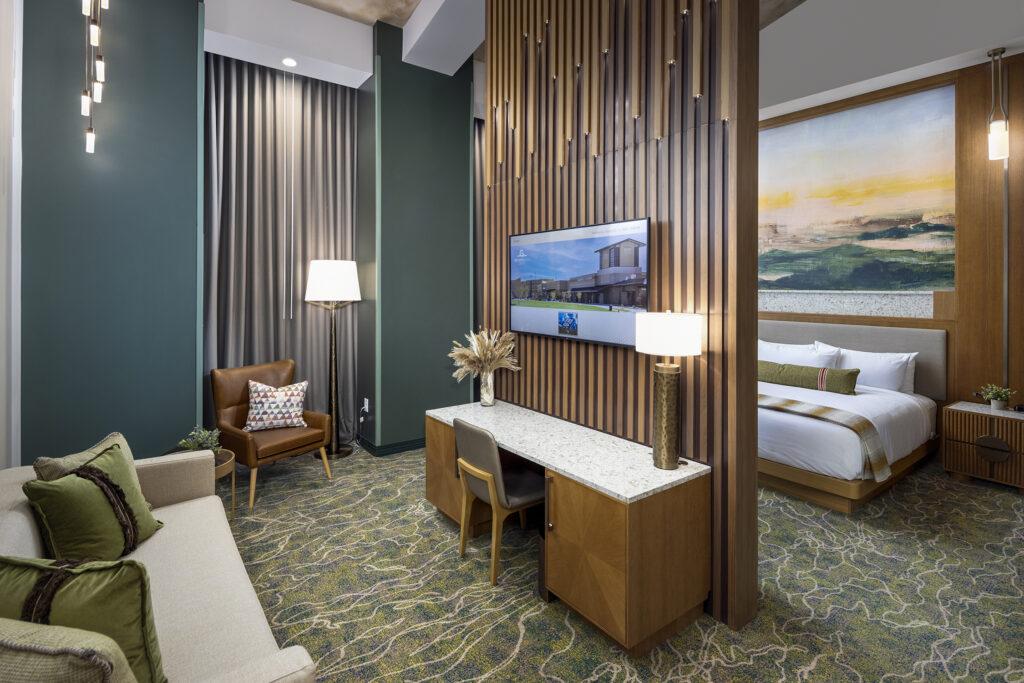 A defining feature is the solid white oak slat feature wall, which creates separation between living and sleeping zones without sacrificing openness. Integrated twinkle light detailing adds a refined, hospitality-forward moment—introducing visual interest, warmth, and a sense of occasion that elevates the suite experience without adding operational complexity.
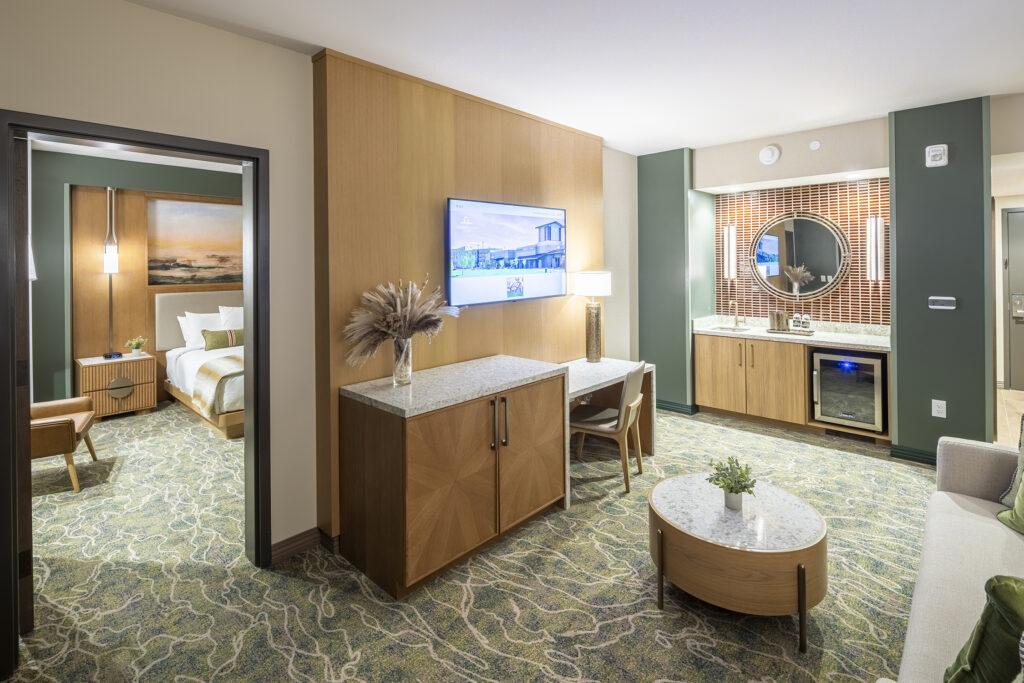 The suites introduce a deeper, more grounded color palette, with rich green walls that create a residential, intimate atmosphere. These tones are balanced by warm wood finishes, textured ceiling treatments, and tailored furnishings—enhancing the perception of value while maintaining a welcoming, approachable feel.
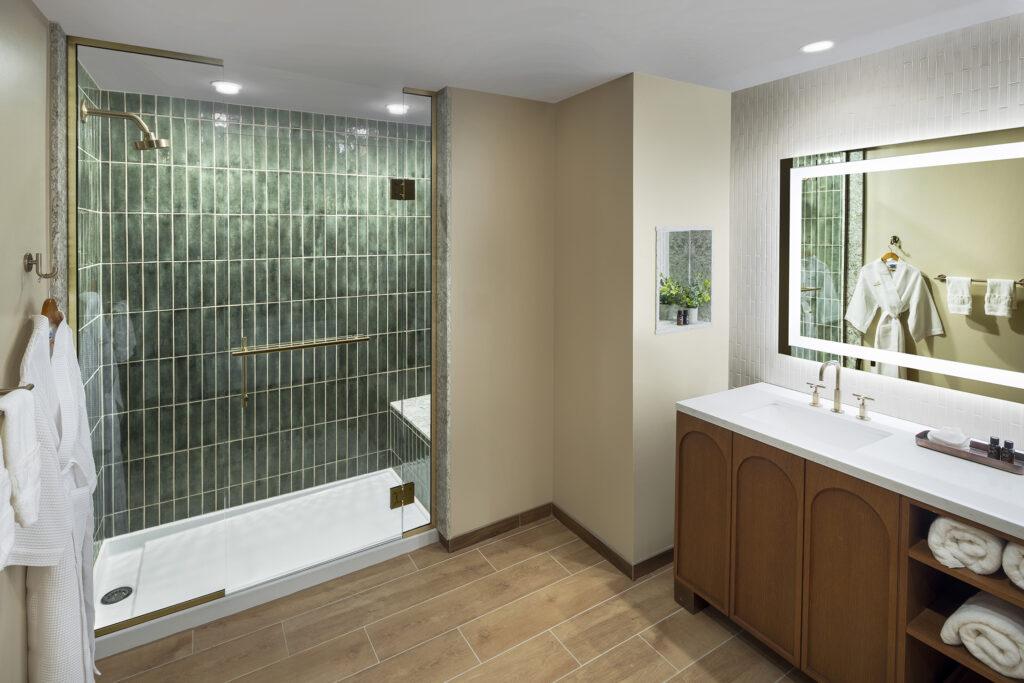 Custom millwork desks with stone-look surfaces provide flexible functionality for work or leisure, while curated lighting and accessories elevate the space beyond a typical hotel suite. In the bedroom, large-scale artwork continues the landscape narrative, reinforcing a consistent design story throughout the tower.
An organic-patterned carpet flows through the suite, visually connecting zones and reinforcing the natural inspiration behind the design—while offering durability and ease of maintenance for long-term operations.
Strengthening the Resort Through Guestroom Design
By investing in elevated guestrooms and suites, Golden Mesa Casino & Hotel strengthens the entire resort ecosystem. The hotel tower provides a refined counterbalance to the energy of the casino floor and entertainment venues, supporting longer stays, repeat visitation, and a broader guest demographic.
For hospitality clients, Golden Mesa demonstrates how strategic interior design—focused on materiality, lighting, durability, and sense of place—can enhance guest satisfaction, reinforce brand identity, and deliver long-term value. These guestrooms are not simply places to sleep; they are a critical component of the resort’s overall performance and positioning as a destination.
Guestroom and Suite Vendor List:
-
Casegoods: Custom white oak casegoods
Manufacturer: Distinction Hospitality -
Carpet: Custom-designed carpet
Manufacturer: Brintons -
Elevator Lobby Accent Wallcoverings: Textured wallcoverings
Manufacturer: Momentum Textiles & Wallcovering -
Guestroom Headboard Wallcovering: Custom wallcovering
Manufacturer: Astek -
Sheer Window Treatments: Custom tribal-pattern sheers
Manufacturer: Momentum Textiles & Wallcovering -
Guestroom Lighting: Decorative and architectural lighting
Manufacturers: Trinity Lighting and Laspec -
Illuminated Mirrors & Backlit Artwork:
Manufacturer: Spacia
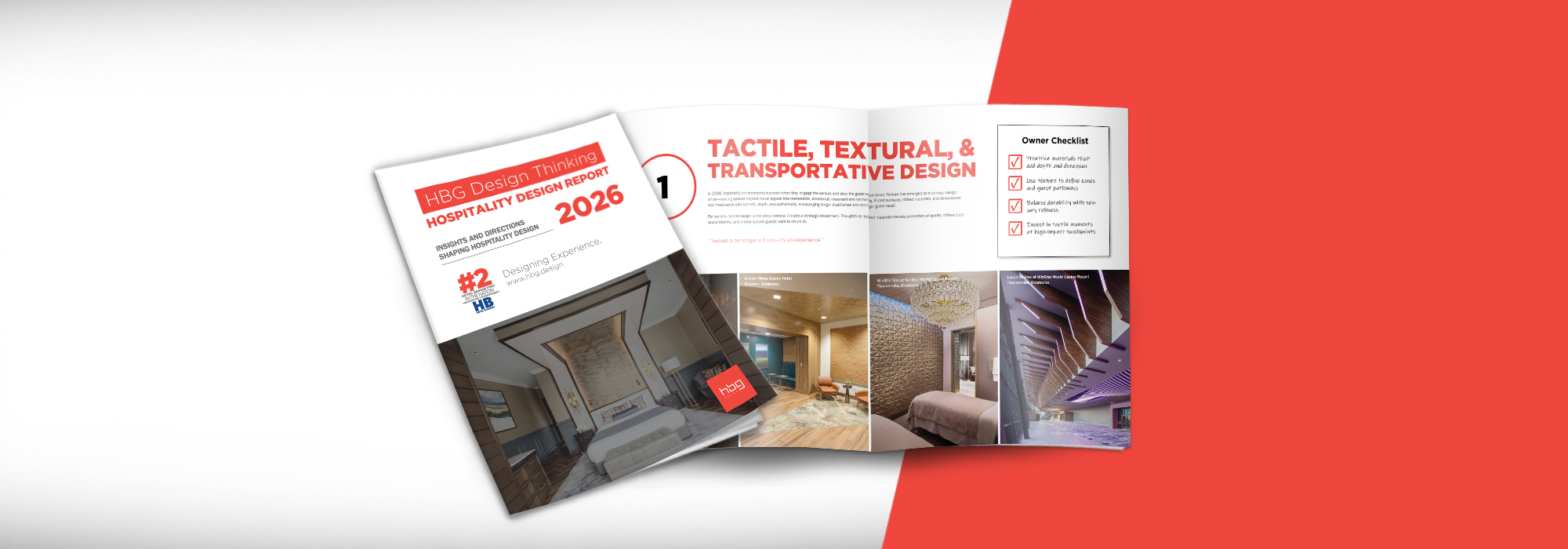
HBG Design Thinking: Hospitality Design Report
In 2026, hospitality design is all about creating immersive, memorable experiences that resonate with guests long after they leave. From boutique hotels to large-scale resorts and entertainment destinations, the bar for innovation has never been higher. HBG Design, ranked #2 Hospitality and Entertainment Design Firm in the U.S., by Hotel Business Magazine for 2026, has decades of experience translating industry insights into transformative guest experiences. This year, our team has identified the design thinking that will define hospitality experiences and drive both engagement and operational success.
You can download the full 'HBG Design Thinking' Hospitality Design Report here.
Social Wellness: Connection as the New Currency

Wellness has evolved beyond serenity and self-care—connection is now central to well-being. Guests increasingly seek shared experiences that foster community and engagement. HBG clients are already ahead of this curve, with co-ed hydrothermal lounges at WinStar Spa and hydrotherapy pools at MnoYé Spa at Gun Lake Resort. These spaces blend luxury, functionality, and social interaction, transforming wellness into a destination activity rather than a solitary experience.
Open Edge Environments
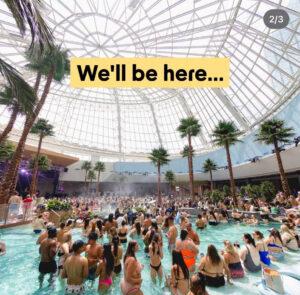
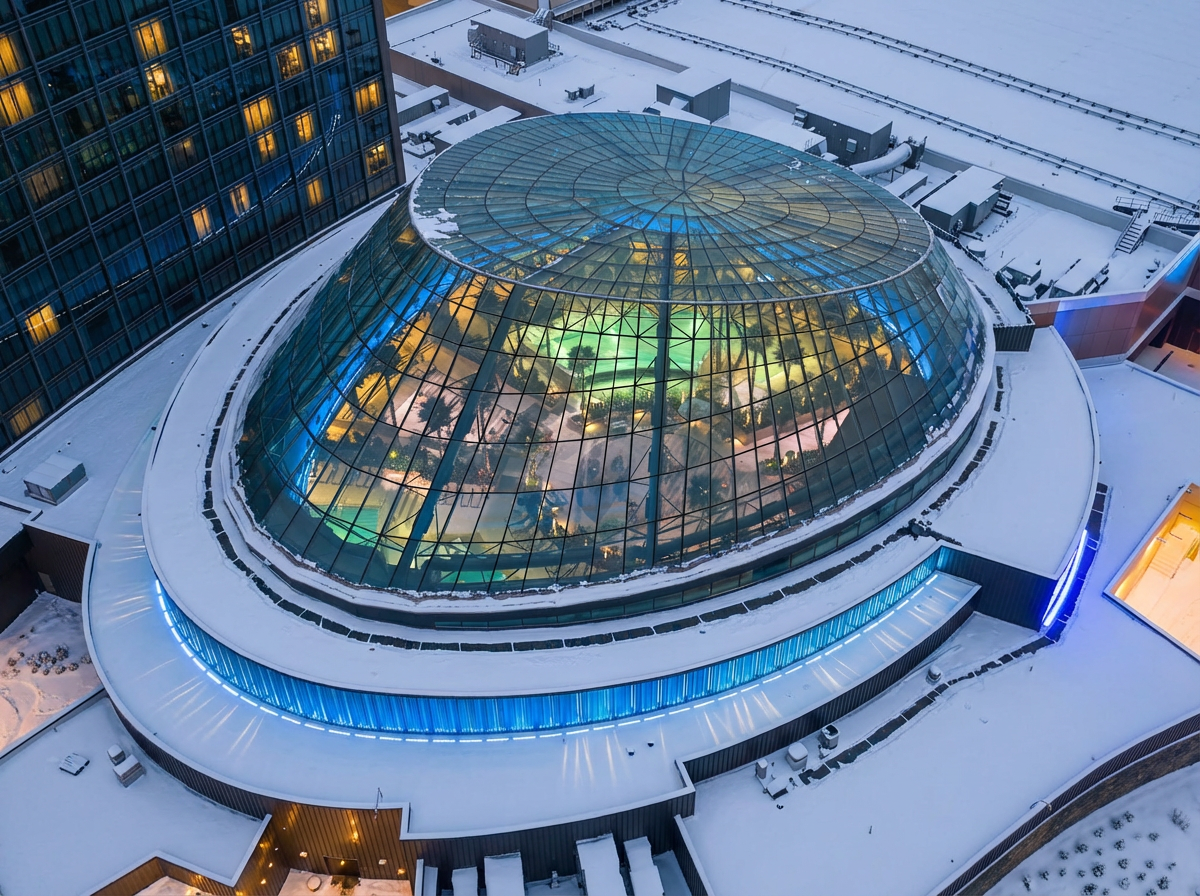
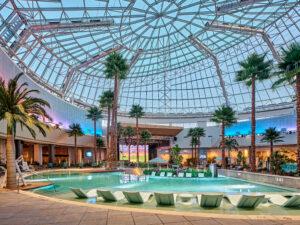
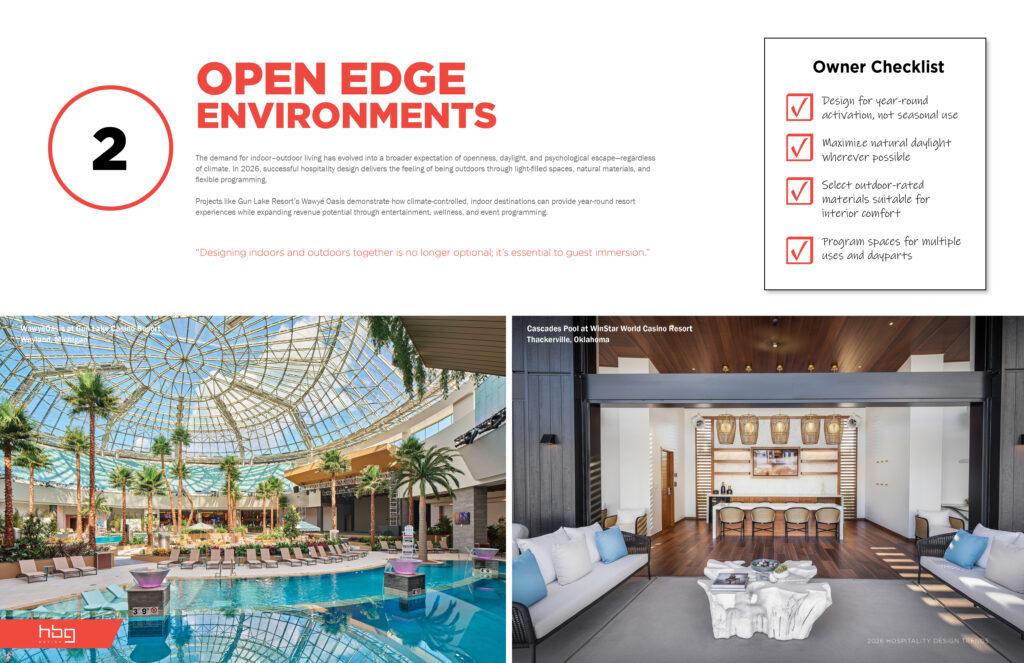 Seamless indoor–outdoor environments are no longer just a coastal luxury—they’re expected year-round, everywhere. The Wawyé Oasis at Gun Lake Resort exemplifies this trend, featuring a six-story glass dome that creates a tropical, light-filled escape in Wayland, Michigan. Guests enjoy the sensation of being outdoors while designers control climate, programming, and operational flexibility, proving that immersive environments drive engagement and revenue alike.
Maximalism with Meaning
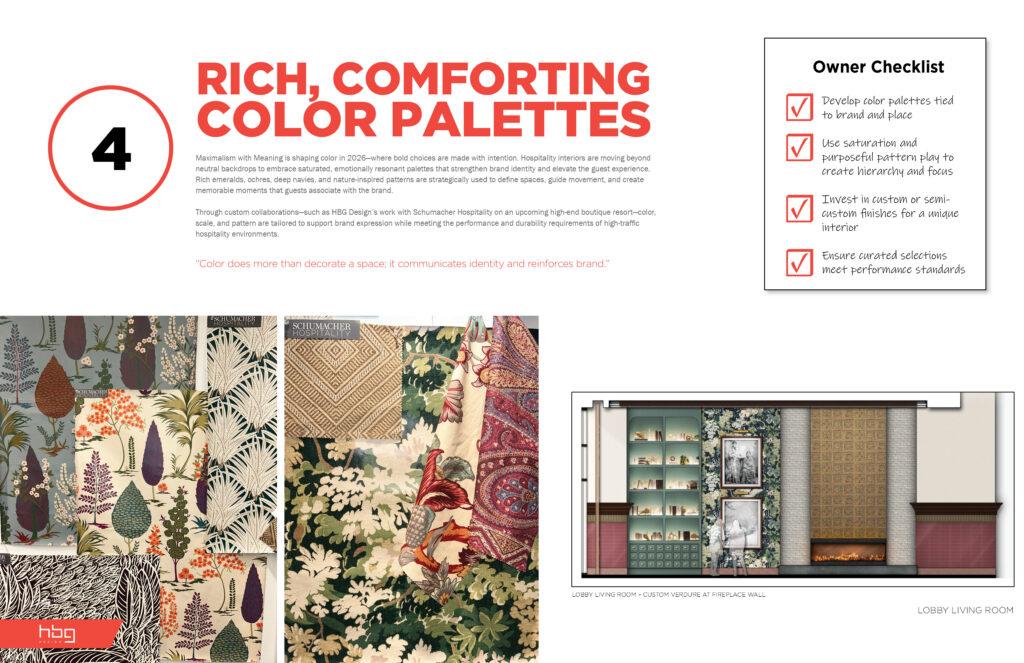 Color and material storytelling are taking center stage. For an upcoming boutique resort lobby, HBG Design collaborated with Schumacher Hospitality to transform iconic residential patterns into hospitality-grade fabrics and wallcoverings. Custom applications—from vibrant lobby wallcoverings to rooftop restaurant fabrics—combine durability with artistry, craft, and narrative inspiration drawn from the surrounding woodland landscapes and local industrial heritage.
Ready to explore all six trends in detail?
Download the full 'HBG Design Thinking' Hospitality Design Report to see more quotes, actionable owner checklists, and client case studies that bring these insights to life.

Project Delivery: Delivering Complexity with Confidence
Ensuring Design Intent for Large Scale Projects
At HBG Design, Construction Administration is not a back-end service. It is a core component of project delivery—bridging design intent and built reality. On large and technically demanding projects, Construction Administration becomes the engine that aligns teams and manages complexity from day one.
Embedded Specialization from Day One
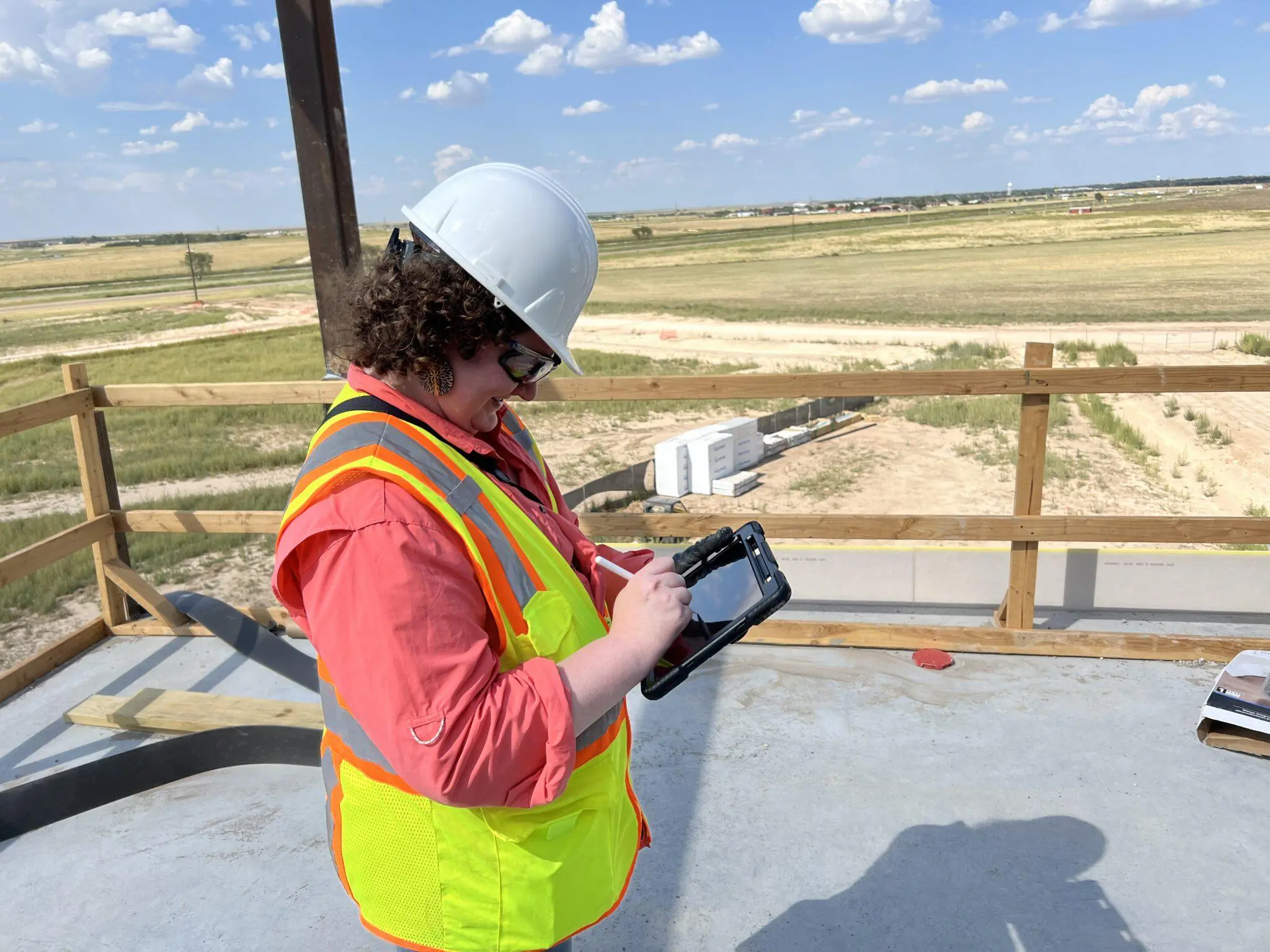
HBG provides dedicated CA representatives who bring deep casino and large-scale hospitality experience. Our CA leaders are fully embedded in the construction process—participating in coordination sessions to help ensure decisions are clearly documented, communicated, and implemented.
In the field, our CA representatives operate with a clear mandate: be visible, accessible, accountable, and solution-oriented. Site observation debriefs are conducted at the conclusion of each visit, enabling real-time discussion. This proactive communication helps resolve questions early, reduce downstream impacts, and reinforce trust across the project team.
Managing Change with Clarity and Control
Change is inevitable on complex projects. What matters is how it is managed. HBG’s CA team works to identify potential changes early, evaluate impacts to design, budget, and schedule, and present clear options so Owners can make informed decisions.
By closely monitoring RFIs, Submittals, and field conditions, our team minimizes ASIs and increases opportunities for clarity. When changes are approved, we focus on value-based solutions that maintain quality, protect design intent, and support overall project goals.
Closing Out with the Same Discipline
Construction Administration doesn’t end at substantial completion. HBG streamlines punch list documentation, allowing items to be recorded efficiently and consistently across the CA team—often with reports generated before leaving the site.
Our services also include reviewing pay applications, coordinating close-out documentation, and assembling complete record drawings, including building signage. Deliverables are provided in the format preferred by Ownership, supporting smooth turnover and long-term facility operations.
A Tropical Escape in the Heart of Michigan: The Wawyé Oasis
When winter grips Michigan in icy temperatures, guests at Gun Lake Casino Resort are now floating beneath a sunlit glass dome in a lush, 82-degree tropical paradise. Debuting in May 2025, the six-story, 32,000-square-foot Wawyé Oasis redefines what’s possible for year-round resort design—seamlessly shifting from daytime pool retreat to high-capacity concert venue, nightclub, and banquet space. Shaped by solar studies and engineered as a massive glass “sundial,” the Oasis is both sculptural and supremely functional, capturing natural daylight while shielding guests from the region’s harsh climate.
As the architectural and experiential centerpiece of Gun Lake’s $300 million expansion, the Oasis anchors a new 252-room hotel and full-service spa—establishing the resort as a true “daycation” destination for guests across Michigan and major Midwest markets. From bird-safe, low-E glass and climate-responsive HVAC systems to flexible acoustics, dynamic lighting, and thoughtfully zoned guest experiences, every element was precision-engineered to support comfort, performance, and unforgettable entertainment.
The result is more than a building—it’s a fully immersive, adaptable environment where architecture, engineering, and guest experience converge in spectacular fashion.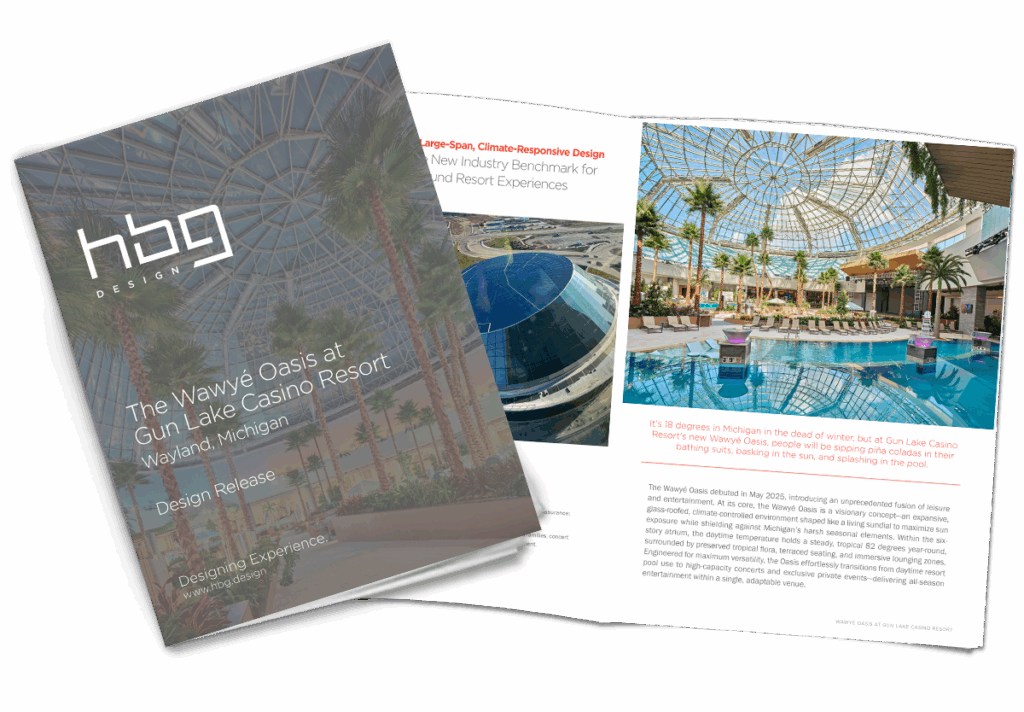
▶ Watch the full design thinking video to explore the innovation behind the Wawyé Oasis—and flip through the complete Project Design Release for detailed insights into the architecture, engineering, sustainability strategies, and guest experience that bring this extraordinary destination to life.

A New Era of Entertainment Rises in the Oklahoma Panhandle at Golden Mesa Casino & Hotel
Warmth, Light, and Modern Comfort: A New Era of Entertainment Rises in the Oklahoma Panhandle at Golden Mesa Casino & Hotel, Guymon, Oklahoma
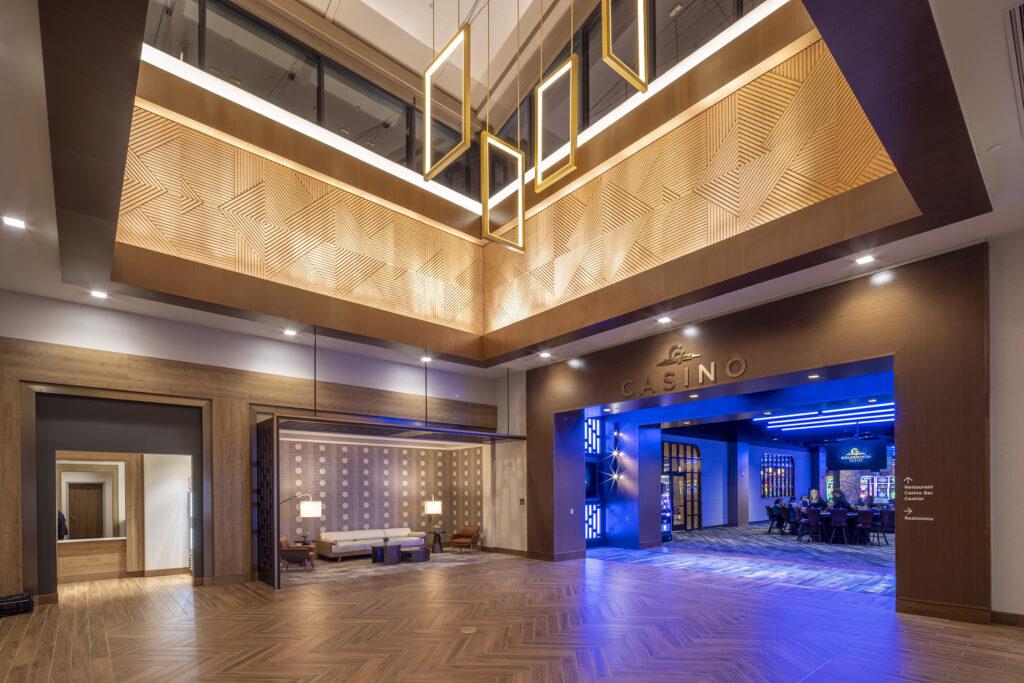
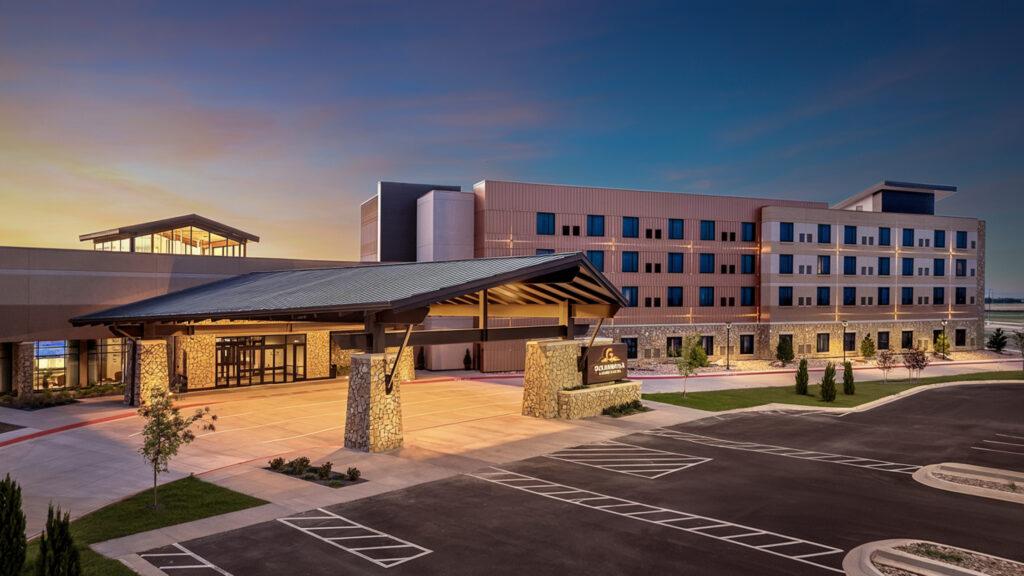
The $78 million expansion of Golden Mesa Casino & Hotel has redefined entertainment and hospitality in Oklahoma’s Panhandle, transforming the Shawnee Tribe’s vision into a vibrant destination that celebrates both culture and community. The project doubles the casino’s gaming capacity to more than 1,100 electronic games and 10 tables across a 40,000-square-foot gaming floor, introduces a 99-room hotel and a 45-slip RV park, and adds new dining and lounge experiences that elevate guest comfort and connection. From the Cimarron Ridge Restaurant and Panhandle Press Café to the dynamic high-limit room and two lively casino bars, every new space was purposefully crafted to enrich the guest journey and offer a warm, contemporary sense of hospitality.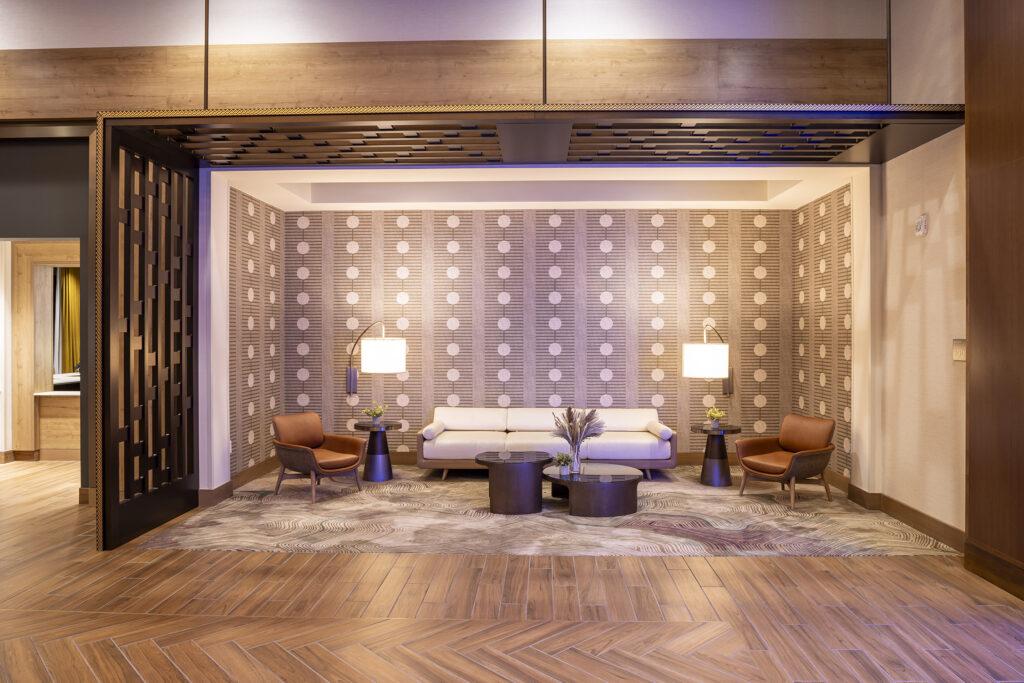
Across the new hotel tower, the elevator lobbies introduce a subtle thematic progression—each level reflecting a “dusk-to-dawn” concept through shifting wallcovering tones. Guestroom corridors extend this narrative with soft, ambient lighting and a warm, textural palette. Inside the guestrooms and suites, neutral foundations pair with bright accents inspired by the region’s open skies and sunlit plains, creating spaces that feel both grounded and refreshingly modern.
 Lighting plays a defining role in shaping the atmosphere of Golden Mesa—both as a functional tool and an expressive design element. The exterior façades feature a distinctive cross-weave illumination that animates the architecture at night, while the lobby’s soaring atrium showcases a glowing geometric chandelier that sets an elegant tone for arrival. Throughout the property, lighting transitions seamlessly between hospitality and entertainment zones, guiding guests from calm to energy, from relaxation to anticipation. Every glow and reflection reinforces the resort’s identity as a destination that subtly shifts in mood from day into night.
 Architecturally and operationally, the expansion embodies graceful growth—an evolution of the property’s design that preserved full operations throughout construction while introducing a new benchmark for resort-style amenities in the region. Warm yet contemporary prairie-inspired materials, the dramatic new porte cochere, and the signature nighttime lighting pattern establish a welcoming exterior presence; while inside, the clearstory hotel lobby, geometric fixtures, and rich layers of color and texture create an atmosphere of approachable comfort and elevated luxury. Together, these elements position Golden Mesa Casino & Hotel as a beacon of progress and pride for the Shawnee Tribe and a standout destination for travelers across the Panhandle.
 Delivering a project of this scale on time and on budget required extraordinary coordination between the owner, operator, and design and construction teams. HBG Design’s ability to anticipate operational needs and sustain continuous functionality was essential to the project’s success. The team’s challenge was to merge the new with the existing without visual or functional disruption—an effort that highlights the depth of talent within HBG’s architecture and interior design studios and the strength of collaboration with Global Gaming Solutions, Connect Advisors, and the Chickasaw Nation.
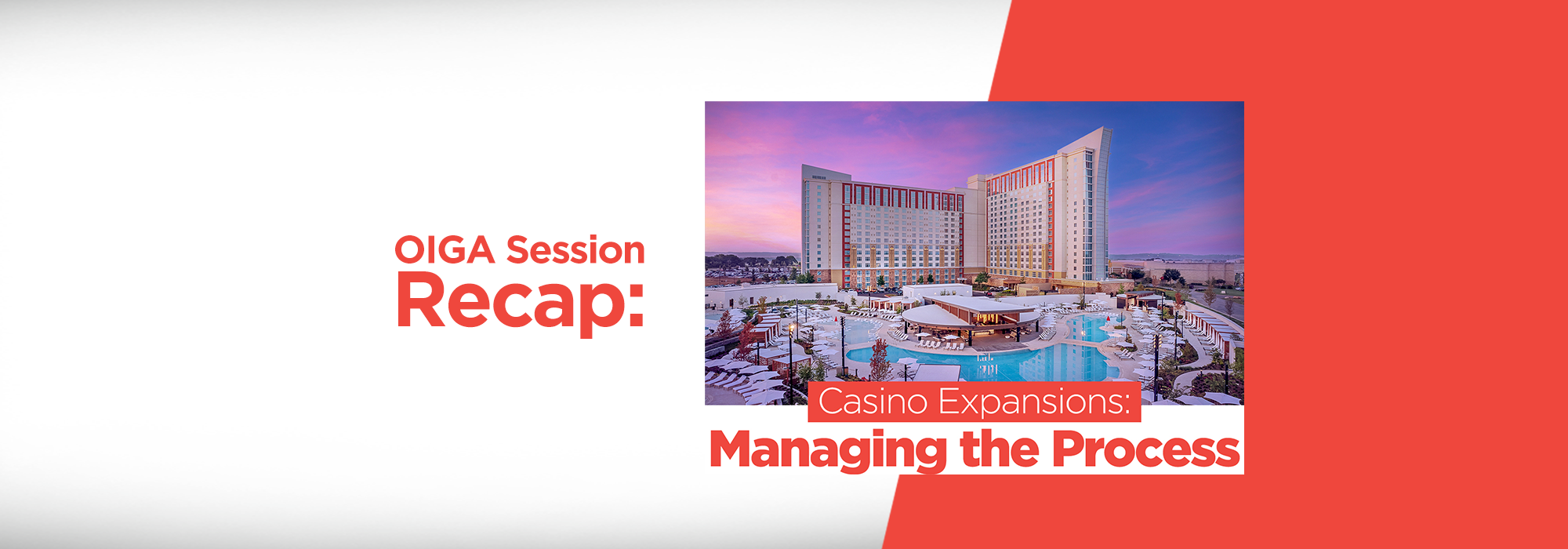
Tribal Casino Expansion Insights from OIGA 2025
 By Ray Mabry, AIA | Principal & Dallas Office Leader, HBG Design | Member, Citizen Potawatomi Nation
Couldn’t make it to my session at OIGA 2025? No worries—I’m recapping the key takeaways on tribal casino expansion and smart resort growth strategies right here.
Building for Generations: Smart Expansion Strategies
When we talk about tribal casino expansion and resort development, we’re not just talking about new construction—we’re talking about legacy. For tribal nations, each expansion project carries long-term implications, shaping communities and economies for generations. That’s why smart expansion planning must be guided by data, rooted in cultural values, and driven by a clearly defined economic vision.
At HBG Design, we’ve helped tribal clients across the country navigate every stage of the expansion process, from master planning to construction to grand opening. What we’ve learned: successful growth doesn’t happen by accident. Casino expansion takes strategy. It takes discipline. And it requires an aligned, experienced team working from a unified vision.
When it’s time to grow, these are the expansion insights worth keeping close:
✔ Long-term, generational vision
✔ A master plan rooted in feasibility and customer data
✔ Aligned teams from day one
✔ Smart phasing that leverages revenue
✔ Operational continuity during construction
✔ Seamless guest experience
✔ Cohesive brand expression
From “Slot Halls” to Super-Regional Destinations
Across the country, we’re seeing a clear evolution: tribes are transforming compact, gaming-focused venues into full-fledged destination resorts that compete on the national stage. Guests don’t need to fly to Vegas anymore. They’re looking for upscale, high-touch experiences closer to home. That’s a huge opportunity, especially in markets like Dallas/Fort Worth.
WinStar World Casino Resort in Thackerville, Oklahoma, about 90 minutes from the DFW market, is a prime example. What began as tent gaming and a supporting hotel has grown into a 12,000+ machine, multi-hotel, entertainment-packed mega-resort. Every move—whether it was efficiently positioning non-gaming amenities off-trust to maximize the trust footprint or phasing infrastructure upgrades—was driven by long-term planning. And that kind of future-focused thinking continues to pay off.

Learn from the Past. Plan for the Future.
Not every property starts fresh. Many tribal projects come with inherited issues—aging infrastructure, dated additions, and lack of long-term phasing. That’s where we roll up our sleeves. HBG teams help our clients untangle those complexities—from reworking site sequencing, opening sight lines to revenue-generating spaces, and modernizing infrastructure so it supports what’s next.
Expansion is our chance to fix what’s not working and create something that lasts.
A Master Plan Built for the Long Haul
Our approach to master planning is grounded in data and adaptability. We always start with feasibility studies, market demand, and customer trends. It’s how we know what’s viable now, and what will pay off five phases from now.
One of the best examples of strategic planning and phasing is Gun Lake Casino Resort in Michigan. That project didn’t happen all at once. It was phased carefully over time. But the vision was always clear: become a premier resort destination.
That’s how Wawyé Oasis came to life. What started as an Owner concept grew into a fully enclosed, all-season pool and event venue. The HBG team took our experience designing large-scale, climate-controlled atriums like those at Gaylord Texan and Palms Resorts and created something iconic, efficient, and uniquely suited to Gun Lake’s brand.
And because we respected the existing material palette while enhancing it, the old and new spaces now feel completely cohesive. That’s good design, and it keeps working long after the grand opening.
Guests Feel the Disconnect—So Fix It Before They Do
You can have the flashiest new expansion in the world, but if it doesn’t connect with the rest of the property, guests will notice, and not in a good way. Disjointed spaces dilute the brand and disrupt the flow of the experience.
That’s why we never treat expansions like standalone projects. We zoom out and look at the full property story. For many tribal resorts, that means addressing inherited quirks, for example, outdated infrastructure, awkward additions, or site plans that don’t quite add up. We help bring clarity by reworking circulation, upgrading aging systems, and opening up sight lines to showcase the amenities that drive revenue.
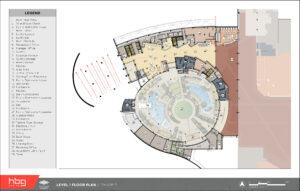
We’ll also typically recommend setting aside 5–10% of the FF&E budget to refresh adjacent spaces during expansion. Just a few updates to lighting, finishes, and furnishings can bring everything into harmony. At Gun Lake, this strategy helped us unify the new hotel and entertainment venues with the existing gaming floor, making the whole property feel seamless and elevated.
Align Early. Avoid Surprises. Build Smarter.
But one of the biggest cost drivers I see? Misalignment between stakeholders. If your design, construction, and operations teams aren’t aligned from the beginning, you’re most likely going to hit delays, budget issues, and rework.
Early integration into the process is always a good idea. We build collaborative workflows. We align schedules. And we make sure that all voices and perspectives are at the table from day one. That’s how we keep vision, program, and design intent as the roadmap, timelines on track, and help protect the project’s bottom line—setting the entire project up for smarter, more efficient delivery.
Phase with Purpose. Protect the Guest Experience.
This rule is simple: never let construction get in the way of your guests. If you lose satisfaction and revenue during the build, you’re working against the very success you’re trying to create. Smart phasing keeps the heart of your property beating while setting the stage for what’s next.
Phasing isn’t just a construction strategy, it’s a critical part of protecting your operation and your bottom line. That’s why we develop detailed, team-driven phasing plans to keep key spaces open, maintain guest flow, and ensure revenue keeps rolling in.
The Takeaway: Expansion Is Legacy
There’s no one-size-fits-all formula for expansion design. But when you begin with the right questions—and plan intentionally for where you want to be 10 to 20 years from now—expansion becomes something greater. It becomes transformation.
Because in the end, success isn’t just about what opens tomorrow. It’s about what still delivers value a decade down the line. And that’s the kind of legacy we’re here to create.
Smart Strategies for Casino Expansion in a Changing World
As Seen in Casino Design Magazine: "Nips, Tucks, Dollars, & Cents" - HBG's Strategies for Casino Expansion in Today's Changing World
In a time of record-setting gaming revenues but persistent economic headwinds, the stakes for casino resort development have never been higher. That’s why we're proud to share that HBG Design President Nathan Peak is featured as a key voice in Casino Style Magazine’s latest article, “Nips, Tucks, Dollars & Cents,” exploring how savvy operators and designers are rethinking renovation and expansion strategies in today’s unpredictable environment.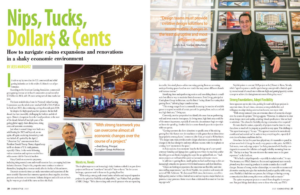
 The article outlines how operators across the country—both commercial and tribal—are navigating inflation, shifting tariffs, labor challenges, and supply chain unpredictability. Nathan Peak offers insight into how HBG Design is helping clients move forward with confidence through phased development, data-driven flexibility, and proactive sourcing strategies. As Nathan notes,
“Flexibility is built into our process, but it hinges on having a strong communication chain among the owner, architect and contractor.”
With a deep portfolio of hospitality and gaming projects across the U.S., HBG Design is uniquely positioned to guide clients through capital investment decisions that balance guest experience with economic resilience. Whether it's identifying high-performing zones within a casino footprint, maximizing revenue-generating amenities, or phasing construction to match market conditions, our integrated team of architects, interior designers, and procurement experts helps clients transform challenges into opportunities.
Read the full article to learn how HBG Design is shaping the next generation of resort experiences.
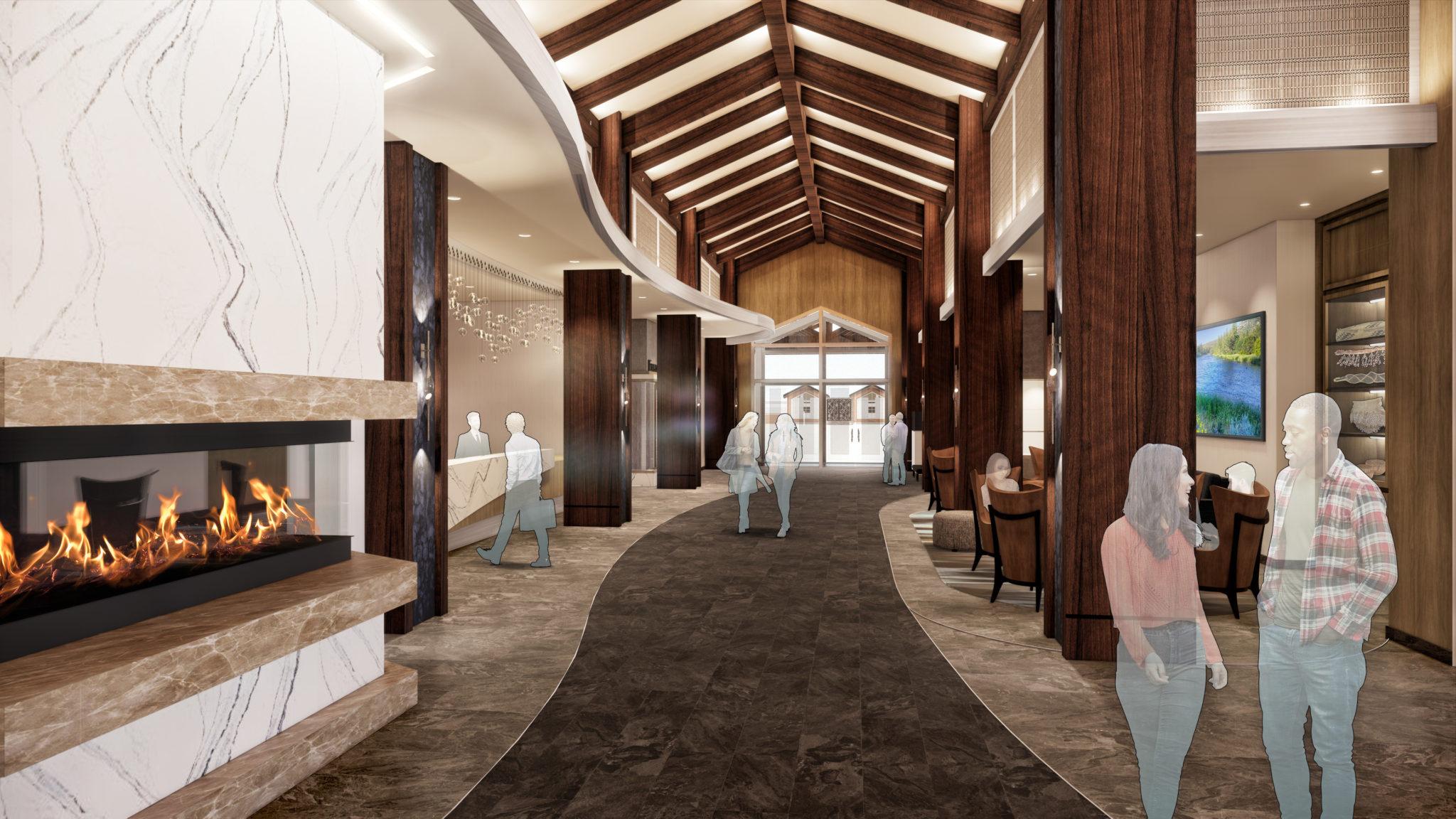
Rain Rock Casino breaks ground on new addition
KDRV NewsWatch 12 covered the Ground Breaking Ceremony.
Updated
Yreka, CA - Today the Rain Rock Casino in Yreka broke ground to begin its transformation from a pit stop casino to a travel destination. The future of the casino will provide more stability to Siskiyou County and the Karuk Tribe.
The project is being designed by HBG Design, a nationally recognized entertainment design firm.
Projected to be complete in 2024 the Rain Rock Resort will feature more than 80 rooms, VIP cabins, a luxurious pool, and a convention center. Mayor of Yreka Duane Kegg says the addition will create more jobs and circulate more money into the city of Yreka.
“For every dollar spent in Yreka, 75% will be will get recirculated back into this community so it’s huge. For them to expand on this just means more value for the city of Yreka. Bringing people that would not normally stop in Yreka are now stopping in Yreka so it’s huge all the way around,” says Kegg.
This addition will create a better sense of community and develop economic growth for Siskiyou County. changing the city in a very positive way. Chairman for the Karuk Tribe Buster Attebery says they need jobs in Siskiyou County and the building of this resort can help be a solution.
Rain Rock breaks ground - Rain Rock Casino shares their vision for an expanded gaming destination.
“It’s a great opportunity to create more jobs in Siskiyou County and more opportunities for the people who live here and the people that want to come back to this beautiful place,” says Attebery.
According to the Mayor, the small town will explode with this destination resort, it will help with tourism and expose the beauty of northern California.
Attebery says this project will be a positive change for the county, community, and tribe. “The ultimate goal is to make Siskiyou County and the city of Yreka a better place and make some contributions to those efforts and most of all a way of self-sufficiency for the Karuk Tribe,” says Attebery.
This addition would allow the tribe to be more self-sufficient and self-governing. Bringing economic support to the community and Siskiyou County overall. They hope this project will turn the city and casino from a pit stop to a full-on travel destination.
Rain Rock breaks ground
