Beauty & Purpose: Smart Resort Reinvestments

In a gaming landscape defined by constant evolution, long-term success depends on the ability to adapt with intention. As explored in Global Gaming Business’s recent feature, “Beauty, Purpose & Smart Resort Reinvestments,” leading operators are embracing reinvestment as a strategic tool to strengthen market position and elevate the guest experience.

Read the full article

At Rain Rock Casino Resort, this approach takes shape through a reinvestment strategy rooted in authenticity, operational continuity, and a strong sense of place.

A Design Vision Grounded in Place

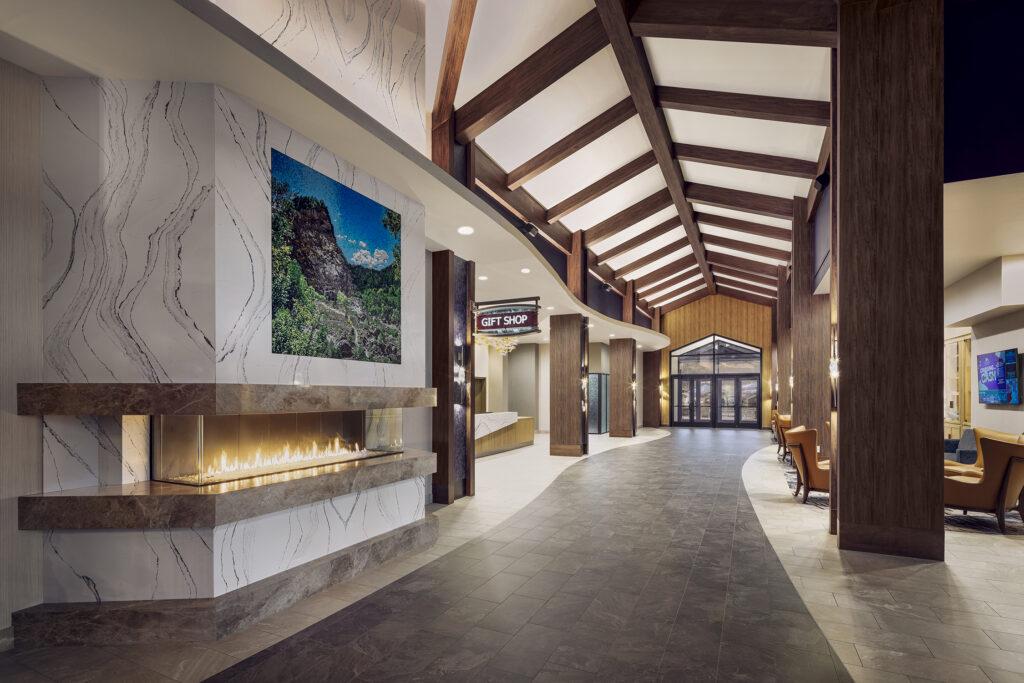
Owned and operated by the Karuk Tribe, Rain Rock Casino Resort occupies a unique position within Northern California’s Siskiyou landscape. The property’s recent expansion builds upon that identity, drawing inspiration directly from the land, water, and cultural heritage that define the region.

"We want the design and amenities to resemble the land and river, like what a salmon might see on his journey upstream!"

A guiding insight from the Tribe—envisioning the environment through the perspective of salmon navigating upstream—became a foundational design principle. This concept informed a cohesive experience across the property, shaping both spatial planning and material expression.

The result is an environment that feels immersive, intentional, and inherently connected to its surroundings.

Expanding the Resort Experience

Completed in 2025, the $40 million expansion introduces a series of enhancements designed to broaden the resort’s appeal while maintaining a clear design narrative.
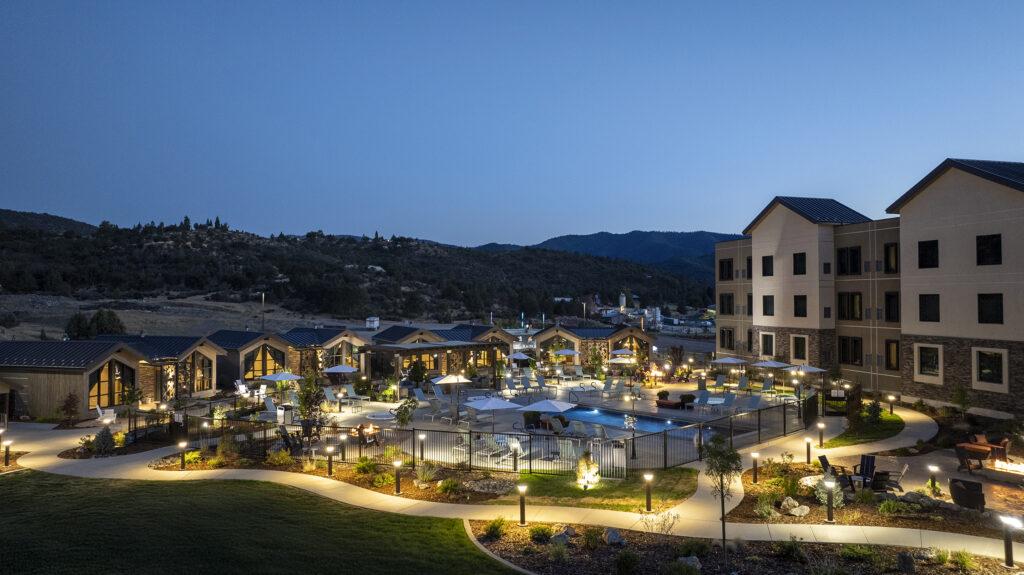
A collection of lodge-style cottages anchors the guest experience, offering a more intimate and residential scale of hospitality. Organized around an outdoor lounge pool with fire features and shaded gathering spaces, these accommodations reflect a balance of regional authenticity and elevated comfort.

Throughout the property, design elements reinforce a cohesive story:

  • Natural material palettes that reflect the surrounding terrain
  • Architectural forms influenced by the movement of water and landscape
  • Integrated opportunities for cultural storytelling and interpretation

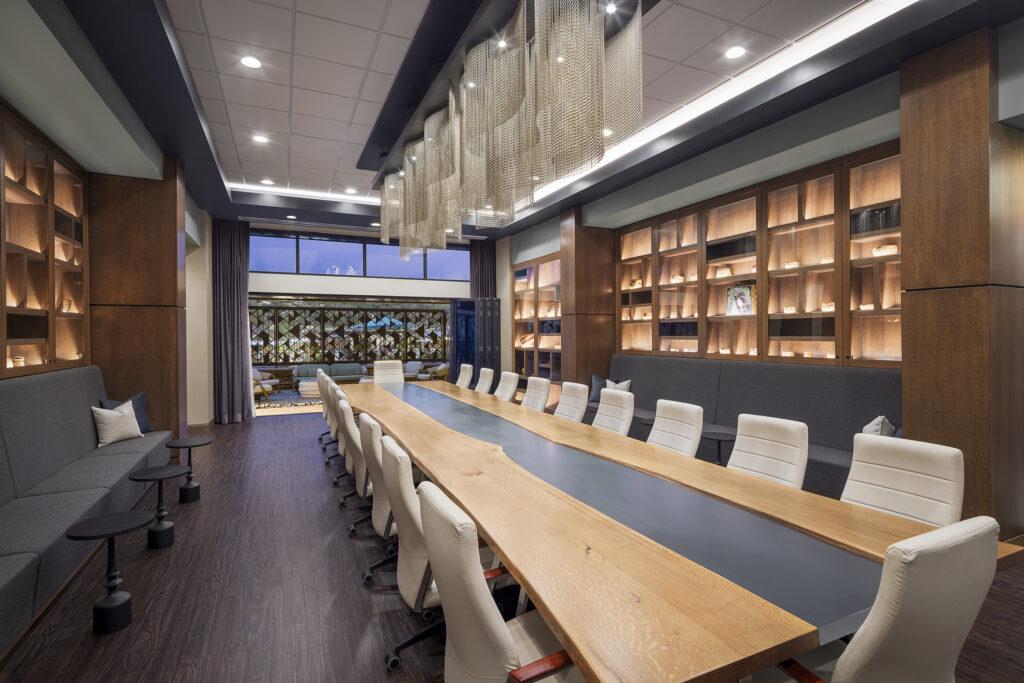
Within the new Tribal Council Boardroom, this approach becomes more explicit. Custom furnishings, layered wood tones, and curated artifact displays create a space that is both functional and representative—supporting governance while reinforcing cultural identity.

Delivering Impact Through Phased Implementation

Equally critical to the project’s success was the execution strategy. Maintaining uninterrupted operations throughout construction required a highly coordinated, phased approach.

Rather than disrupting the guest experience, improvements were carefully sequenced around active gaming and hospitality areas. This methodology allowed the property to expand and enhance its offerings while continuing to generate revenue and serve its guests.

Key outcomes include:

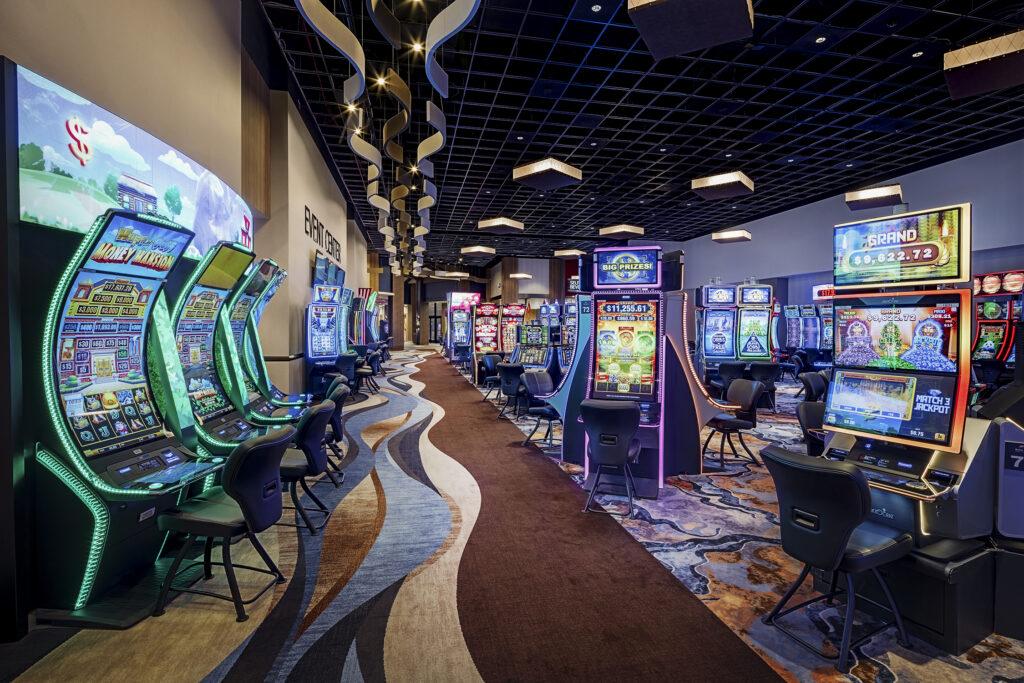
  • Approximately 20,000 square feet of expanded gaming space
  • 175 additional gaming positions
  • Renovated food and beverage venues
  • A new ballroom-style event center

This balance of design and operational strategy underscores the importance of aligning reinvestment with both guest expectations and business performance.

Designing for Longevity

Rain Rock Casino Resort reflects a broader shift within the gaming industry—one that prioritizes meaningful, experience-driven environments over purely programmatic expansion.
As competition intensifies, reinvestment strategies must do more than add capacity. They must strengthen identity, enhance flexibility, and create memorable experiences that resonate with guests.

At Rain Rock, the integration of cultural narrative, environmental inspiration, and operational precision demonstrates how design can support long-term relevance while honoring the story of place.


Ask the Experts: Indian Gaming – A Look Forward

Kelly DeVine Offers Insights for Indian Gaming Magazine's 2026 'Ask the Experts: Indian Gaming – A Look Forward'

Kelly DeVine, Principal & Director of Strategic Partnerships, HBG Design

From Indian Gaming Magazine January/February 2026 Issue

As tribes consider their long-term economic visions and land development options, there has been a shift in how casino resort destinations are being planned. While the destination resort has long been the goal, what’s emerging is a more holistic, integrated town-center style approach, reimagined as a larger, tribally owned economic ecosystem anchored by the casino resort.  

Signature resort “wow” amenities like gaming, hotels, pools, spas, and event centers remain critical. What’s changing is how those resort amenities are positioned within a broader planned vision – organized from the casino and hotel, layered with complementary amenities and community infrastructure. This more intentional approach supports longer stays, creates customer loyalty, and greater community economic opportunity.

Resort guests need basics as much as indulgences, and when those needs are met on tribal land – through convenience stores and fuel centers, health and wellness offerings including CBD retail, and destination-oriented shopping – it creates a more livable experience and greater benefit for all. 

Looking ahead, we expect this integrated planning approach will continue gaining momentum, with casino resorts anchoring more self-sufficient town centers. By keeping both guest and tribal member spending on tribal land, this strategy strengthens local economies and expands long-term opportunities for tribal communities.


Caesars Southern Indiana's New $90 Million Casino Opens for Business

See full article at WDRB.COM

ELIZABETH, Ind. (WDRB) -- Hundreds of people streamed into the new, $90 million land-based Caesars Southern Indiana casino on Thursday, saddling up to blackjack tables, slot machines and a Las Vegas-style sports betting theater.
The new facility replaces the Glory of Rome riverboat casino that operated as Horseshoe Southern Indiana for the past two decades.

Indiana lawmakers in 2015 allowed riverboat casinos to move on land.

"That really got us thinking, is there a better way to run a business than on a riverboat?" said Caesars Southern Indiana general manager Brad Seigel.

The 110,000 square-foot complex combines entertainment, dining, shopping and gaming on one floor, whereas the riverboat casino had four floors.

"The riverboat was great for 20 years, but if you are on the fourth level of the riverboat, you might have no idea what's going on on the second. Now can see from corner to corner," Seigel said.

Indiana legalized sports betting earlier this year. The casino has an area called The Book with wagering windows, kiosks, plush seats, huge TV screens and a large bar. Guests can bet on football, basketball, baseball and other sports.

A dining area called Piazza has five restaurants including pizza, Mexican and Asian foods. There is also a 24-hour restaurant for burgers and other fare along with a home-style restaurant serving foods like fried chicken and barbecue ribs.

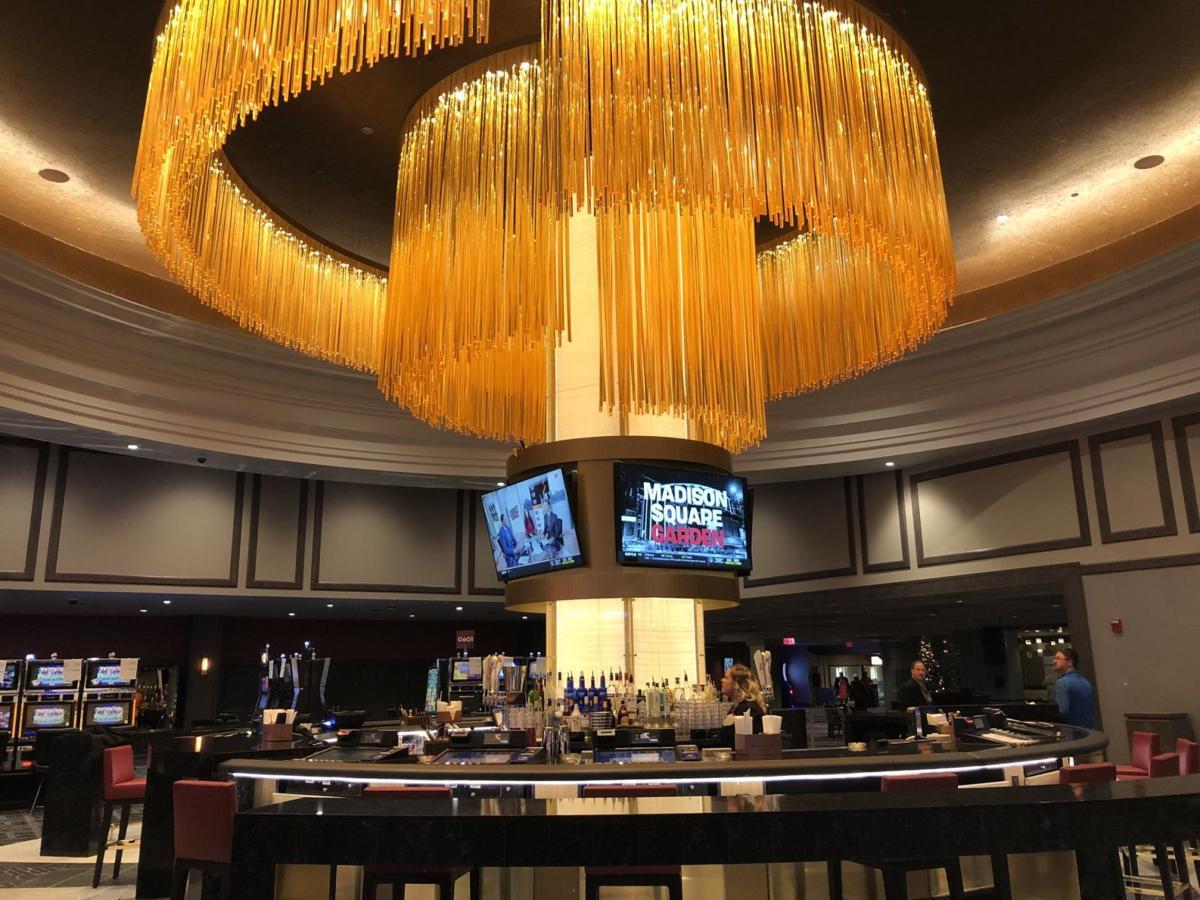
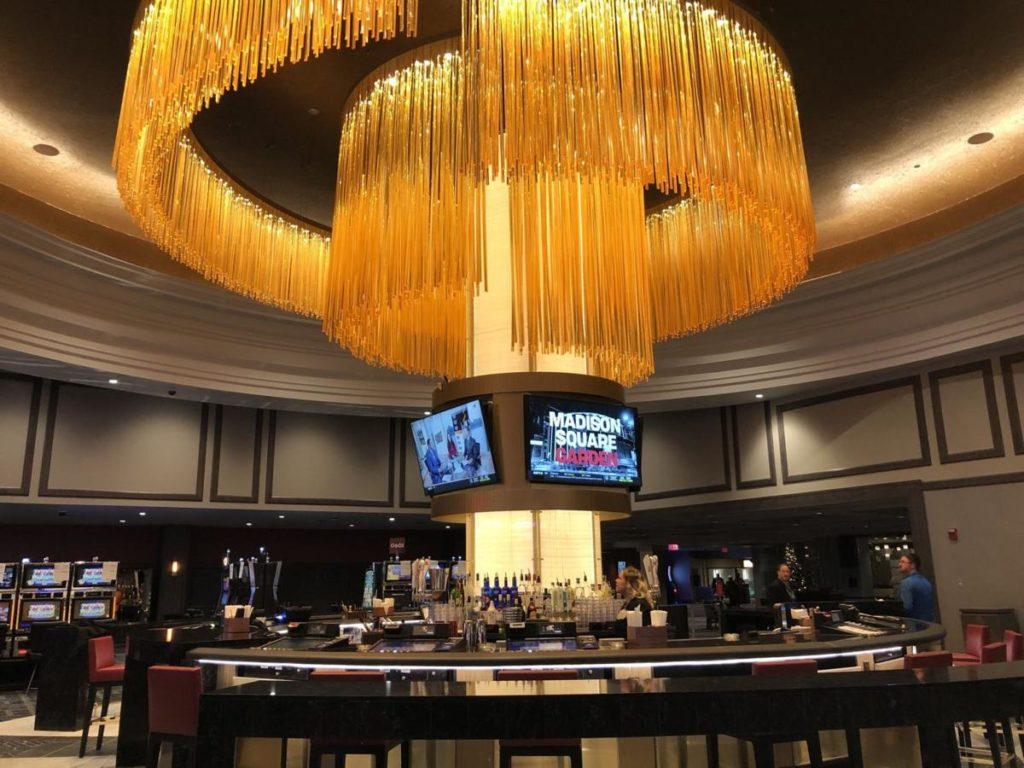
Several new bars and lounges are included. Volt Lounge will offer craft cocktails and live entertainment on the weekends. The Juno Bar is in the center of the gaming floor, and the Laurel Lounge and its outdoor balcony is exclusively for Caesars Rewards VIPs.

Tony Rodio, CEO of Las Vegas-based Caesars Entertainment Corp., said Thursday that the bricks-and-mortar casino should attract even customers who don't gamble.

"There was no way anyone was going to that riverboat and spending an evening if they weren't interested in gambling. You could, I think, have an enjoyable evening here without making a wager," he said.

The casino also includes High Limits gaming with private parlors and a non-smoking gaming area.

Caesars Southern Indiana has also renovated existing meeting and convention spaces to accommodate larger groups.