
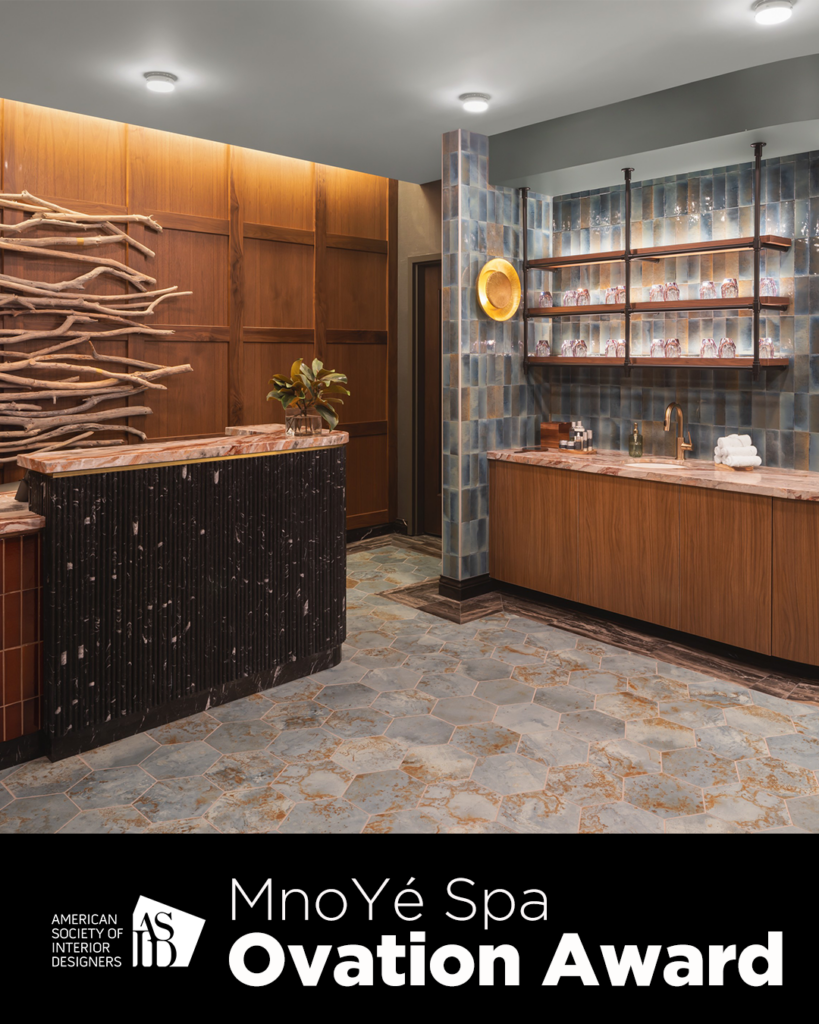
 MnoYé Spa, located within
  The spa’s thoughtful integration of cultural storytelling and contemporary wellness design creates a memorable guest experience that stood out among all commercial submissions in this year’s competition.
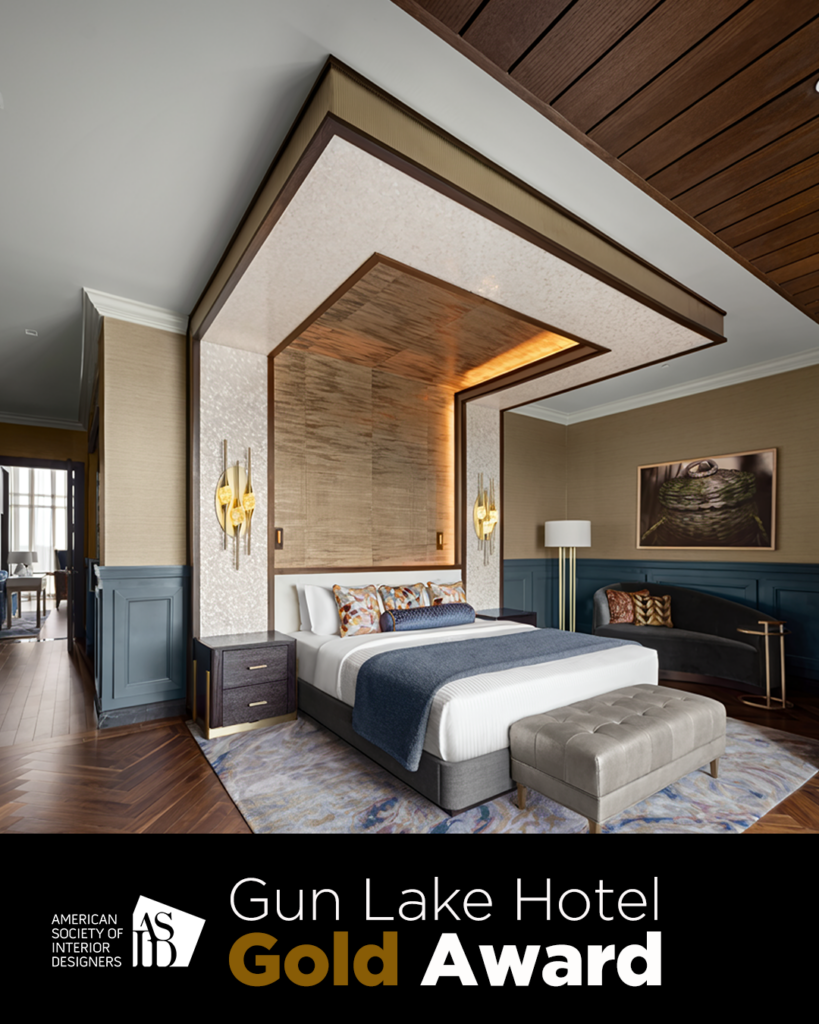 The Gun Lake Casino Resort Hotel received Gold in Hospitality Design, recognizing the interiors of the new hotel tower that anchors the resort’s transformation into a premier Midwest destination.
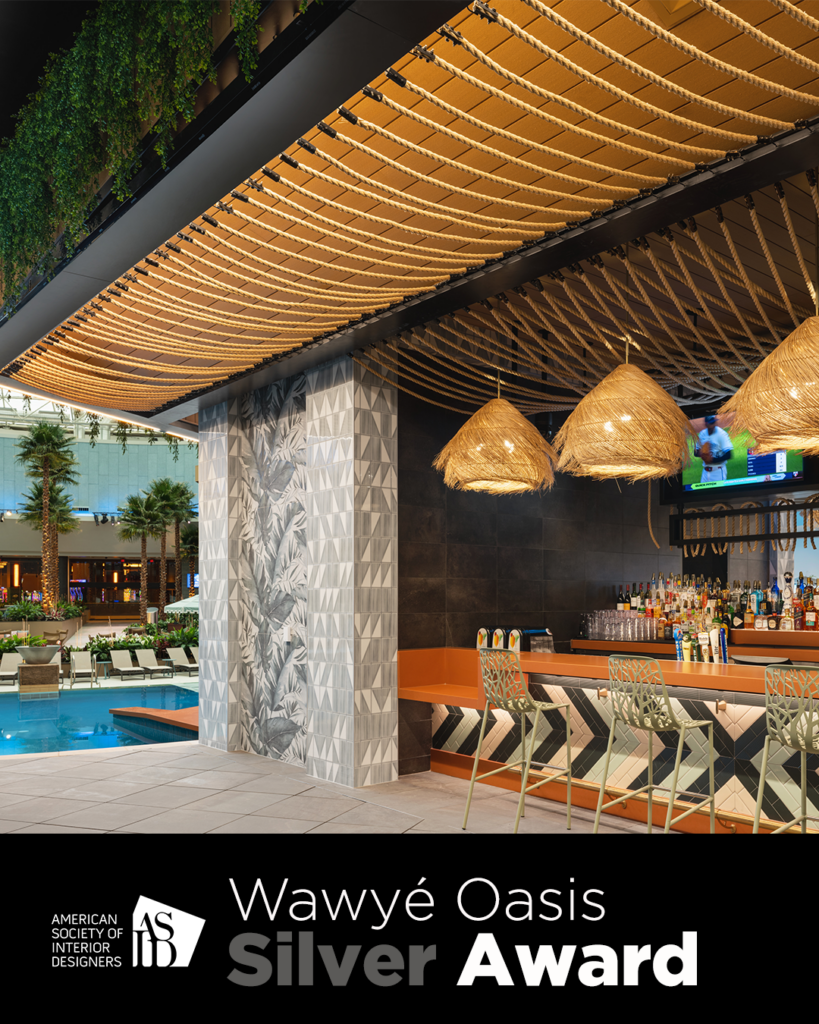 Completing the recognition for the resort expansion, Wawyé Oasis received Silver in Commercial Design. This dynamic pool and recreation venue creates a vibrant indoor resort environment designed for year-round enjoyment.
Are Your Public Spaces Working Hard Enough?
Hospitality Design Trends 2026: Wellness, Dwell Time & Revenue Activation
With rising construction costs and increasing guest expectations, every square foot inside a hotel or casino resort must deliver measurable value. Yet many public spaces — lobbies, lounges, pre-function areas, and resort environments — remain underleveraged.
The most important question for owners and operators today is simple: Are your public spaces working hard enough?
Across the hospitality industry, a shift is underway. Spaces that were once designed primarily for circulation are now expected to drive revenue, extend guest stays, and strengthen brand loyalty.
The future of hospitality design lies in activated public environments.
The 2026 Shift in Hospitality Design
One of the defining hospitality design trends of 2026 is the shift from passive gathering areas to multi-functional, revenue-generating environments.
Two major forces are driving this change.
First, hospitality and retail research consistently shows a direct correlation between guest dwell time and spending. When guests stay longer in an environment, they are more likely to engage with food and beverage, entertainment, retail, and premium amenities.
 Second, the global wellness economy has grown to $6.8 trillion, according to the Global Wellness Institute. Wellness is no longer limited to spas or fitness centers; today it encompasses social connection, relaxation, and shared experiences — all of which take place in public environments.
 For casino resorts and destination hotels, this means public space has become one of the most powerful economic tools on the property.
Public space is no longer transitional — it is strategic.
What Is Public Space Activation?
Public space activation is the intentional design of hospitality environments to support both experience and economics.
These spaces are designed to:
- Increase guest dwell time
- Encourage social interaction and group gathering
- Support multi-generational audiences
- Flex across dayparts and programming needs
- Strengthen brand identity
- Generate direct or indirect revenue
When done well, activated public spaces become the connective tissue of a resort, linking hospitality, entertainment, dining, and gaming into a seamless guest experience.
Gun Lake Resort: Designing an Indoor Destination
At Gun Lake Casino Resort, public space activation takes the form of an immersive indoor resort environment—free to guests during the day as a vibrant pool experience that also builds anticipation for the events and entertainment the space hosts at night.
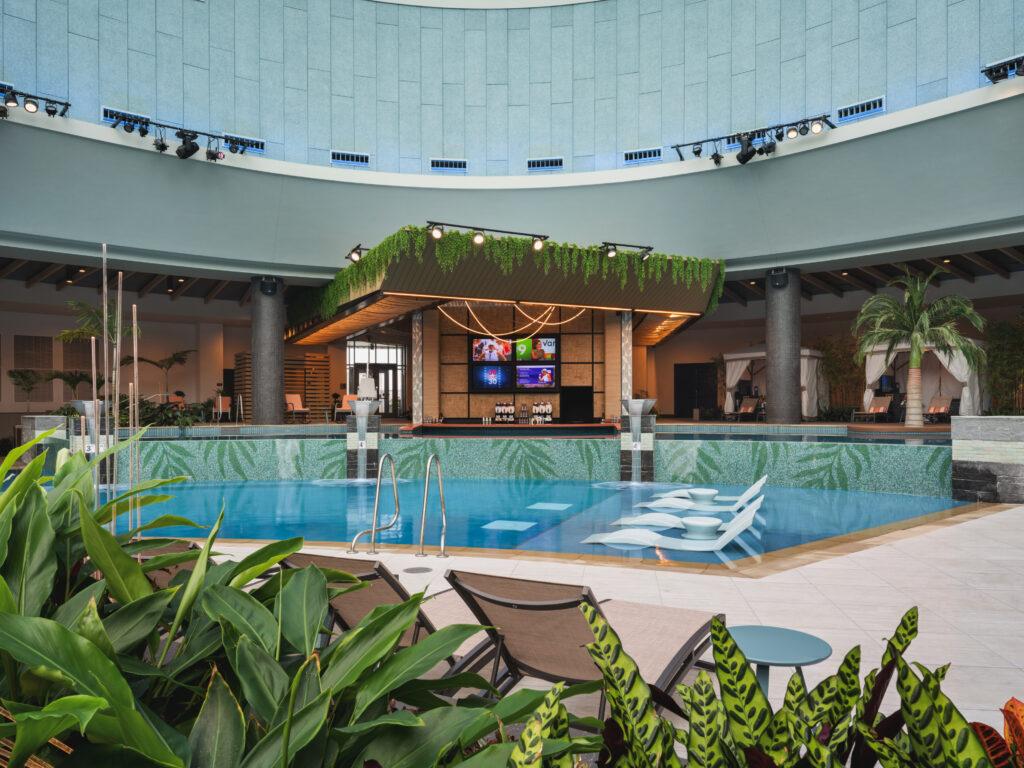
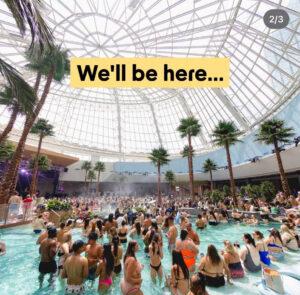
The Wawyé Oasis, a 32,000-square-foot indoor tropical atrium, creates a year-round destination that blends leisure, entertainment, and social gathering into a single environment. The climate-controlled space includes resort-style pools, cabanas, lounge seating, and integrated food and beverage venues arranged around a flexible event stage.
The key to the space’s success is programmatic flexibility. During the day, the Oasis operates as a relaxed indoor pool retreat for hotel guests and families, while its open layout and visual connections to the stage and surrounding venues create energy and anticipation for evening programming. At night, the same environment transforms into a concert venue, DJ lounge, or special event space—dramatically increasing utilization and guest engagement across dayparts.
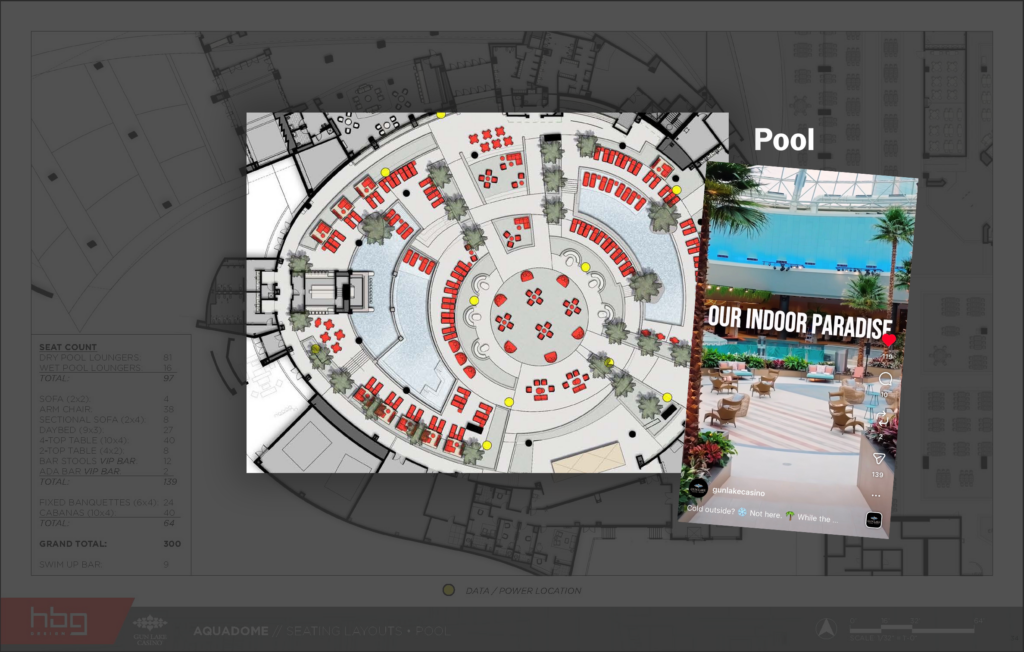
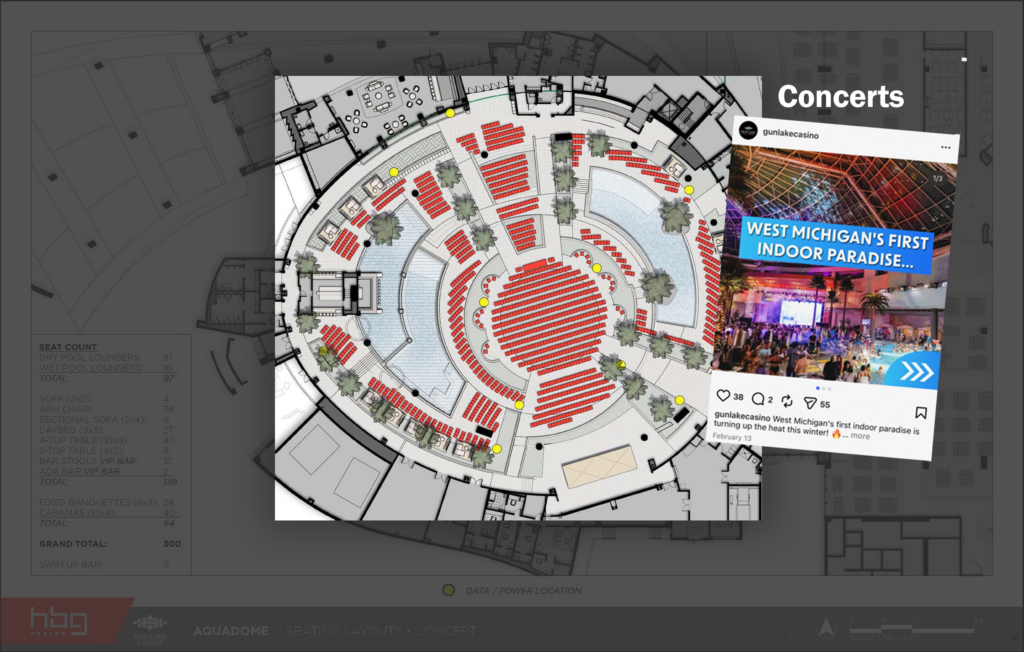
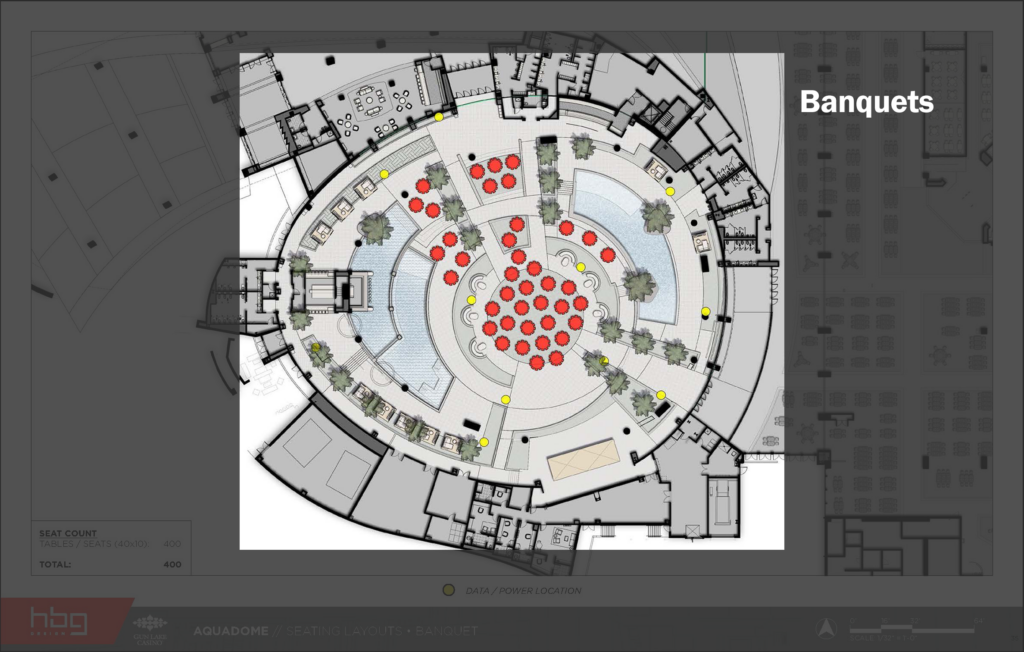
The environment also expands the resort’s audience. By creating a destination amenity that appeals to couples, families, and younger social groups, the property broadens its demographic reach beyond traditional gaming audiences.
Since completing its $300 million resort expansion, which introduced a hotel, spa, and new entertainment amenities, Gun Lake Casino Resort has reported a 20% increase in revenue along with strong hotel occupancy—signaling demand for experiential resort environments that extend the guest journey beyond gaming.
In this model, public space is not simply decorative—it becomes a strategic connector that builds visibility, excitement, and demand for the resort’s revenue-generating amenities.
Golden Mesa: Cultural Identity as Competitive Advantage
At Golden Mesa Casino & Hotel in Guymon, Oklahoma, public space activation takes a different approach — one rooted in cultural storytelling and social connection.
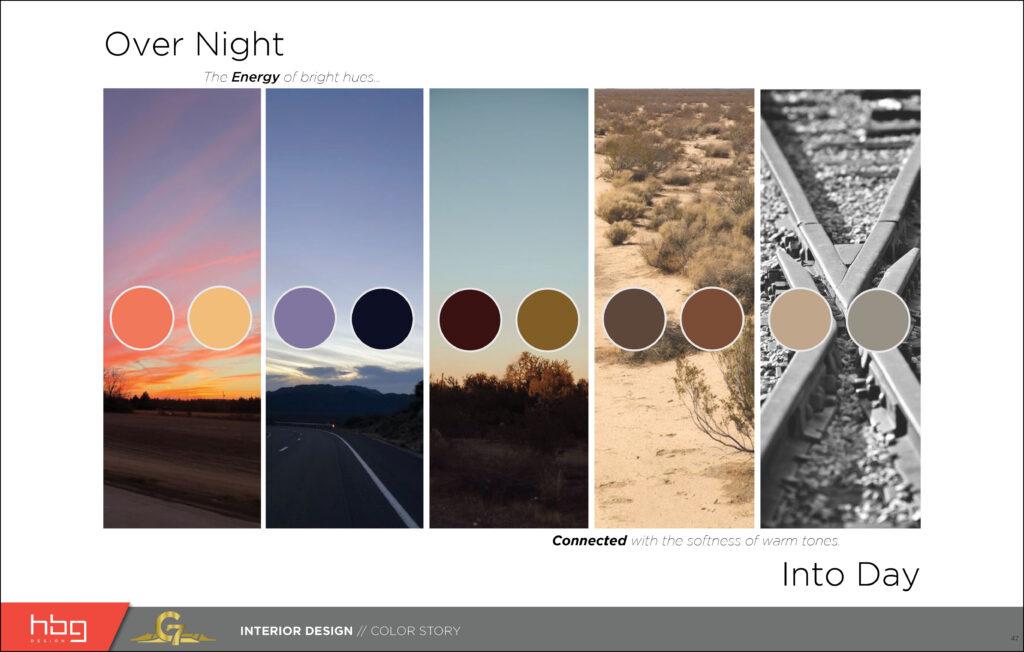 The property’s $78 million expansion doubled gaming capacity while introducing a new hotel, dining venues, and multiple gathering spaces that together transform the property into the Oklahoma Panhandle’s only full-scale casino resort destination.
Rather than designing the lobby as a traditional circulation zone, the space functions as a hospitality hub.
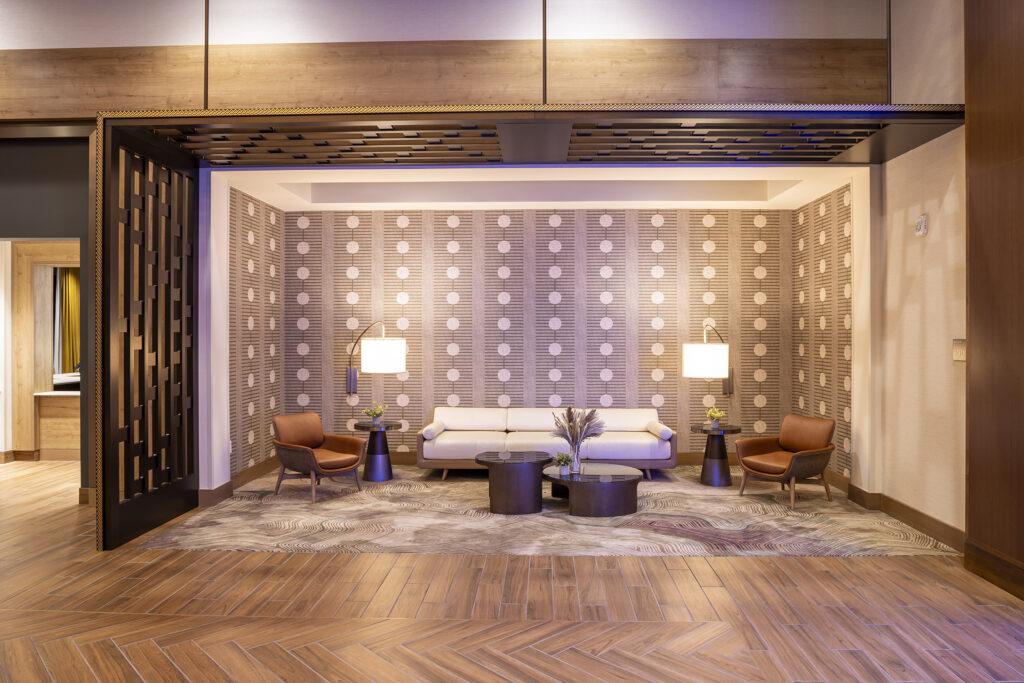
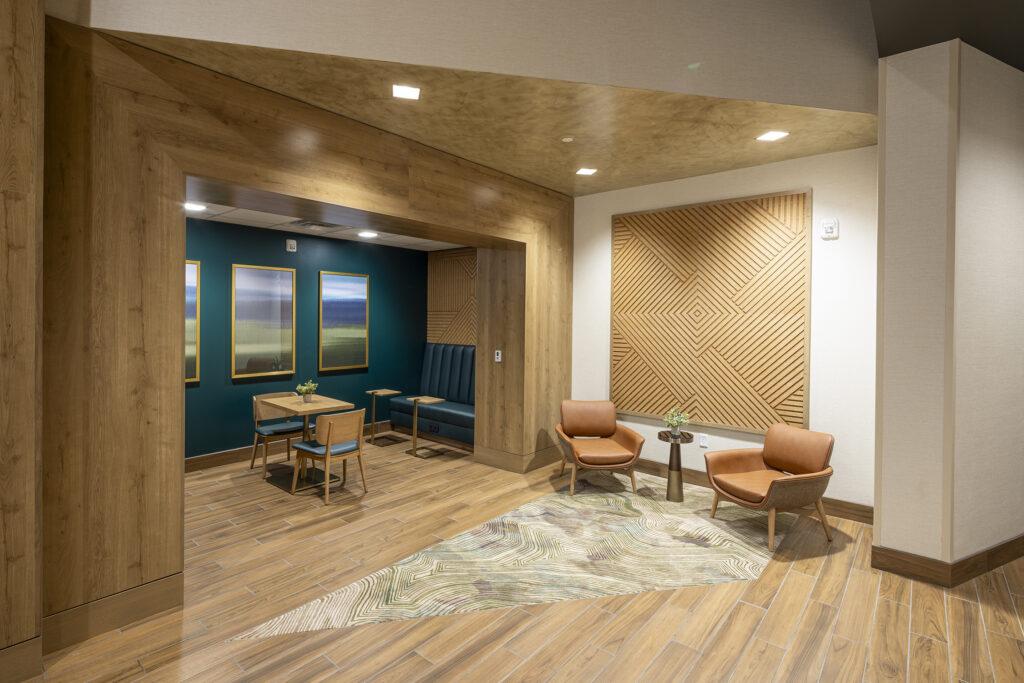 Residential-style seating clusters encourage guests to gather and linger, while the adjacent Panhandle Press café and nearby Cimarron Ridge restaurant create natural activity throughout the day. These proximities were intentionally designed to increase visibility and engagement with food and beverage offerings.

Technology also plays a role in activating the environment. On the casino floor, a 12-foot CLEAR digital signage wall introduces dynamic content and branding while maintaining visual transparency between the high-limit room and the gaming floor — drawing attention and curiosity from guests moving through the space.
Another key moment occurs at the transition between hospitality and gaming. A dramatic geometric light portal connecting the hotel lobby to the casino floor transforms circulation into an experiential threshold, guiding guests from calm social space into the energy of gaming.
These types of architectural moments do more than create visual impact — they encourage exploration and movement throughout the property.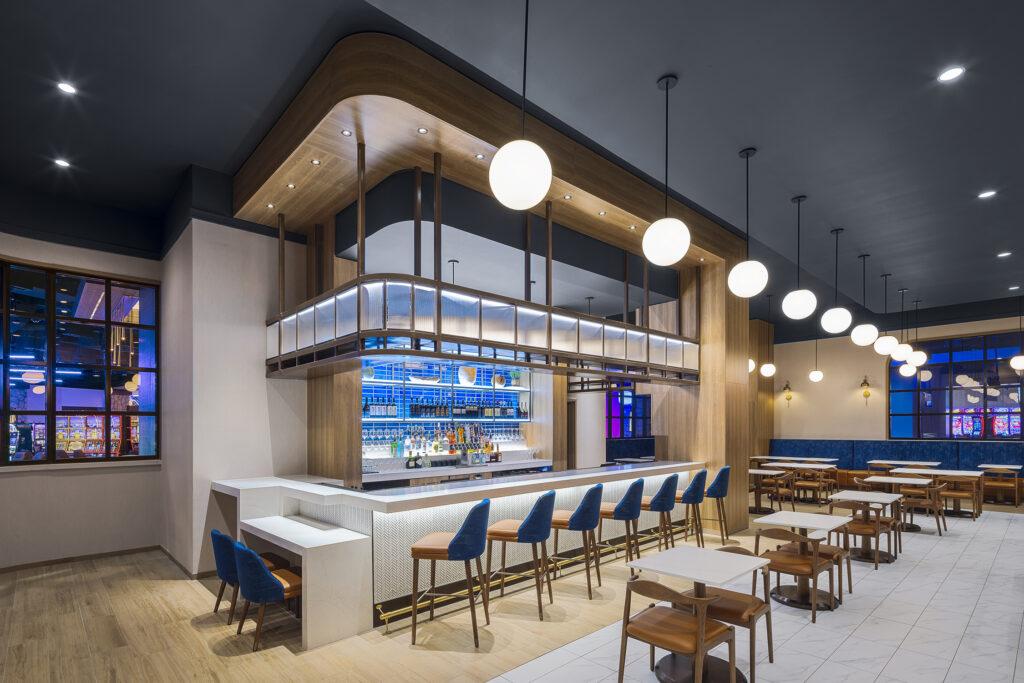
Golden Mesa demonstrates how culturally authentic environments can drive both guest engagement and long-term brand differentiation.
The Future of Hospitality Public Space
Across hospitality and gaming resorts, a clear pattern is emerging.
The most valuable square footage in a property may no longer be the gaming floor or guestrooms — but the spaces in between.
When designed intentionally, public environments can:
- Extend guest stays
- Increase cross-property spending
- Support events and entertainment programming
- Strengthen brand identity
- Create memorable social experiences
For owners and operators navigating rising construction costs and competitive markets, activated public space represents one of the most powerful design strategies available.
The most successful resorts in the next decade will not treat public space as circulation.
They will treat it as performance.
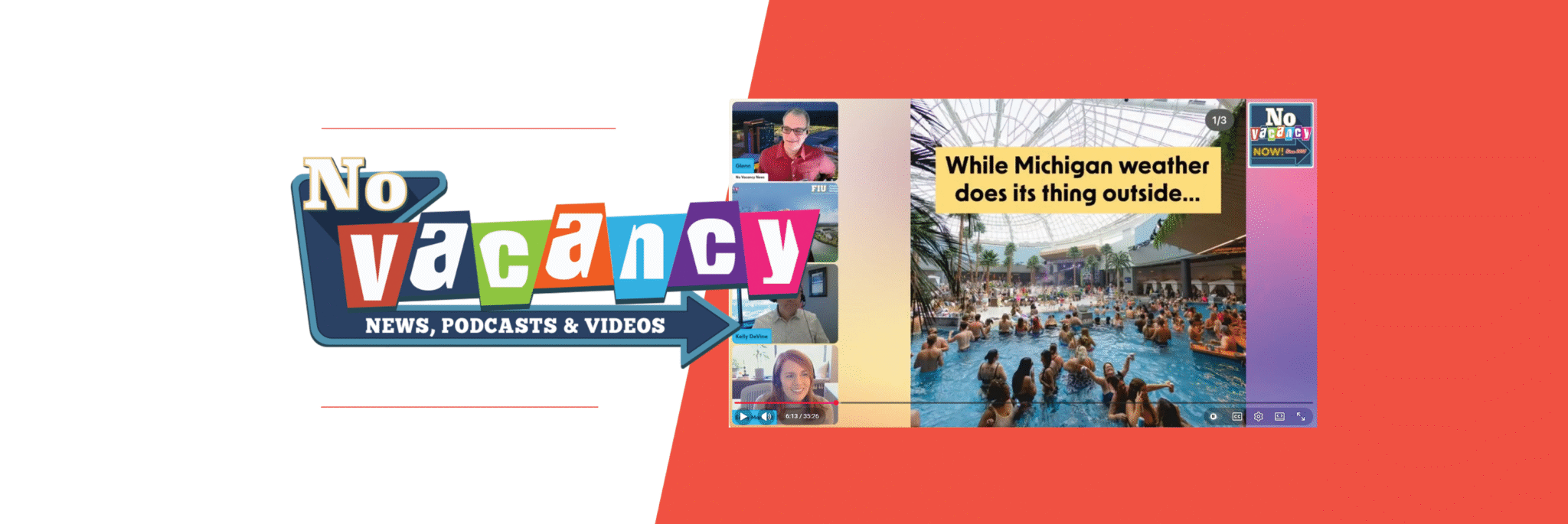
HBG Design Featured on No Vacancy: Why Casino Resorts Now Compete Like Destination Hotels
Regional casino resorts have evolved—and today’s most successful properties are no longer competing solely on gaming floors or square footage. They are competing as full-scale destination hotels, designed to extend stays, increase spend, and drive repeat visitation.
That shift is the focus of a recent episode of the No Vacancy podcast, hosted by Glenn Haussman with guest co-host Dr. Suzanne Bagnera, featuring HBG Design leaders Kelly DeVine, Principal, and Emily Marshall, NCIDQ, NEWH, IIDA, Principal and Interior Design Leader.
In the episode, Kelly and Emily discuss how design, operations, and profitability are inseparable in modern regional casino resorts—and why performance-driven design must start long before finishes and aesthetics are considered.
From Regional Casino to Destination Resort
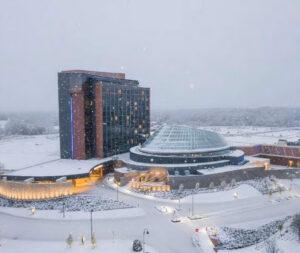 Using Gun Lake Casino Resort in Michigan as a case study, the conversation explores how regional gaming properties now compete with Las Vegas–style destination resorts. Guests expect more than gaming alone: hospitality, dining, entertainment, and thoughtfully designed hotel experiences all play a role in attracting longer stays and repeat visits.
Kelly and Emily emphasize that this evolution requires a fundamental shift in how projects are approached—one that prioritizes operational strategy and guest behavior from day one.
 Designing for Gaming Performance
 Designing for Gaming Performance
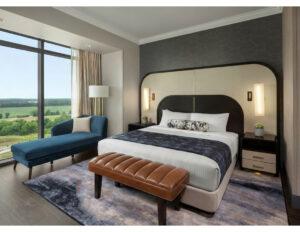
One of the key insights from the episode is how hotel design directly influences gaming behavior. Guest rooms must strike a careful balance: they should feel comfortable and welcoming, but not so indulgent that guests disengage from the casino floor and resort amenities.
This intentional approach ensures that the hotel supports—not competes with—the core gaming experience, reinforcing the overall business model of the resort.
Operations First: The Engine Behind the Experience
At HBG Design, successful casino resorts begin with operations. Kelly and Emily discuss why elements such as:
- Housekeeping flow and back-of-house efficiency
- Durability and material selection
- Turnover time and maintenance realities
are often more critical to long-term performance than purely visual considerations.
By designing the “engine” before the exterior experience, properties are better positioned to operate efficiently, control costs, and deliver consistent guest satisfaction over time.
Programming Spaces for Repeat Visitation
 Programming Spaces for Repeat Visitation
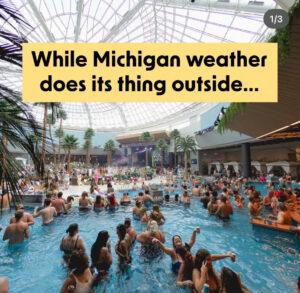
Beyond the hotel and gaming floor, the episode highlights the importance of programming spaces that keep guests coming back—especially local and regional visitors. Flexible entertainment venues, food and beverage offerings, and social spaces all contribute to building loyalty and extending engagement beyond a single visit.
Design as a Business Tool
 Ultimately, the conversation reinforces a core HBG Design philosophy: design is not a vanity exercise—it is a business tool. When design decisions are grounded in operations, guest behavior, and measurable outcomes, they can directly support revenue growth and long-term success.
We’re proud to see Kelly DeVine and Emily Marshall share their expertise on No Vacancy and contribute to an industry-wide conversation about performance-driven design in today’s casino resorts.
Listen to the full episode of No Vacancy: Episode 1009 – Why Casino Resorts Now Compete Like Destination Hotels to hear the complete discussion and insights.
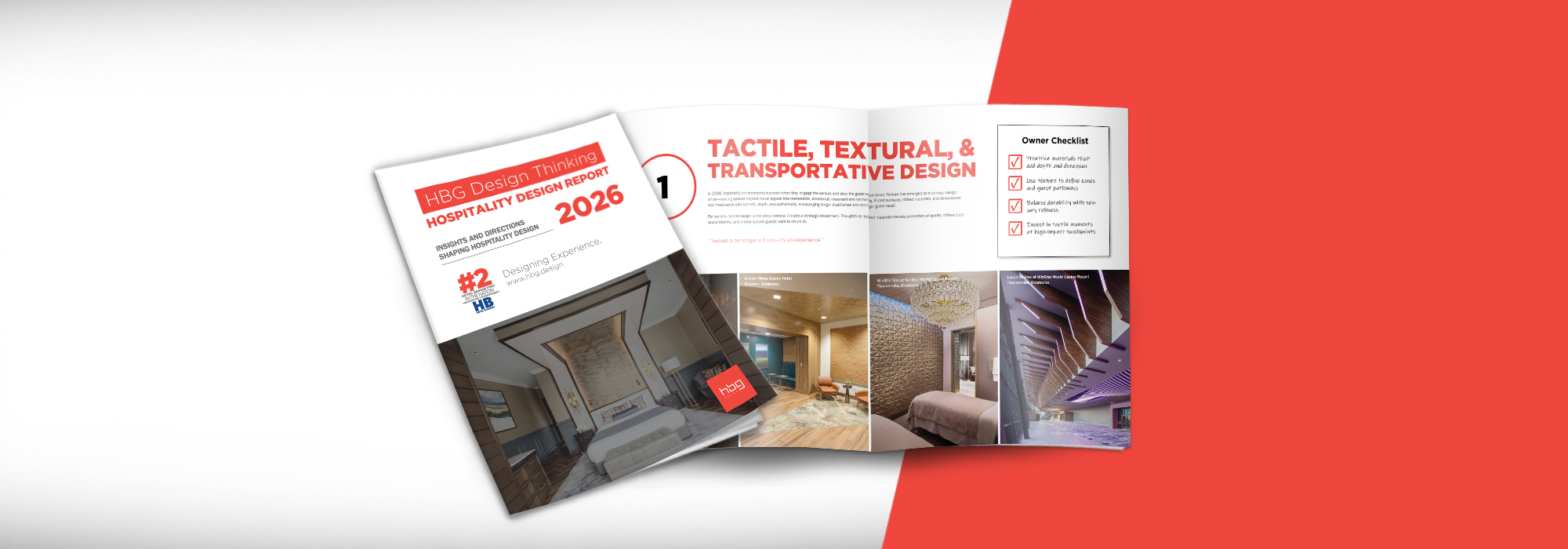
HBG Design Thinking: Hospitality Design Report
In 2026, hospitality design is all about creating immersive, memorable experiences that resonate with guests long after they leave. From boutique hotels to large-scale resorts and entertainment destinations, the bar for innovation has never been higher. HBG Design, ranked #2 Hospitality and Entertainment Design Firm in the U.S., by Hotel Business Magazine for 2026, has decades of experience translating industry insights into transformative guest experiences. This year, our team has identified the design thinking that will define hospitality experiences and drive both engagement and operational success.
You can download the full 'HBG Design Thinking' Hospitality Design Report here.
Social Wellness: Connection as the New Currency

Wellness has evolved beyond serenity and self-care—connection is now central to well-being. Guests increasingly seek shared experiences that foster community and engagement. HBG clients are already ahead of this curve, with co-ed hydrothermal lounges at WinStar Spa and hydrotherapy pools at MnoYé Spa at Gun Lake Resort. These spaces blend luxury, functionality, and social interaction, transforming wellness into a destination activity rather than a solitary experience.
Open Edge Environments
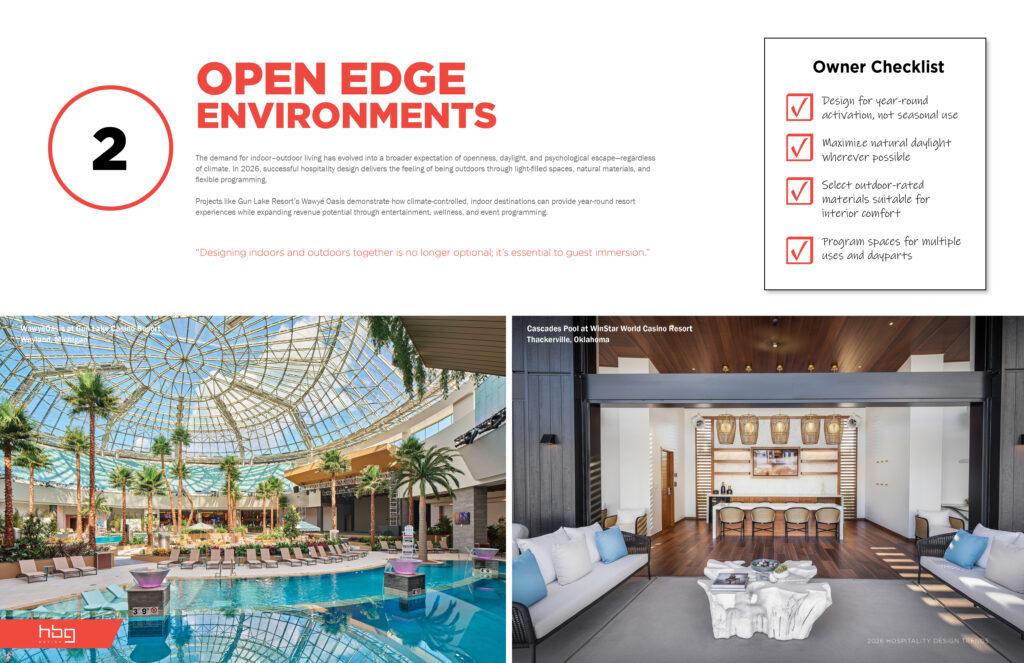 Seamless indoor–outdoor environments are no longer just a coastal luxury—they’re expected year-round, everywhere. The Wawyé Oasis at Gun Lake Resort exemplifies this trend, featuring a six-story glass dome that creates a tropical, light-filled escape in Wayland, Michigan. Guests enjoy the sensation of being outdoors while designers control climate, programming, and operational flexibility, proving that immersive environments drive engagement and revenue alike.
Maximalism with Meaning
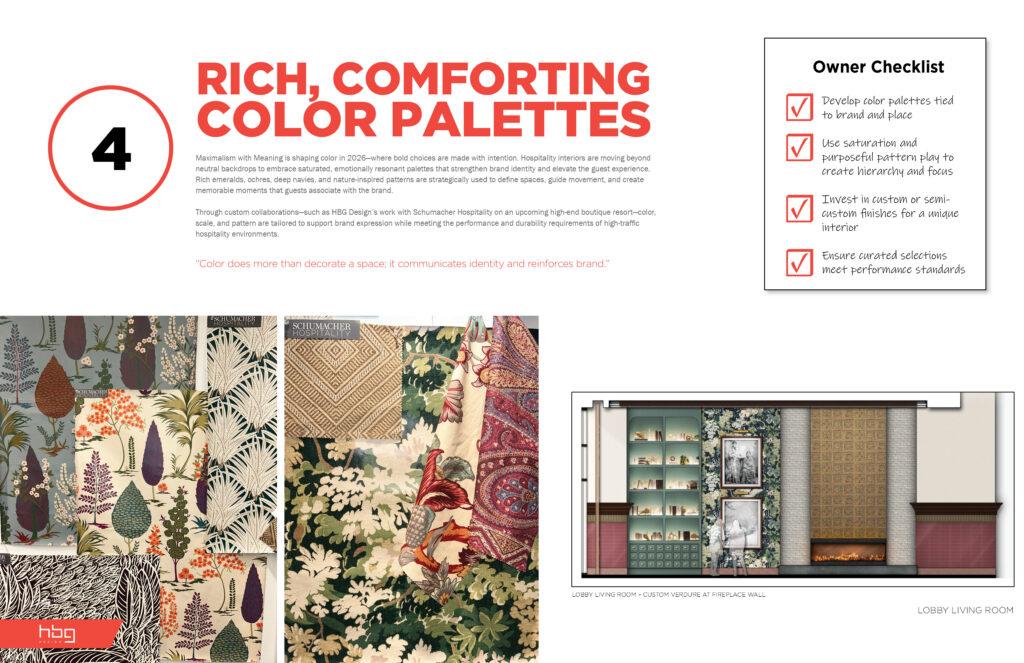 Color and material storytelling are taking center stage. For an upcoming boutique resort lobby, HBG Design collaborated with Schumacher Hospitality to transform iconic residential patterns into hospitality-grade fabrics and wallcoverings. Custom applications—from vibrant lobby wallcoverings to rooftop restaurant fabrics—combine durability with artistry, craft, and narrative inspiration drawn from the surrounding woodland landscapes and local industrial heritage.
Ready to explore all six trends in detail?
Download the full 'HBG Design Thinking' Hospitality Design Report to see more quotes, actionable owner checklists, and client case studies that bring these insights to life.

A Tropical Escape in the Heart of Michigan: The Wawyé Oasis
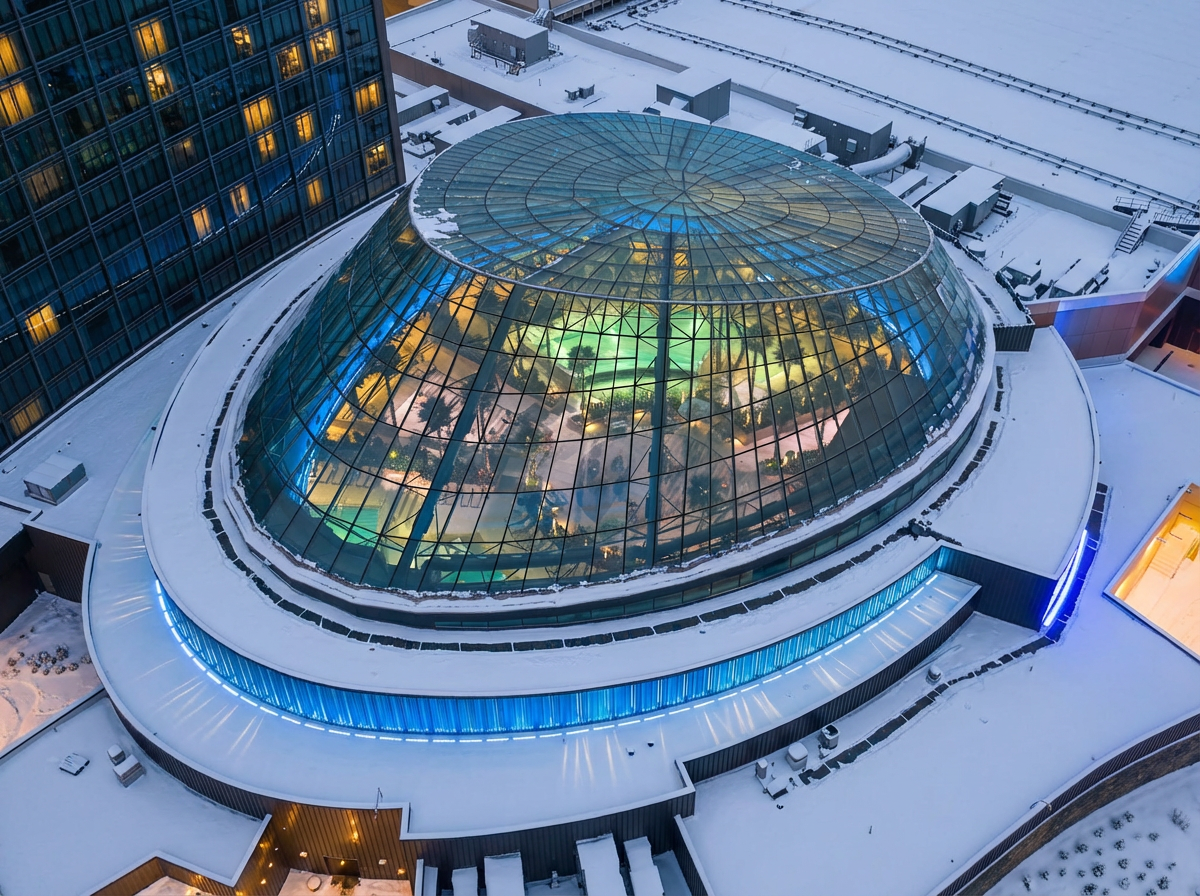
When winter grips Michigan in icy temperatures, guests at Gun Lake Casino Resort are now floating beneath a sunlit glass dome in a lush, 82-degree tropical paradise. Debuting in May 2025, the six-story, 32,000-square-foot Wawyé Oasis redefines what’s possible for year-round resort design—seamlessly shifting from daytime pool retreat to high-capacity concert venue, nightclub, and banquet space. Shaped by solar studies and engineered as a massive glass “sundial,” the Oasis is both sculptural and supremely functional, capturing natural daylight while shielding guests from the region’s harsh climate.
As the architectural and experiential centerpiece of Gun Lake’s $300 million expansion, the Oasis anchors a new 252-room hotel and full-service spa—establishing the resort as a true “daycation” destination for guests across Michigan and major Midwest markets. From bird-safe, low-E glass and climate-responsive HVAC systems to flexible acoustics, dynamic lighting, and thoughtfully zoned guest experiences, every element was precision-engineered to support comfort, performance, and unforgettable entertainment.
The result is more than a building—it’s a fully immersive, adaptable environment where architecture, engineering, and guest experience converge in spectacular fashion.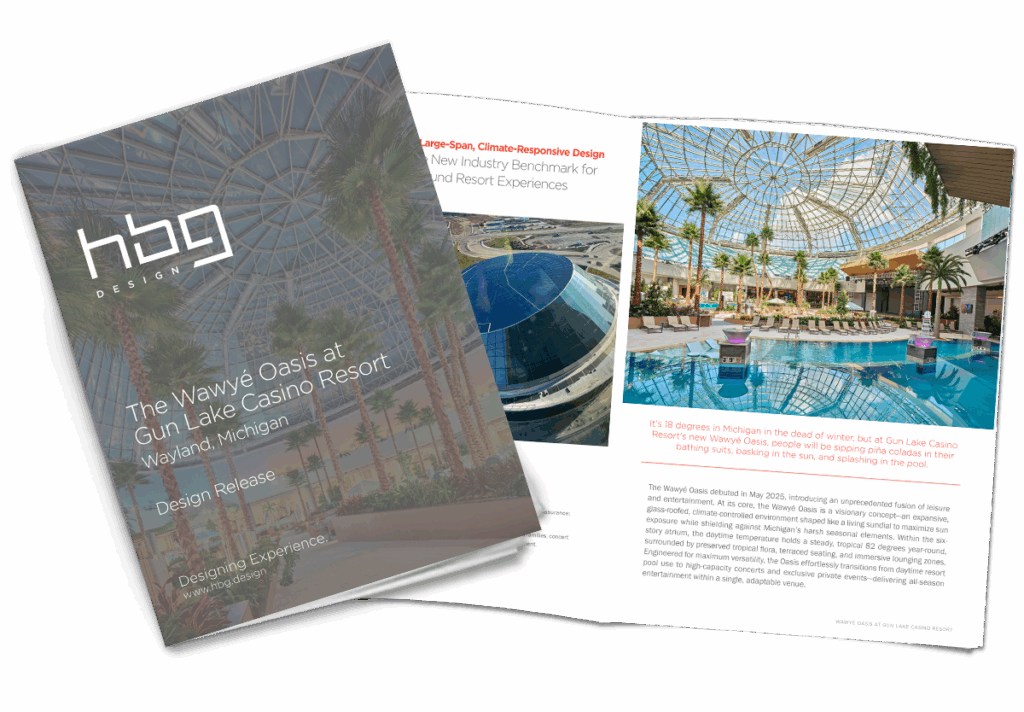
▶ Watch the full design thinking video to explore the innovation behind the Wawyé Oasis—and flip through the complete Project Design Release for detailed insights into the architecture, engineering, sustainability strategies, and guest experience that bring this extraordinary destination to life.

Designing Nature-Inspired Luxury at Gun Lake Resort
Designing Nature-Inspired Luxury at Gun Lake Resort
Gun Lake Resort’s new hotel tower is more than an expansion—it’s a transformational destination for West Michigan and the greater Midwest. Rising prominently above Highway 131, the 15-story tower positions the resort as a premier super-regional draw for guests traveling from Chicago, Detroit, and beyond. With its blend of high-end accommodations, world-class amenities, and the one-of-a-kind Wawyé Oasis tropical atrium, the resort elevates the standard of hospitality in the region, offering guests an experience that rivals the nation’s top luxury destinations.

A Grounded Arrival: Biophilic Hospitality
The best hospitality spaces don’t just provide a service—they create experiences that linger long after checkout. At the new Gun Lake Resort Hotel Tower, HBG Design has reimagined the guest journey by blending biophilic principles with elevated luxury, crafting interiors that connect guests to nature while surrounding them with comfort and sophistication.
The interior concept was shaped by the natural rhythms and beauty of the region—dynamic summer sunsets, dappled light filtering through the trees, and serene views of Gun Lake. These elements became the design DNA for the tower’s interiors, translated into atmospheres of Dappled Light, Serene, and Radiance.
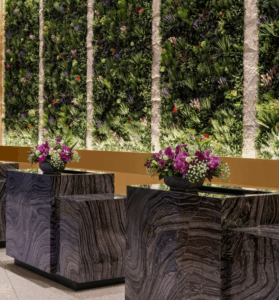
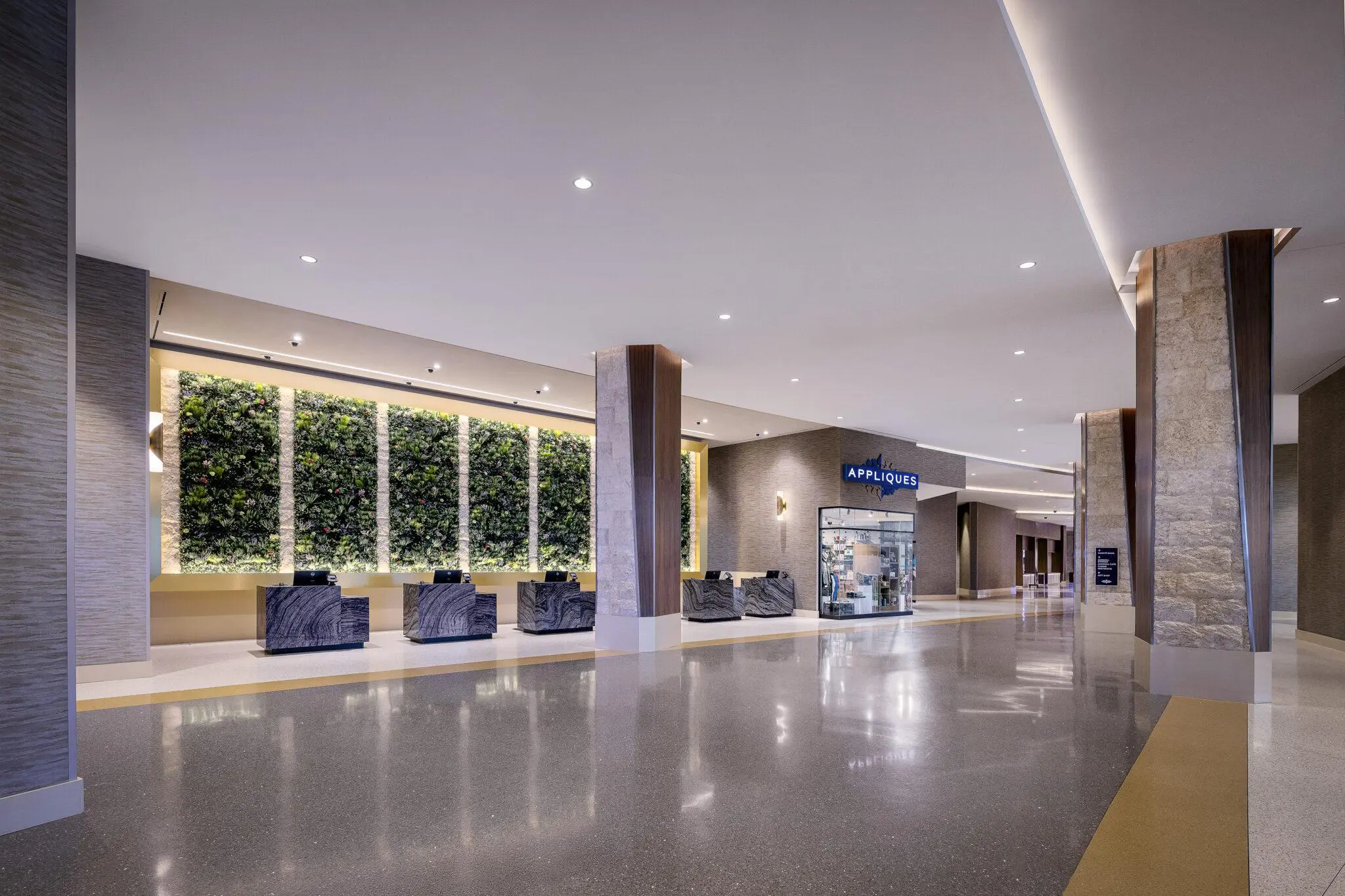
The journey begins in the soaring double-height lobby, where guests are welcomed by a vibrant living green wall—a vertical garden that breathes life into the reception experience. Expansive glazing frames the lush Wawyé Oasis atrium, filling the space with natural light and views of greenery. Together, these layered strategies set a calming tone, grounding guests the moment they arrive.
Material selections extend this connection to place: warm wood, natural stone, and metals that mirror Michigan’s rugged beauty. Radial ceiling treatments echo organic patterns, while daylighting establishes rhythm and flow. For HBG, biophilic hospitality design isn’t a trend—it’s a philosophy of guest wellbeing, ensuring each space resonates with a sense of balance and belonging.
Serene Wellness and Retreat
Below, the MnoYé Spa embraces Serene. Inspired by the soft glow of Gun Lake sunsets, its palettes of warm stone, tranquil colors, and layered textures create a restorative retreat. Flowing water features, hydrotherapy pools, and customizable lighting reinforce the sensory calm, allowing guests to feel both nurtured and renewed.
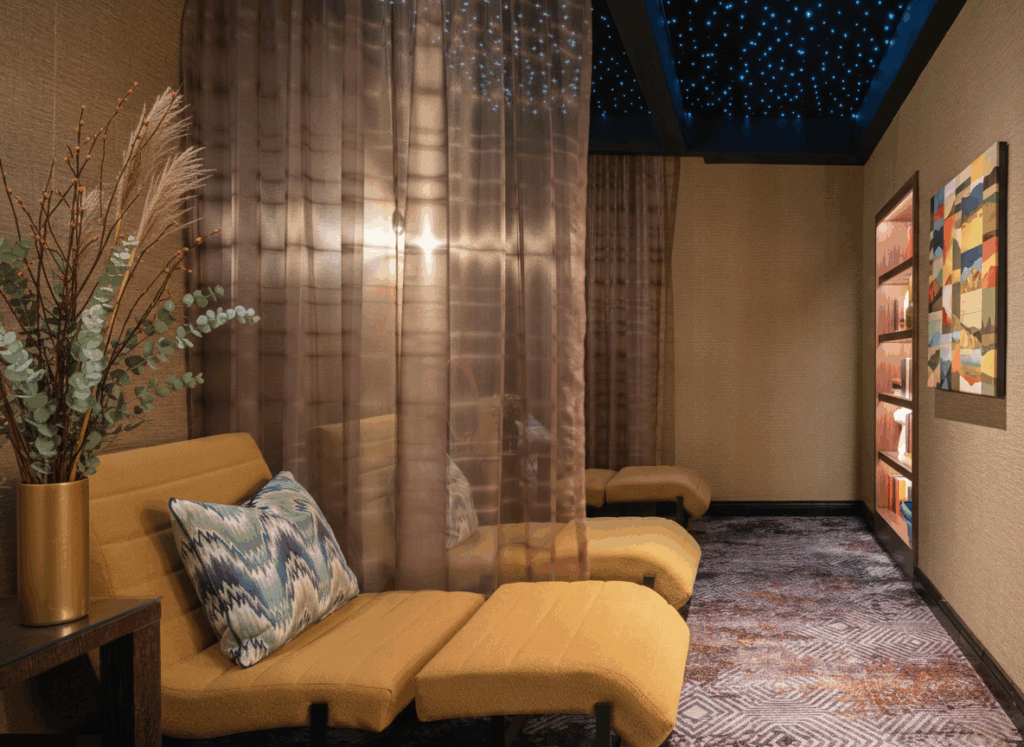

Guestrooms extend this atmosphere of serenity. Broad glass openings frame the surrounding landscape, while natural woods and layered fabrics echo the colors and textures of Michigan’s seasons. Here, biophilic design ensures that the restorative qualities of nature are never out of reach, even in the most private spaces.

The Pinnacle of Luxury: The Ogema Suite
At the summit, the Ogema Suite redefines modern luxury. Spanning more than 3,000 square feet across two levels, the suite delivers architectural drama with its soaring two-story glass wall framing panoramic views of the Michigan landscape. A sculptural floating stair, bespoke railings, and curated art add layers of sophistication, while fireplaces and a full-service bar create opportunities for both retreat and gathering.
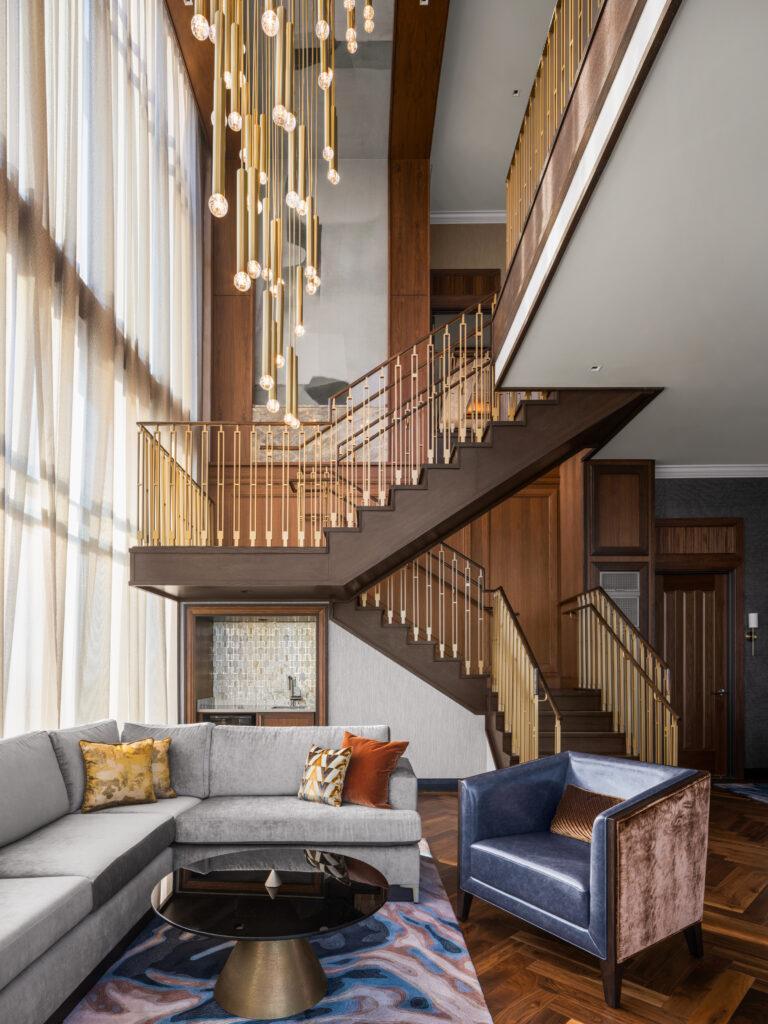 Technology enhances this indulgence with seamless personalization—integrated automation of lighting, drapery, and climate, plus radiant floor heating for comfort in Michigan winters. Every detail, from crafted finishes to immersive views, reinforces the suite as the pinnacle of hospitality design.
Redefining Regional Hospitality

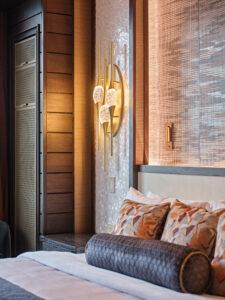
At Gun Lake Resort, luxury and biophilia converge. Rooted in the landscapes and skies of Michigan, the interiors balance restorative, nature-inspired design with the drama of high-end hospitality, giving guests spaces that are both grounding and unforgettable. From dappled light in the lobby, to sunset-inspired spa palettes, to the radiant vistas of the Ogema Suite, HBG Design has crafted an immersive experience that elevates regional hospitality and sets a new benchmark for connection, comfort, and design excellence.

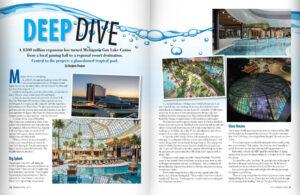
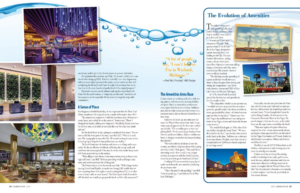
Wawyé Oasis Lands the Cover of Casino Style Magazine
 We’re thrilled to share that Casino Style Magazine’s Summer 2025 issue features Wawyé Oasis at Gun Lake Casino on its cover—and for good reason. As the centerpiece of the resort’s transformative $300 million expansion, Wawyé Oasis is a first-of-its-kind, indoor tropical retreat and entertainment venue designed by HBG Design to deliver a bold, immersive escape in the heart of West Michigan.
Created in close collaboration with the Match-E-Be-Nash-She-Wish Band of Pottawatomi Indians and Gun Lake Casino leadership, the new 32,000-square-foot, glass-domed atrium is more than a pool—it’s an all-season, all-occasion destination. By day, lush greenery, radiant natural light, and sparkling pools invite guests into a serene tropical haven. By night, it morphs effortlessly into a vibrant concert venue or special event space, replete with dynamic lighting, state-of-the-art acoustics, and energy that rivals the biggest entertainment hot spots.
“When you look at the array of amenities—a hotel, a spa—some of them are natural, because we’re shooting for four-diamond status or higher,” says Gun Lake CEO Sal Semola. “The big differentiator is the Oasis.”
In the article "Deep Dive", writer Marjorie Preston explores the innovation, collaboration, and vision that brought this complex new environment to life. From the dome’s engineering marvels to the intricate planning behind its multi-functional spaces, Wawyé Oasis represents a bold new chapter in resort amenity design—one that’s turning heads, drawing visitors, and redefining what’s possible in a four-season casino resort.
Read the full story in Casino Style Magazine to see how HBG Design and Gun Lake Casino are making a splash in the world of resort entertainment.
Gun Lake Casino Unveils New Resort Hotel Tower
Hotel was designed by HBG Design to Redefine Hospitality in the Midwest Region
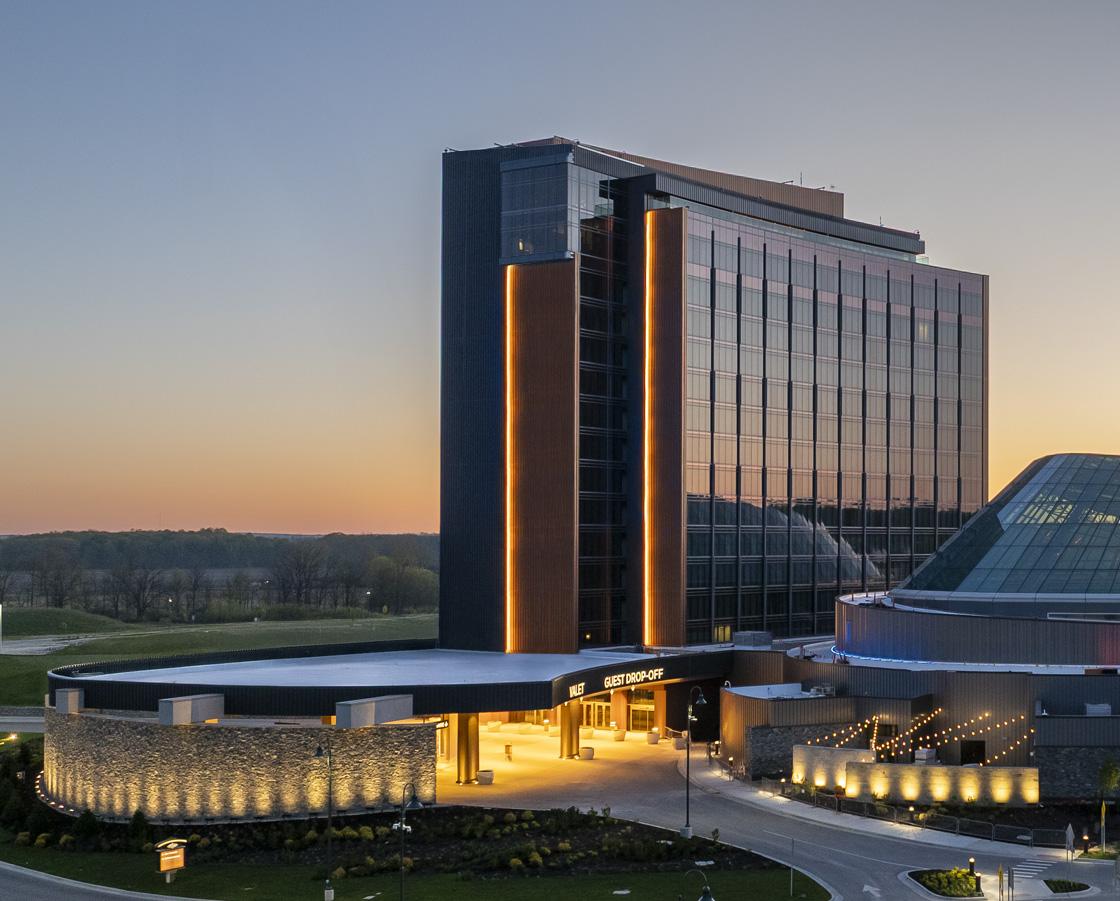
Gun Lake Casino Resort has officially opened the doors to its striking new 15-story resort hotel tower. It's an eye-catching, experience-forward destination. The transformational expansion marks a new era for the property. It sets a bold benchmark for luxury, entertainment, and wellness in the Midwest.
With 252 guest rooms and suites, a tropical year-round atrium known as the Wawyé Oasis, a new spa and wellness retreat, and elevated dining and entertainment offerings, the expansion solidifies Gun Lake Casino’s position as a leading superregional resort destination.
“This project is a powerful expression of vision, identity, and hospitality innovation,” said Nathan Peak, AIA, Principal and Practice Leader at HBG Design. “Every aspect of the hotel and spa was designed to immerse guests in comfort, nature, and a sense of year-round escape—right here in West Michigan.”
A Destination That Begins with Engineering Ingenuity
The soaring hotel tower—visible from over a mile away along Highway 131—isn’t just beautiful; it’s built to last. To support the hotel and adjacent Wawyé Oasis, the team installed 263 caissons, each up to eight feet in diameter and drilled as deep as 180 feet into the ground, ensuring long-term structural integrity for the towering facility.
“Creating this level of verticality and complexity on site required an incredible effort between design, engineering, and construction,” said Paul Bell, AIA, Principal and Project Manager at HBG Design. “We had to integrate cutting-edge solutions at the foundation level to support the vision above.”
Natural Inspiration, Modern Comfort
HBG Design’s architectural and interior design concepts were deeply inspired by the surrounding landscape. The tower’s tinted glass façade captures natural light throughout the year, while earth-toned materials and layered metal panels ground the building within its rural Michigan context. At night, LED lighting animations bring the tower to life, adding energy and vibrancy to the entire resort.
“We wanted guests to feel like the entire property had always been planned this way—from the earliest expansions to today,” said Peak. “That level of cohesion elevates the guest experience and builds a sense of place.”
Inside the Experience: A Luxury Journey
From the moment guests arrive beneath the porte-cochère, they’re welcomed into a richly detailed environment. The hotel’s double-height lobby features a living green wall behind the reception desk. Just steps away, a stylish lobby bar offers an inviting social atmosphere, with window views into the lush tropical greenery of the Wawyé Oasis—bathed in natural light streaming through its expansive 29,000-square-foot glass atrium ceiling.
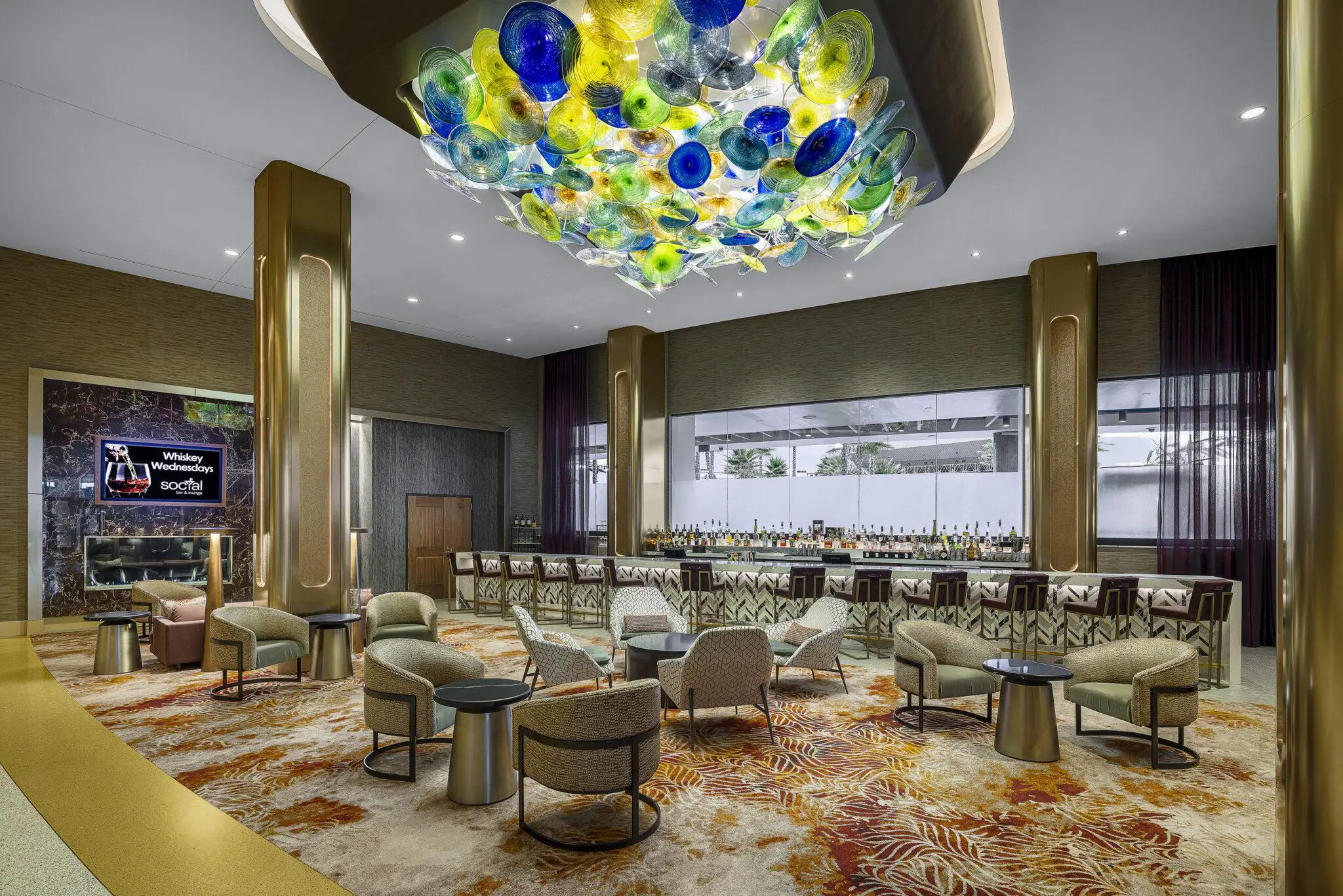 Each of the 252 guest accommodations—including 221 guestrooms, 31 suites, and the exclusive Ogema Suite—draws from a warm, natural palette inspired by Michigan’s landscape. Spacious layouts and large windows offer unobstructed views of the surrounding countryside and the Oasis below.
The two-story Ogema Suite—the crown jewel of the hotel—spans 3,368 square feet and features an in-suite elevator, two bedrooms, multiple entertaining spaces, a full bar, billiards table, and double-height windows with panoramic views. As Gun Lake CEO recalls: “One high-end guest, familiar with top-tier penthouses in Las Vegas, called it “beyond expectation.””
Living Well: MnoYé Spa Retreat and Fitness
Located on the lower level of the hotel, the MnoYé Spa Retreat—named after the Potawatomi word for “living well”—offers a private, tranquil counterpoint to the energy of the casino and Oasis. Guests can enjoy:
- Six massage treatment rooms with customizable lighting and soundscapes
- A full-service nail salon
- A state-of-the-art fitness center with Peloton bikes, treadmills, and weights
- An aquathermal spa pool with gooseneck massagers and bubble massage benches
“The MnoYé Spa was designed as a calming wellness destination—one that engages all the senses,” said Peak. “It’s more than a spa; it’s a retreat where guests can reconnect with themselves.”
Dining, Entertainment, and Resort Amenities
Rounding out the resort experience are upgraded F&B and entertainment venues, including:
- Sandhill Café – A refreshed 137-seat, three-meal restaurant offering comfort classics and all-day breakfast. The design features custom crane-inspired artwork and a sculptural wood and glass wall inspired by sandhill crane feathers.
- Renovated Casino Center Bar – A dynamic, centrally located bar on the gaming floor redesigned for greater social energy, accessibility, and ambiance.
These new amenities provide the perfect balance to the resort’s gaming offerings, creating opportunities for relaxation and reconnection throughout the guest journey.
A Vision Realized
From the underground caissons to the penthouse views, every detail of the new Gun Lake Casino Resort Hotel reflects intentional design and collaborative execution.
“It’s been an incredible honor to help bring this vision to life,” said Bell. “This isn’t just a resort expansion—it’s a transformative destination with heart, story, and staying power.”
With this major milestone, the Gun Lake Tribe and Gun Lake Casino continue to deliver on their bold long-term vision for the region—one guest experience at a time.

IGA Tradeshow and Conference Recap: HBG Design Shines in San Diego!

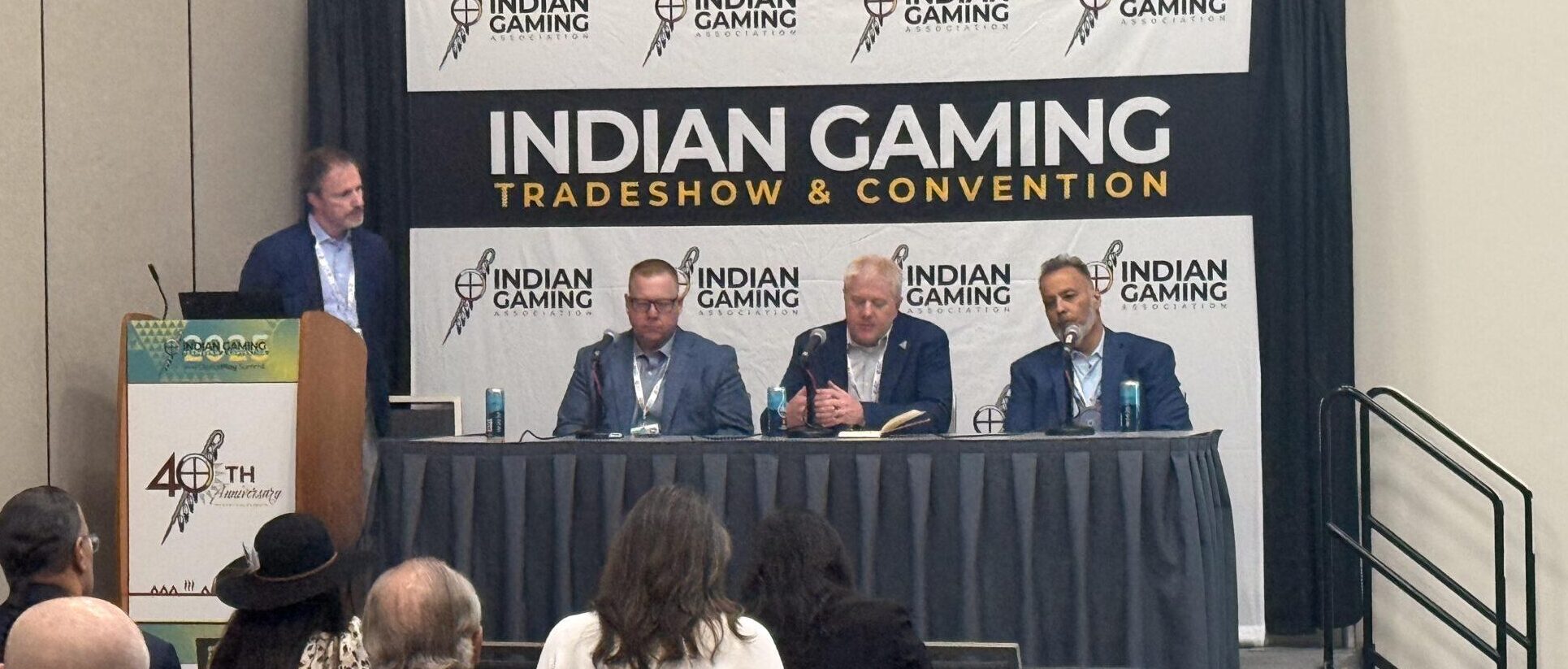
What a fantastic week in San Diego at the 2025 Indian Gaming Association Tradeshow and Conference (IGA)! Our team made a bold statement this year, showcasing HBG Design’s thought leadership, immersive exhibit design, and next-level hospitality.

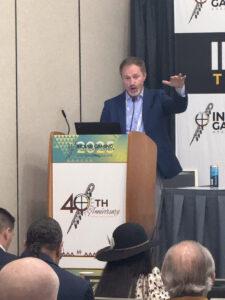
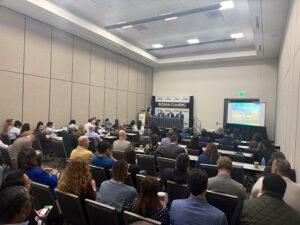
Educational IGA Conference Panel
We kicked things off with a packed house at our educational session, “Scaling Your Casino Operations for Success,” which drew over 75 attendees! The panel was expertly moderated by our very own Danny Valle, Principal, and featured a powerhouse group of speakers:
- Jon Greendeer, President, Ho-Chunk Nation
- Evan Anderson, Director of Preconstruction, Connect Advisors
- Robert Blankmeyer, Operations Manager, PCL Construction Services Inc.
The panel offered incredible insights into the challenges and strategies behind expanding and optimizing casino operations—from capital planning to execution.
A Booth to Remember
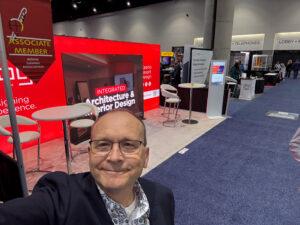
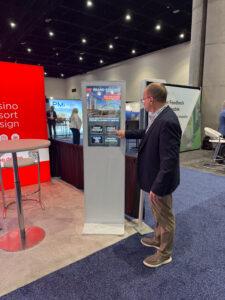
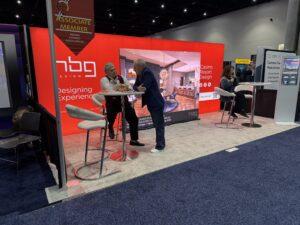
We debuted our new interactive tradeshow booth, located right near the entrance—and you couldn’t miss it! A jumbo screen showcased some of our most exciting recent projects, and a touchscreen kiosk gave attendees a deeper dive into HBG’s Event Center Design portfolio, the Gun Lake Casino expansion, Pool and Spa concepts, and our master planning expertise. A big shoutout to Kelly DeVine, Ray Mabry, and Joe Baruffaldi for representing HBG at the booth and connecting with clients and industry partners throughout the show!
Party on the Harbor
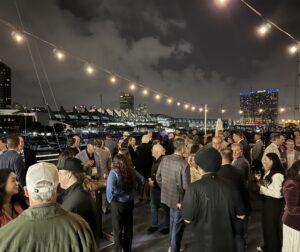

Of course, no IGA week would be complete without our legendary industry party, and this year’s event was one for the books! We co-hosted with FS Advisors, Connect Advisors, Western Alliance Bank, Procopio, GMA, and Yates Construction aboard the Adventure Hornblower, a 3-story yacht docked in the beautiful San Diego Harbor. Over 500 guests joined us for cocktails, networking, and stunning sunset views from the open deck. It was truly a night to remember!
From our high-energy panel to our eye-catching booth and unforgettable party, the 2025 IGA Tradeshow was a huge success that continues to position HBG Design as a top firm in Indian Gaming. Big thanks to everyone who helped make this event a standout moment for our team and our brand!
Indian Gaming Asks the Experts: Kelly DeVine
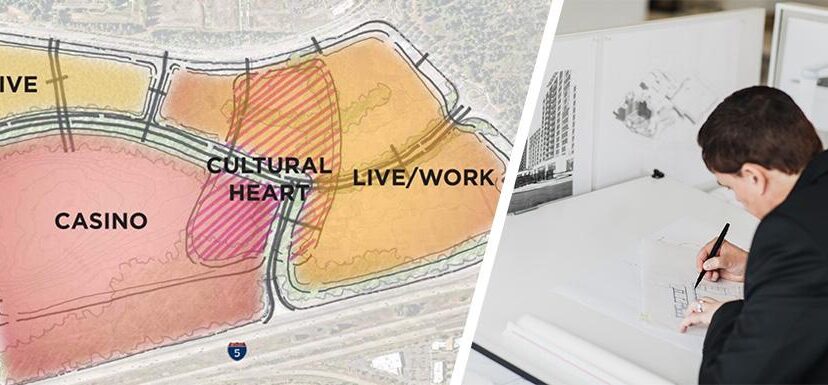
Long-term growth planning helps tribal and financial clients uncover new investment opportunities and highlight the importance of strategic design-thinking from the very start.
“It’s all about planning smarter, thinking long-term, and making well-informed decisions. After all, as the saying goes, it’s easier to erase pencil than concrete.” - Kelly DeVine, Principal, HBG Design

Jan/Feb 2025
- INDIAN GAMING MAGAZINE -
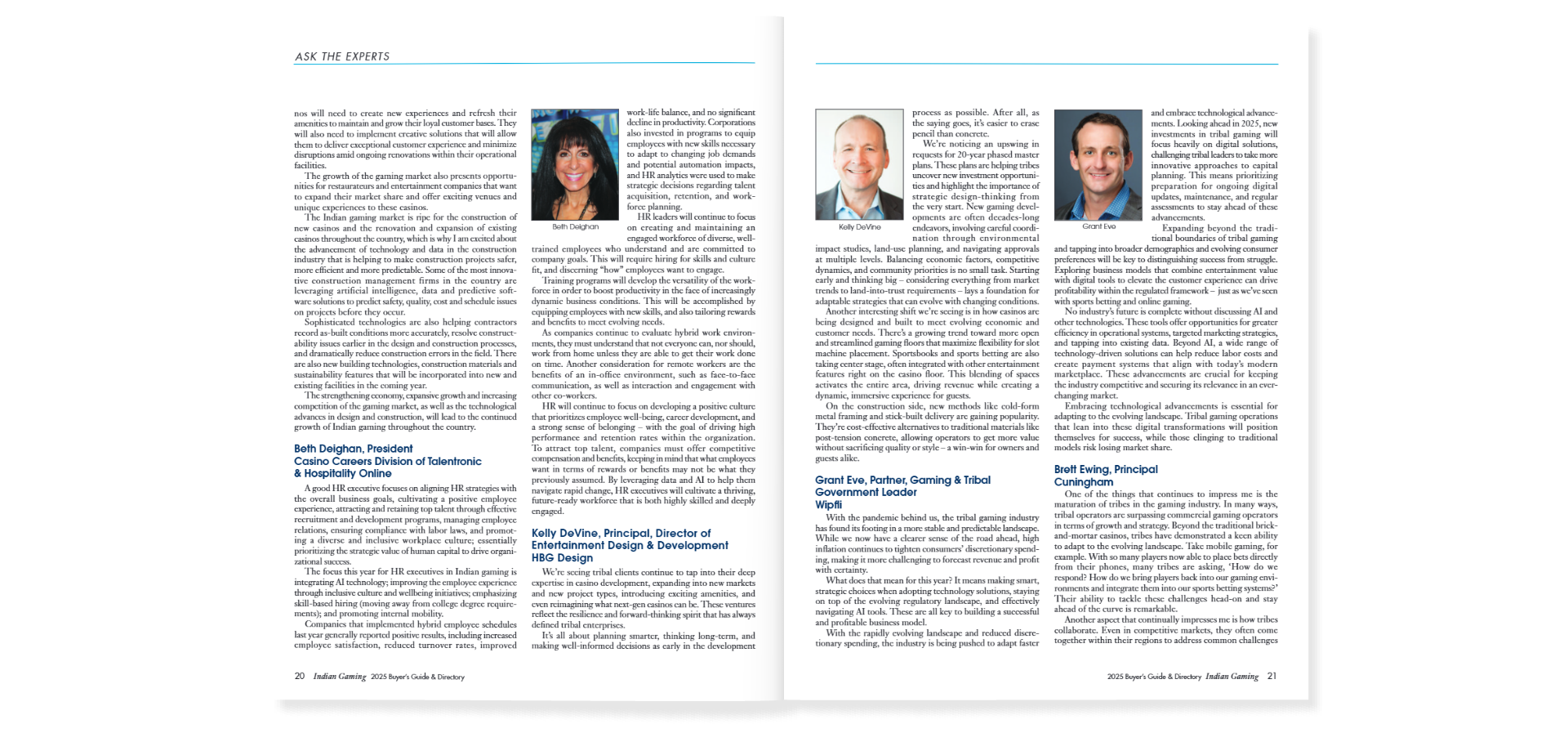
By Kelly DeVine, as seen in Indian Gaming Magazine:
As we look ahead, we’re seeing tribal clients continue to tap into their deep expertise in casino development, expanding into new markets and project types, introducing exciting amenities, and even reimagining what next-gen casinos can be. These ventures reflect the resilience and forward-thinking spirit that have always defined tribal enterprises.
It’s all about planning smarter, thinking long-term, and making well-informed decisions. After all, as the saying goes, it’s easier to erase pencil than concrete.
We’re noticing a big uptick in requests for 20-year master plans. These plans help tribal and financial clients uncover new investment opportunities and highlight the importance of strategic design-thinking from the very start. Casino developments are often decades-long endeavors, involving careful coordination with environmental impact studies, land-use planning, and navigating approvals at multiple levels. Balancing economic factors, competitive dynamics, and community priorities is no small task. Starting early and thinking big—considering everything from market trends to land-into-trust requirements—lays a foundation for adaptable strategies that can evolve with changing conditions.
Another interesting shift we’re seeing is in how casinos are designed and built to meet evolving economic and customer needs. There’s a growing trend toward more open and streamlined gaming floors that maximize flexibility for slot machine placement. Sportsbooks and sports betting are also taking center stage, often integrated with other entertainment features right on the casino floor. This blending of spaces activates the entire area, driving revenue while creating a dynamic, immersive experience for guests.
On the construction side, new methods like cold-form metal framing and stick-built delivery are gaining popularity. They’re cost-effective alternatives to traditional materials like post-tension concrete, allowing operators to get more value without sacrificing quality or style. These innovations are a win-win for owners and guests alike.