
Regional casino resorts have evolved—and today’s most successful properties are no longer competing solely on gaming floors or square footage. They are competing as full-scale destination hotels, designed to extend stays, increase spend, and drive repeat visitation.
That shift is the focus of a recent episode of the No Vacancy podcast, hosted by Glenn Haussman with guest co-host Dr. Suzanne Bagnera, featuring HBG Design leaders Kelly DeVine, Principal, and Emily Marshall, NCIDQ, NEWH, IIDA, Principal and Interior Design Leader.
In the episode, Kelly and Emily discuss how design, operations, and profitability are inseparable in modern regional casino resorts—and why performance-driven design must start long before finishes and aesthetics are considered.
From Regional Casino to Destination Resort
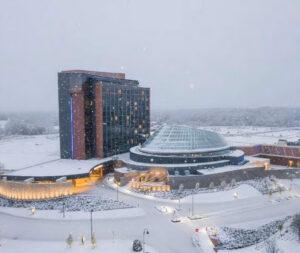 Using Gun Lake Casino Resort in Michigan as a case study, the conversation explores how regional gaming properties now compete with Las Vegas–style destination resorts. Guests expect more than gaming alone: hospitality, dining, entertainment, and thoughtfully designed hotel experiences all play a role in attracting longer stays and repeat visits.
Kelly and Emily emphasize that this evolution requires a fundamental shift in how projects are approached—one that prioritizes operational strategy and guest behavior from day one.
 Designing for Gaming Performance
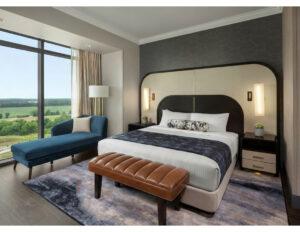 Designing for Gaming Performance
One of the key insights from the episode is how hotel design directly influences gaming behavior. Guest rooms must strike a careful balance: they should feel comfortable and welcoming, but not so indulgent that guests disengage from the casino floor and resort amenities.
This intentional approach ensures that the hotel supports—not competes with—the core gaming experience, reinforcing the overall business model of the resort.
Operations First: The Engine Behind the Experience
At HBG Design, successful casino resorts begin with operations. Kelly and Emily discuss why elements such as:
- Housekeeping flow and back-of-house efficiency
- Durability and material selection
- Turnover time and maintenance realities
are often more critical to long-term performance than purely visual considerations.
By designing the “engine” before the exterior experience, properties are better positioned to operate efficiently, control costs, and deliver consistent guest satisfaction over time.
Programming Spaces for Repeat Visitation
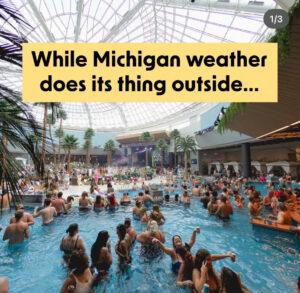 Programming Spaces for Repeat Visitation
Beyond the hotel and gaming floor, the episode highlights the importance of programming spaces that keep guests coming back—especially local and regional visitors. Flexible entertainment venues, food and beverage offerings, and social spaces all contribute to building loyalty and extending engagement beyond a single visit.
Design as a Business Tool
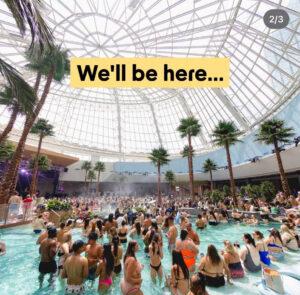 Ultimately, the conversation reinforces a core HBG Design philosophy: design is not a vanity exercise—it is a business tool. When design decisions are grounded in operations, guest behavior, and measurable outcomes, they can directly support revenue growth and long-term success.
We’re proud to see Kelly DeVine and Emily Marshall share their expertise on No Vacancy and contribute to an industry-wide conversation about performance-driven design in today’s casino resorts.
Listen to the full episode of No Vacancy: Episode 1009 – Why Casino Resorts Now Compete Like Destination Hotels to hear the complete discussion and insights.